








A recent environmental crisis gripping the North East coast, involving thousands of tiny plastic pellets known as nurdles, has ignited an extraordinary wave of community action and sparked a critical debate about the national recognition and protection of Britain’s vital coastal regions. Following an incident at the Port of Tyne, these industrial raw materials, used in countless everyday products, have polluted beaches across the coastline, prompting an unprecedented response from local communities, environmental organisations, agencies, and thousands of dedicated volunteers.
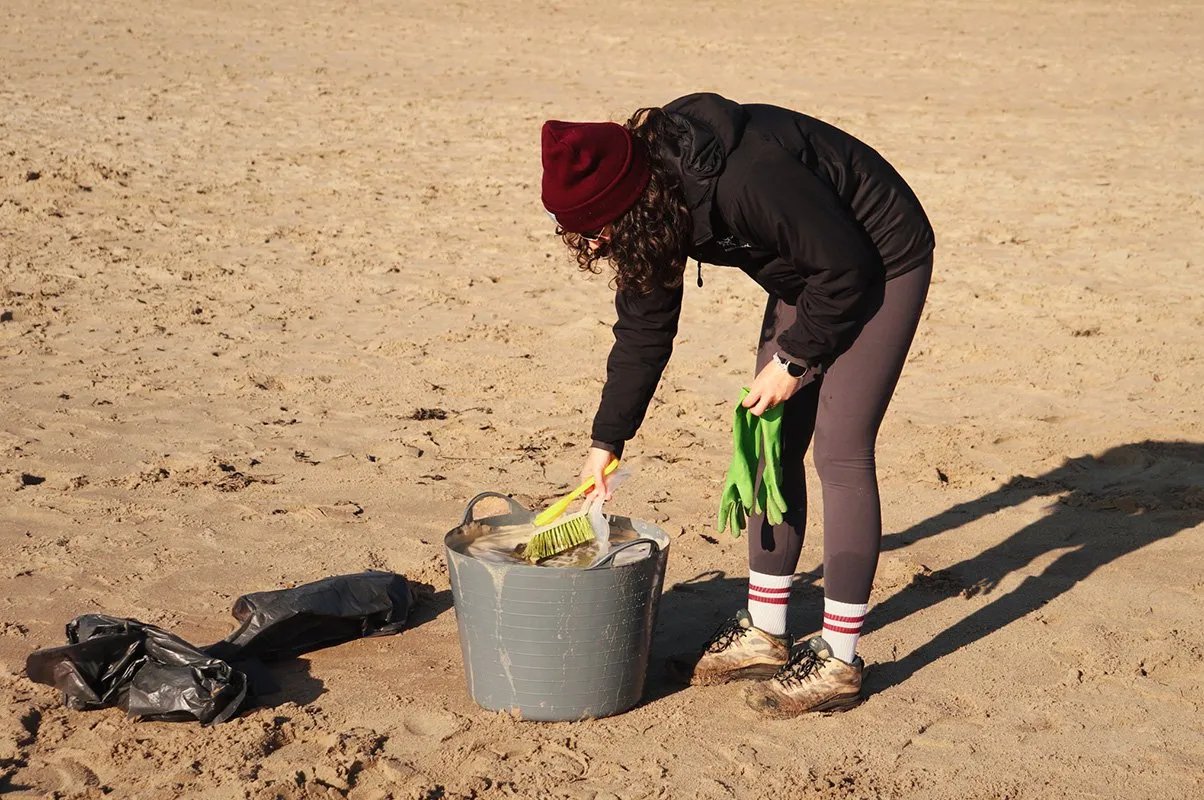
The unwavering commitment of these volunteers has been truly remarkable. Day after day, individuals have scoured beaches, meticulously sifting through sand, shingle, and seaweed, demonstrating an profound dedication to safeguarding the places they cherish and the wildlife that calls these shores home.
However, this incident transcends a simple clean-up operation; it raises a more profound question: Does the nation truly acknowledge and value the immense importance of the coastline that its communities are so tirelessly working to protect?
The Deep Connection: North East and the Sea
This question resonates deeply because the North East boasts an exceptionally rich and enduring relationship with the sea. For generations, its people have lived by, worked on, and looked out upon these waters. The region’s ports and rivers were instrumental in forging its industrial economy, while shipbuilding, fishing, maritime trade, and engineering profoundly shaped its coastal communities. The subsequent development of oil and gas further cemented a legacy of offshore expertise.
This relationship is dynamic and ever-evolving. The skills honed in shipbuilding and marine engineering were seamlessly transferred to the burgeoning oil and gas industry, and now, much of that capability is being redirected towards offshore wind, subsea technology, marine engineering, robotics, and autonomous systems. At Blyth, the Offshore Renewable Energy Catapult stands as a testament to this innovation, actively developing and testing technologies crucial to Britain’s future energy landscape. Across the region, businesses, universities, and research organisations are leveraging decades of marine and engineering prowess to seize new opportunities.
This narrative reveals a striking continuity: the North East has consistently adapted and applied its expertise from one generation of maritime industry to the next.
A prime example of this innovative spirit is Turbinia. Developed by Charles Parsons in Newcastle, this revolutionary steam turbine, showcased at the 1894 Naval Review, heralded a new era in marine propulsion. It was more than an engineering marvel; it epitomised the North East’s ability to transform challenges presented by the sea into technological triumphs. This tradition persists today, from pioneering offshore wind and subsea engineering to the development of robotics, autonomous systems, and other advanced marine technologies. While the technology itself has progressed, the fundamental connection between the North East, engineering, and the sea remains steadfast.
Yet, the sea has never been solely an economic commodity. It is intrinsically woven into the fabric of the North East, influencing its communities, culture, and identity. It contributes significantly to the visitor economy and the overall well-being of its inhabitants.
The breathtaking beauty of the North East coastline is undeniably one of its greatest assets. From the expansive beaches and dunes of Northumberland to the dramatic cliffs, bustling harbours, and quaint fishing communities further south, it offers an unparalleled blend of landscape, wildlife, and history. People flock here to walk, swim, fish, observe wildlife, and immerse themselves in the natural environment. For many residents, the coast is an integral part of daily life – a place to walk the dog, clear one’s head, spend time with family, or simply witness the ever-changing majesty of the sea.
This intrinsic value extends beyond tourism and recreation. Access to nature, open spaces, and the sea significantly contributes to physical and mental well-being, enhancing the quality of life the North East offers. Equally important is the coastline’s environmental significance. The Farne Islands and Coquet Island are critical habitats for internationally important seabird populations, while the broader coastline supports diverse habitats and marine ecosystems vital for sustaining wildlife and coastal communities.
The profound connection to this coastline has also captivated attention far beyond the region. In 1881, American artist Winslow Homer spent eighteen months in Cullercoats, deeply immersed in the local fishing community. His evocative paintings and watercolours depicting the sea, coastline, and the lives of those dependent on it marked a pivotal period in his artistic career. Similarly, L. S. Lowry developed a lasting fascination with the North East, repeatedly visiting locations like Sunderland and the River Wear, where his work eloquently captured the interplay between people, industry, rivers, and the sea. For these artists, the coastline was not merely scenery; it was a vibrant, working landscape and a living community.
These examples powerfully illustrate that the North East coast has always been more than a site of economic activity; it has been a wellspring of inspiration, identity, and belonging.
Therefore, when we discuss protecting the North East coast, we are safeguarding a multitude of invaluable assets: wildlife and habitats, beaches and landscapes that attract visitors and support businesses, places for recreation and well-being, and a fundamental part of the history and identity of communities that have coexisted with the sea for generations. Crucially, we are also protecting an environment upon which a significant portion of our future economy will depend.
This is precisely why the current pollution incident is of such paramount concern.
The Nurdle Crisis: A Call for National Action
The nurdles are not merely inert plastic pieces on a beach. Once introduced into the marine environment, they become subject to tides and currents, interacting with ecosystems that transcend administrative boundaries. Pollution in the Tyne does not necessarily remain confined to the Tyne. Understanding the true consequences necessitates more than simply counting and removing visible pellets.
We need a comprehensive understanding of the incident’s scale, including what remains unseen. This demands proper environmental monitoring, rigorous scientific assessment, and long-term observation of affected beaches, habitats, and wildlife. We must ascertain what has entered the wider marine environment, the potential repercussions, and whether there will be long-term impacts that only become apparent over time.
It is here that the scale of the response needs to fundamentally shift.
In my view, this should be recognised as an incident of national environmental significance and receive the appropriate level of national support.
This call for national support is not a reflection of the North East’s inability to respond; quite the contrary. Our communities have demonstrated extraordinary commitment, and local authorities, environmental organisations, businesses, researchers, and volunteers have shown remarkable knowledge, determination, and care for their local environments. Rather, it is because the asset they are protecting is of undeniable national importance.
The North East coast is an integral part of Britain’s natural heritage. It supports internationally significant wildlife and habitats, contributes substantially to tourism and recreation, sustains coastal communities, and enhances the well-being of its residents. Furthermore, it hosts crucial ports, energy infrastructure, and industries that are increasingly vital to Britain’s economic and energy future.
The marine environment knows no administrative boundaries, nor does pollution. Therefore, the response must reflect this reality. The national government and relevant agencies must provide the necessary resources and expertise to coordinate the response, conduct thorough environmental monitoring, and assess the long-term consequences. Affected communities and volunteers should be equipped with the necessary tools and support, rather than being left to bear the burden alone.
There is a clear distinction between community involvement and community responsibility for addressing the consequences of pollution. We should wholeheartedly welcome and support the former, but we must unequivocally reject the latter.
The remarkable volunteers who have mobilised along our coastline deserve immense recognition. However, their heroic efforts must not become a substitute for a professionally resourced response. People should not be compelled to spend countless days meticulously removing pollution from their beaches because no viable alternative exists. Their invaluable contribution should complement a professional, properly funded response, rather than becoming the response itself.
Where responsibility for the pollution is definitively established, those accountable must also bear the appropriate costs of environmental recovery. The “polluter-pays” principle should be an integral part of the response, but it must not impede immediate action. The environment cannot afford to wait for investigations, legal disputes, or insurance claims to be resolved. We must prioritise the immediate protection and monitoring of the coastline, while ensuring that responsibility and costs are justly assigned retrospectively.
There is also a broader lesson to be learned here. As the North East cultivates a new generation of economic activity centered around the sea, we must recognise that the health of this marine environment is a fundamental component of our future economic infrastructure. We cannot compartmentalize offshore wind from marine ecology, ports from the waters in which they operate, tourism from the quality of the beaches and landscapes that attract visitors, or the well-being of coastal communities from the natural environment on their doorstep.
Economic opportunity and environmental stewardship are not competing priorities; they are increasingly interdependent.
This is particularly pertinent for the North East. The region possesses the ports, engineering expertise, subsea capability, world-class universities and research organisations, a thriving offshore energy sector, and businesses at the forefront of developing new marine technologies. Alongside these strengths, it boasts extraordinary wildlife, breathtaking landscapes, vibrant coastal communities, and a visitor economy inextricably linked to the quality of its natural environment. The opportunity lies in synergizing these strengths: developing offshore wind while investing in marine science, expanding ports while strengthening environmental monitoring, and advancing subsea technology while simultaneously enhancing our understanding and protection of the environment in which it operates.
Therefore, the current incident should not be viewed simply as a problem to be cleaned up and swiftly forgotten. It must serve as a powerful catalyst, prompting us to reflect on what we truly value, how we protect it, and who bears responsibility when that invaluable environment is compromised.

Friends of Bylines Network
There has never been a greater need for grassroots journalism that investigates the stories that really matter, holds power to account and champions the voices of everyday citizens. We are proudly powered by volunteers but what we do isn’t free.
STAND WITH US for independent, citizen-led journalism that makes democracy stronger, and you will even get some exclusive benefits.
The people tirelessly cleaning our beaches have already provided their unequivocal answer. They deeply value the coast, its wildlife, and the places they call home, and they understand that the sea is an intrinsic part of the North East’s identity and character.
We in the North East understand, perhaps better than most, the immense gifts the sea has bestowed upon us. We have built ships upon its waters, fostered industries around its shores, innovated technologies to operate on and beneath its surface, and attracted artists from across the globe to capture the essence of our coastline. We have established communities by its edge and developed new industries that will depend upon it for generations to come.
The sea has given the North East an immeasurable amount, and consequently, we bear a profound responsibility to protect it.
However, this monumental responsibility cannot fall solely upon local communities.
The volunteers on our beaches are demonstrating the epitome of local responsibility. It is now imperative that national responsibility rises to meet their efforts.
Because this crisis extends far beyond the simple removal of nurdles from our beaches. It is about safeguarding an environment that is crucial for wildlife, for our economy, for our culture, for our communities, and for the overall well-being of the people who reside here.
The North East coast is not merely a local asset. It is an indispensable part of Britain’s natural heritage, a cornerstone of our economic future, and an intrinsic element of what makes this region truly unique.