








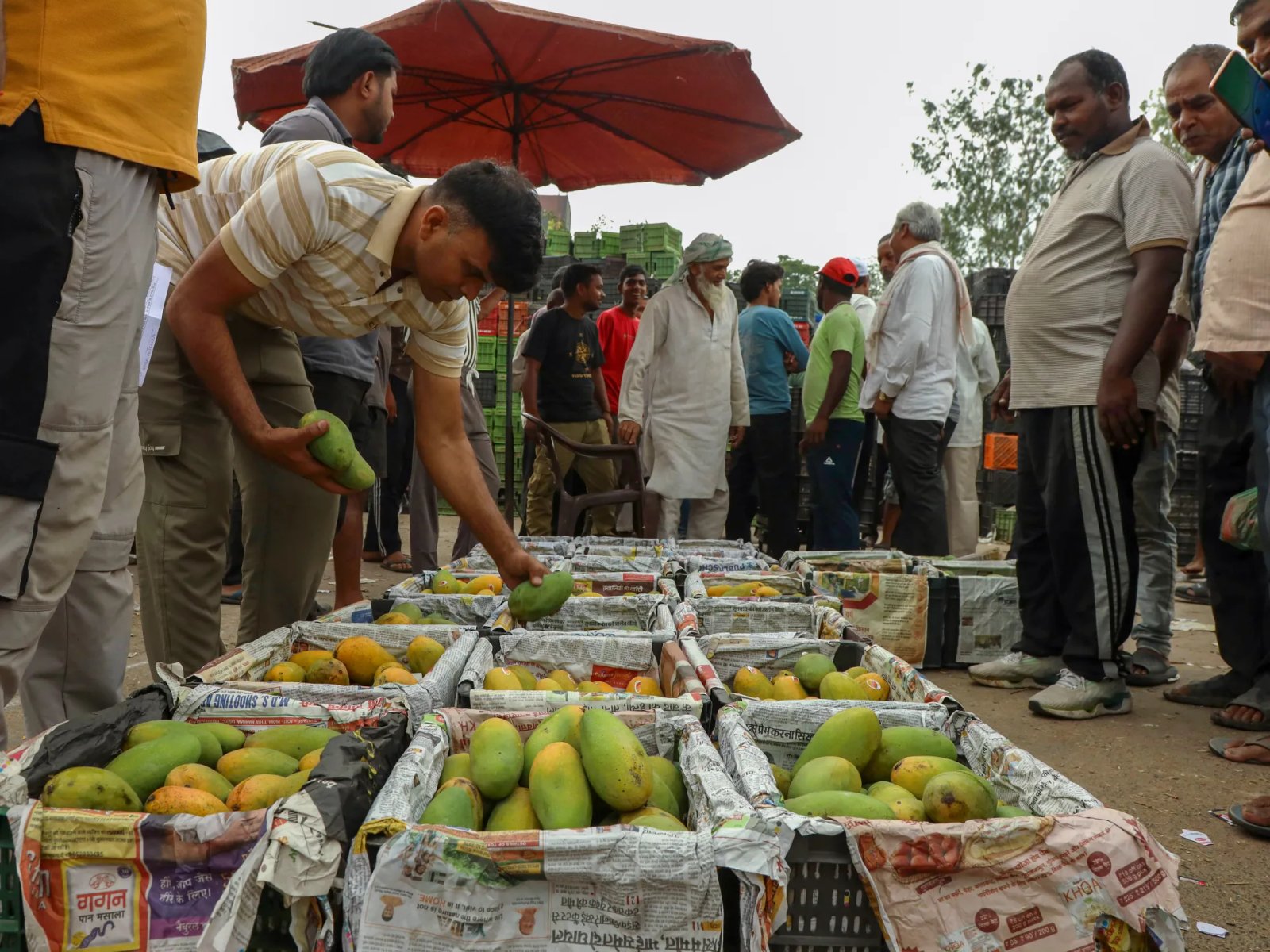
New Delhi, India – India’s agricultural export sector is facing significant challenges as major international markets like Japan and China impose suspensions and stricter quality controls on Indian produce. These recent setbacks, affecting mangoes, rice, and spices, highlight a growing disparity between India’s vast agricultural output and the evolving global standards for traceability, food safety, and certification.
In March, Japanese quarantine inspectors raised concerns regarding the fumigation, disinfection, and certification procedures at the vapour heat treatment (VHT) facility in Rehmanpur village, Lucknow. This facility is crucial for sterilising fruits and vegetables intended for export. Despite cleared export documents and finalised shipping schedules for premium Alphonso and Kesar mangoes from Maharashtra and Gujarat, Japan suspended imports, citing issues with operational standards. On March 31, plant protection authorities in Yokohama formally announced that all Indian mango shipments bearing inspection certificates issued on or after March 25 would be barred until improvements could be confirmed.
This marks the first major disruption to India-Japan mango trade in nearly two decades. Restrictions were previously lifted in 2006 after India established VHT infrastructure, enhanced pest surveillance, and agreed to annual inspections. The current 2026 halt impacts six approved mango varieties – Alphonso, Kesar, Langra, Banganapalli, Chausa, and Mallika – coinciding with the peak export season from April to June. While Japan imported approximately $1.54 million worth of fresh and processed mango products from India between 2025 and 2026, the market’s significance extends beyond its volume, offering premium prices and signaling quality to other international buyers.
The suspension has compounded difficulties for Indian mango farmers already grappling with heatwaves in the Konkan belt that decimated Maharashtra’s Alphonso crop, and increased freight costs due to geopolitical disruptions in West Asia. Vikram Shah, a Mumbai-based exporter who shipped 2.5 tonnes of mangoes to Japan in 2025, underscored the market’s importance for credibility. He noted that building trust with Japanese buyers takes years and can be undone swiftly. Rajesh Patil, an Alphonso grower in Ratnagiri, Maharashtra, revealed that the Japanese market yielded significantly higher returns than domestic auctions, prompting substantial investments in meeting stringent import standards. Patil invested nearly ₹80,000 ($840) in grading and handling equipment, attended pest-management training, and altered harvesting and packing methods to cater to Japanese demands.
Concurrently, on April 17, China revoked the import licenses of three Indian rice exporters after the General Administration of Customs rejected consignments over alleged traces of genetically modified organisms (GMO). The exporters disputed these findings, asserting their shipments received GMO-free certification prior to departure, a claim supported by the Indian government’s stance that all domestic paddy and rice fields are free of genetic modification. Rice accounts for over 20% of India’s agricultural exports, with a record-breaking $12.5 billion shipped in the last financial year (2025-26). The Agricultural and Processed Food Products Export Development Authority (APEDA) has since published a list of approved laboratories for GMO tests on China-bound shipments. SK Singh, an agricultural scientist, noted that this dispute exposes weaknesses in India’s testing system, which has primarily focused on pesticide residue and aflatoxin testing, rather than the protein analysis required for GMO verification.
These issues are not isolated. Hong Kong recently suspended several Indian spice products due to pesticide residues, with quality deviations found in nearly 12% of samples. The European Union also increased inspection frequency on Indian cumin to 30% in January 2025, following 312 spice alerts in 2024. Ananya Bose, a food safety scientist, attributes these problems to a fragmented supply chain where traceability is lost after the initial sale. Bose advocates for mandatory digital pesticide records to meet international regulators’ demands for field-to-shipment traceability.
These setbacks reveal a critical gap between India’s agricultural capabilities and the escalating traceability, food safety, and certification standards now demanded by premium markets such as Japan, the EU, UK, US, and Canada. These standards are driven by consumer pressure for transparency, climate-related pest concerns, food-security strategies, and lessons from the COVID-19 pandemic. While competitors like Thailand, Vietnam, Brazil, and Chile have invested in nationwide traceability programs, farmer training, and cold-chain systems, India’s progress has lagged.
India has only 207 registered pack houses, 72% of which are in Maharashtra. Scarce cold storage facilities and high logistical costs consume about 15% of export value, nearly double that of advanced nations. The predominance of small farmers, owning less than 2 hectares of land and comprising over 86% of cultivators, complicates large-scale standardisation efforts. Agricultural economist Anil Gupta stated that India’s strategy has traditionally focused on increasing production, while premium markets now reward demonstrable quality throughout the supply chain. He acknowledged some gains, with recognised laboratories increasing from 22 to 89 and approved export certificates climbing from 61,000 to over 170,000 in the past decade, but emphasized that these improvements are merely a beginning.
Ujjwal Kumar Ghosh, a senior official in the government’s Department of Commerce, has called for tighter controls on antibiotic residues, pesticides, and aflatoxins in various agricultural products. He confirmed that funds are allocated for laboratory upgrades, though without a definitive timeline. Ghosh stated that the government is strengthening the system from testing to inspection and traceability, introducing risk-based inspections, and using digital systems to expedite problem identification. The goal is to help exporters meet global food-safety standards and protect India’s access to international markets.
Despite being the world’s second-largest agricultural producer, India holds only 2.4% of global agri-exports, with processed exports stagnating at approximately 17%, significantly lower than the US (25%) and China (50%). The consequences are being felt by farmers and exporters: Kesar mango farmers in Gujarat have lost a key Japanese buyer, basmati rice prices in Haryana’s Karnal have dropped 8%, and a turmeric processor in Kerala’s Erode faced a residue testing cost of 15,000 rupees ($157), nearly 10% of his profit. Agriculture still employs about 42% of India’s workforce, yet contributes less than a fifth of the national output. Gupta concluded that for India to succeed, it must consistently meet the demanding standards of global buyers, moving beyond mere production volume to building robust systems that ensure quality and traceability.