








India’s Growing Injury List Puts Spotlight on Player Management Amidst Crucial Season
NEW DELHI, India – A burgeoning injury list has cast a shadow over the Indian cricket team, raising critical questions about player fitness management and the role of the Centre of Excellence (COE). With several key players sidelined across formats, the team faces a significant challenge as it navigates an important phase of international cricket, including preparations for the upcoming World Cup and the ongoing World Test Championship cycle.
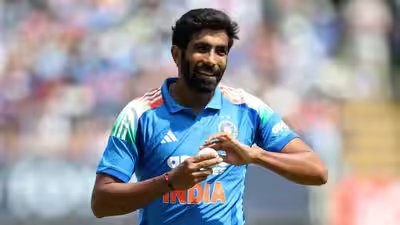
The latest casualty is star pacer Jasprit Bumrah, whose persistent knee swelling has ruled him out of the crucial Test series against Sri Lanka. Bumrah’s absence follows a string of other significant setbacks: Sai Sudharsan is recuperating from a left big toe injury, Harshit Rana and Nitish Kumar Reddy are battling hamstring issues, and Washington Sundar remains unavailable due to a quadriceps injury.
The sheer volume of players grappling with fitness concerns has inevitably drawn scrutiny towards India’s injury management and rehabilitation protocols. This is particularly pertinent given Bumrah‘s status as a linchpin across all three formats. His fitness is paramount to India’s aspirations for the next World Cup and their continued progress in the World Test Championship.
The focus has also squarely landed on the Centre of Excellence (COE), the national facility responsible for player assessment and rehabilitation. However, former India batter Subramaniam Badrinath has clarified the COE’s specific role, emphasizing that it does not hold the ultimate authority on player selection.
"I don’t know who made the decision. COE will not make the selection, right? They will just say he is in this state and can play these matches and his body is in this state. But I think the captain, coach, and selectors are taking the decision. COE only passes the information. They are not selectors," Badrinath stated in a recent video on his YouTube channel. He stressed that the COE’s primary function is to provide comprehensive information regarding a player’s physical condition and recovery progress to the team management. The final decision on player inclusion, he reiterated, rests firmly with the captain, coach, and national selectors.
Badrinath also cautioned against a simplistic view of the current injury crisis, highlighting that the nature of injuries varies significantly among the affected players. This diversity makes it challenging to pinpoint a single overarching cause for the growing list of sidelined cricketers.
While acknowledging that injuries are an inherent part of elite professional sport, Badrinath underscored the critical importance of effective workload management, comprehensive fitness regimes, and consistent player monitoring. These factors, he believes, are crucial for minimizing downtime and keeping players fit for national duty.
"I don’t have an immediate answer to the root cause of so many injuries. It is important to see what kind of injuries these are. At high-level professional sport, injuries are common. Sai Sudharsan got hit by a ball, with Bumah, it is a chronic injury because of being overused and fitness is not Sundar’s forte, he is injury-prone. His fitness needs a lot of work. Management and monitoring is very important. Injuries are bound to happen and you cannot control it," he elaborated.
Badrinath’s insights arrive at a critical juncture for Indian cricket. The national team is grappling with the delicate task of managing the fitness of several indispensable players while navigating a packed international calendar. As the intensity of competition escalates across formats, effective rehabilitation strategies and meticulous workload monitoring will undoubtedly become even more pivotal in ensuring India fields its strongest possible squad. The ongoing challenges serve as a stark reminder of the ever-present balance between peak performance and player well-being in the demanding world of professional sport.