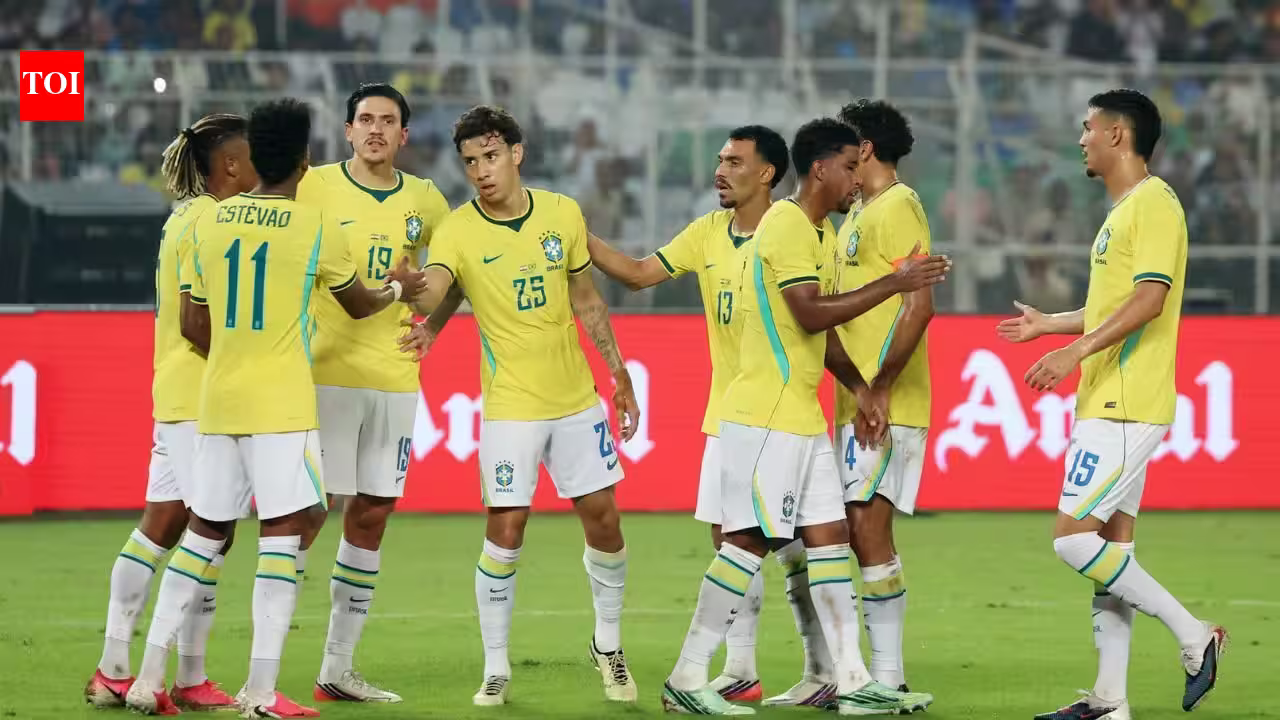





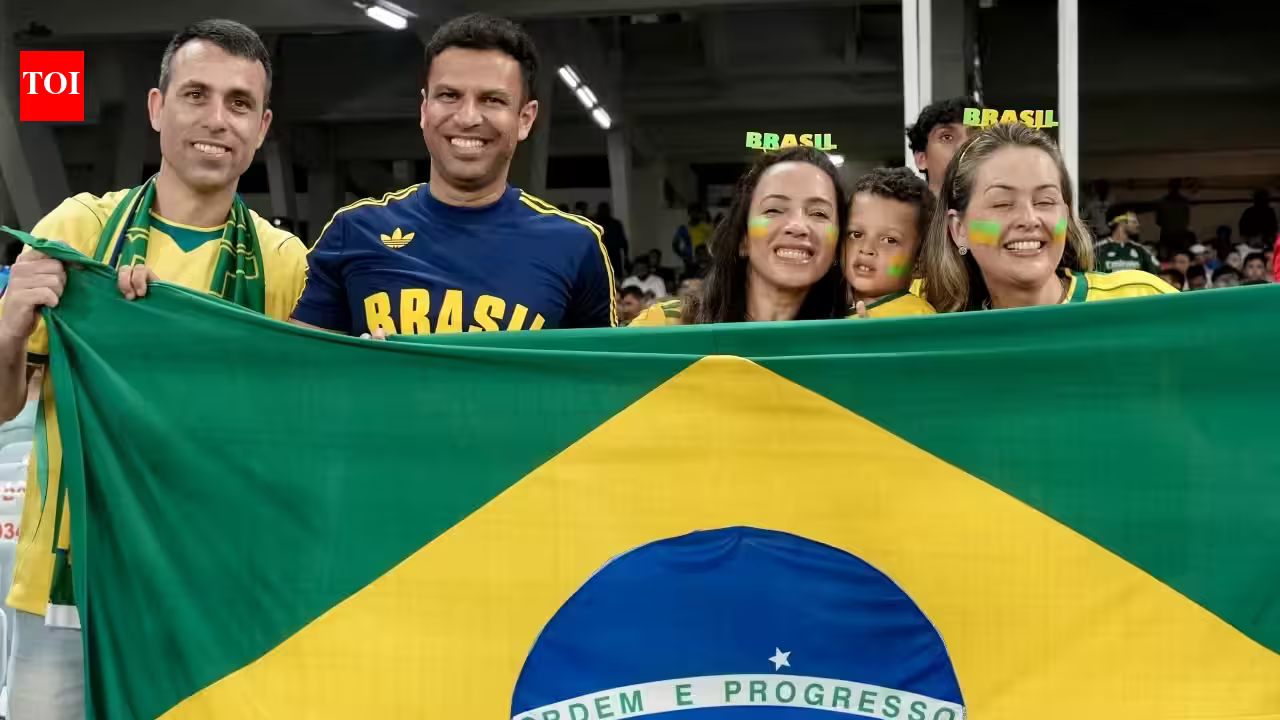


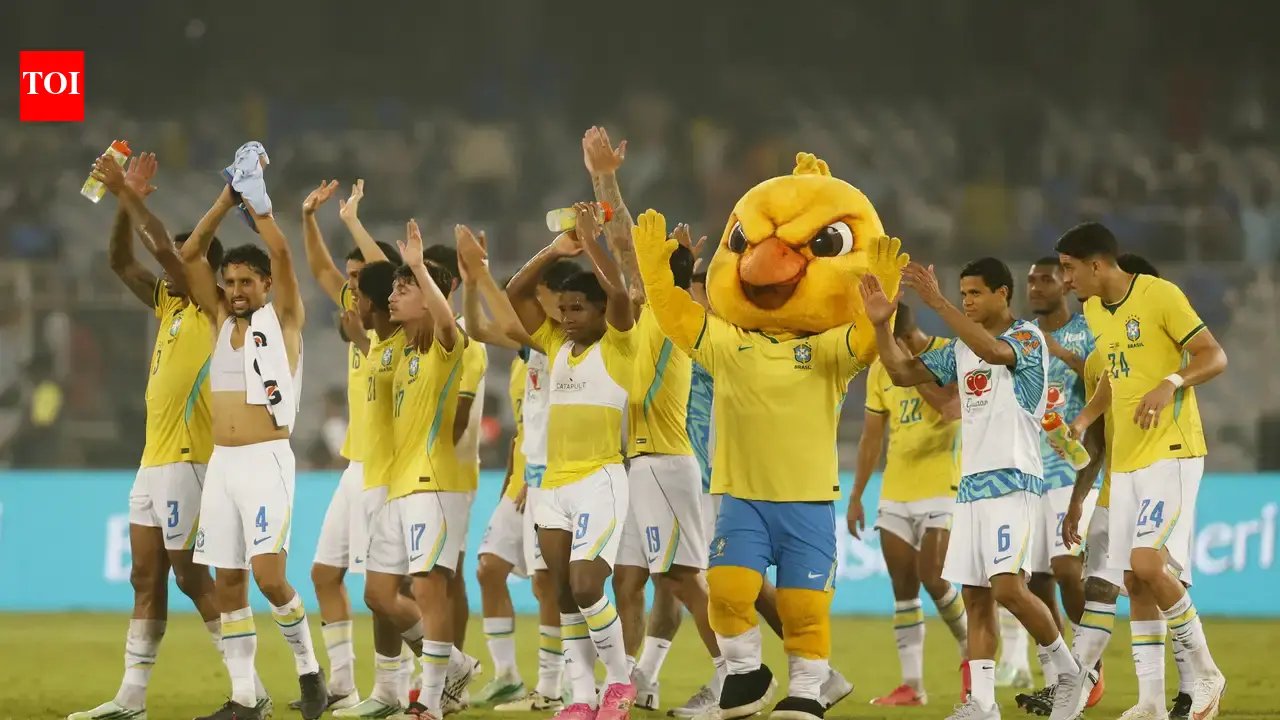
Kolkata’s iconic Salt Lake Stadium played host to a historic night of football on October 3, 2026, as the “Blue Tigers” faced their most formidable challenge in the modern era. While the final scoreline of 4-0 in favor of Brazil reflected the staggering 133-place gap in the FIFA rankings, the encounter provided a fascinating window into India’s tactical evolution under coach Khalid Jamil. For 27 minutes, the script of a blowout was nowhere to be seen, as India stood toe-to-toe with the five-time world champions in a display that earned the respect of the 51,000 spectators in attendance.
India start boldly, and Brazil cannot find their rhythm
Heading into the fixture, the disparity between the fifth-ranked South American giants and the Indian side was stark. Yet, Jamil’s men opted for a brave tactical setup rather than a fearful, defensive shell. India maintained a disciplined defensive block, focusing on neutralizing the midfield channels and utilizing the pace of Manvir Singh and Ryan Williams to exploit space on the counter-attack.
Perhaps most surprising was the treatment of Real Madrid’s superstar, Vinicius Junior. Rather than deploying a double-team that would have left other areas of the pitch vulnerable, India trusted their high defensive line to trap the winger in offside positions. It was a risky strategy, but it largely paid off in the early exchanges. While Vinicius managed to create pockets of danger and forced goalkeeper Gurpreet Singh Sandhu into a series of crucial saves, the Brazilian talisman remained frustrated. His inability to leave his mark on the scoreboard eventually saw him withdrawn at halftime, a testament to the tactical discipline the Blue Tigers exhibited early on.
Estevao breaks the resistance, then Pedro punishes India
The narrative shifted abruptly in the 28th minute when individual brilliance finally dismantled India’s resolve. Estevao, the highly touted youngster destined for Chelsea, collected the ball on the right flank, cut inside with purpose, and unleashed a curling left-footed strike. While Gurpreet got a touch to the ball, the sheer power of the shot carried it past him, breaking the deadlock and the hearts of the home crowd.
The goal seemed to settle the nerves of the visitors, who began to orchestrate their patterns with greater fluidity. A warning sign flashed in the 36th minute when Pedro rattled the upright with a towering header, signaling that India’s defensive organization was beginning to fray under constant pressure. The inevitable second goal followed in the 42nd minute. Estevao, proving his worth as a playmaker, threaded a precision through-ball into the path of Pedro. The forward’s tight-angle shot squirmed beneath Gurpreet, who appeared to have the effort covered but saw the ball agonizingly crawl over the line.
Jamil changes his goalkeeper, but Lino takes over
The second half saw both sides shuffle their packs. Jamil handed a senior international debut to goalkeeper Prabhsukhan Singh Gill, while Brazilian manager Carlo Ancelotti looked to his bench to experiment with his depth, introducing the likes of Bruno Guimaraes and Samuel Lino.
India initially responded with renewed vigor. In the 55th minute, Manvir Singh utilized his physicality to hold off Marquinhos, firing a shot toward the near post that forced a sharp save from Pedro Morisco. Moments later, Ryan Williams surged into the box, only for a last-ditch block from Mauro Júnior to deny him. However, this period of Indian pressure was short-lived. In the 57th minute, a lapse in concentration at the back saw Bijoy Varghese lose possession deep in his own half. Brazil pounced with clinical speed, and Samuel Lino took advantage, curling a sublime finish beyond the reach of the substitute goalkeeper, Gill. At 3-0, the result was effectively put beyond reach.
Brazil finish the job, while India get a lesson to remember
Despite the score, the Indian side continued to work for opportunities, with Jamil using the remaining substitutions to cycle through fresh legs. The match continued to test India’s concentration, as the visitors pushed for a final flourish. That arrived deep in stoppage time, when Lino—displaying the ruthless efficiency characteristic of the Brazilian side—navigated the edge of the box to bury his second of the night and Brazil’s fourth.
For India, the match was a reality check regarding the gulf in quality at the absolute highest level of the game. However, it was also a valuable pedagogical exercise. Having already secured a confidence-boosting draw against 44th-ranked Panama, the Blue Tigers are clearly committed to playing against the best in the world to hasten their own development.
The test does not get any easier. India is scheduled to return to the Salt Lake Stadium on October 6 to face Uruguay, the 20th-ranked nation globally. For Khalid Jamil, the mission remains the same: use these marquee fixtures as a catalyst for growth. While the scoreboard in Kolkata told a story of dominance, the match was a building block for an Indian team looking to bridge the gap between regional relevance and global competitiveness. The Blue Tigers now have a mere 72 hours to recalibrate and prepare for another heavyweight clash that promises to provide more lessons for the future of Indian football.
Disclaimer: This content is auto-generated for informational purposes only.
Source: Read Original News