









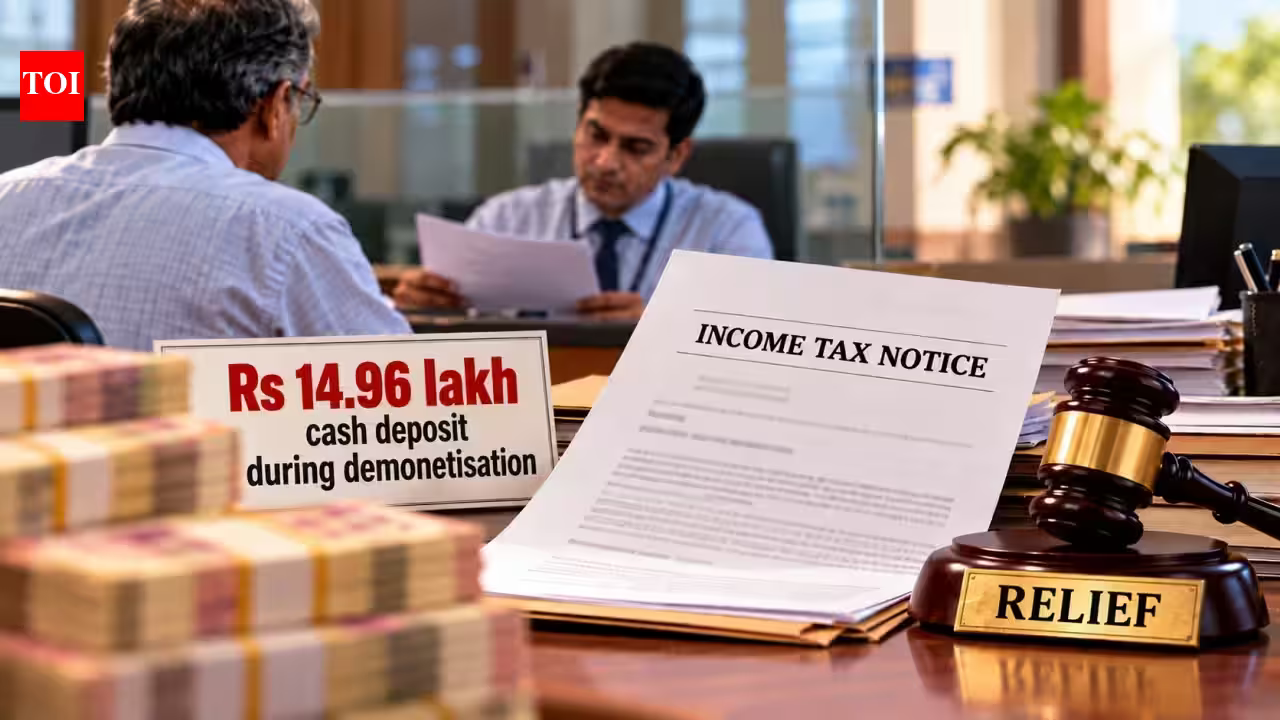
The Intersection of Tax Compliance and Cash Transactions
In the complex landscape of Indian taxation, the burden of proof frequently shifts to the taxpayer when significant cash deposits occur, particularly during periods of intense scrutiny such as the demonetisation era. A recent ruling by the Bangalore bench of the Income Tax Appellate Tribunal (ITAT) has provided essential clarity on how authorities should evaluate cash deposits that originate from previously disclosed income sources. The case underscores the critical importance of maintaining a meticulous paper trail when dealing with liquid assets, especially in sectors like real estate where cash transactions remain prevalent.
For many landlords in India, collecting rent in cash is a long-standing practice. However, when these amounts are deposited into bank accounts, they can easily trigger automated alerts within the Income Tax Department’s monitoring systems. This scenario often leads to scrutiny under Section 69A of the Income Tax Act, which deals with unexplained money. The recent ITAT decision serves as a reminder that while the tax department has the mandate to investigate substantial cash inflows, its conclusions must be rooted in objective evidence rather than conjecture or the mere suspicion that a cash balance is unusually high.
Establishing a Valid Cash Flow Trail
The core of the dispute involved a taxpayer who deposited nearly Rs 15 lakh in cash during the demonetisation phase. The Assessing Officer (AO) rejected the taxpayer’s explanation, arguing that the deposits were unexplained money. The taxpayer’s defense relied on a comprehensive documentation strategy, including cash books, bank statements, and, most importantly, a detailed cash-flow statement that bridged the gap between his disclosed rental income and the specific deposits in question.
What differentiates this case from many others is the existence of a documented “running cash-flow” that spanned multiple financial years. The tribunal observed that the cash available for deposit was not a sudden, inexplicable influx but rather the result of accumulated rental receipts, advances from tenants, and personal bank withdrawals that had been accounted for over time. The tribunal’s decision to rule in favor of the taxpayer highlights that when an individual maintains rigorous records of their cash receipts, the tax authorities cannot arbitrarily dismiss these records simply because they perceive the resulting cash balance to be high.
The Distinction Between Taxation and Cash Availability
A significant aspect of the ITAT’s reasoning was the differentiation between the taxability of an income stream and its role in explaining cash availability. The Assessing Officer had struggled to accept that previously taxed rental income could explain later bank deposits. The tribunal clarified that these are distinct legal and accounting concepts. If a taxpayer has already disclosed rental earnings in their annual income tax returns, that disclosure serves as proof of the receipt. The subsequent physical retention of that money in cash is not a violation of law, nor does it automatically render the money “unexplained” when it is eventually deposited into a bank.
This ruling addresses a common grievance among Indian taxpayers: the assumption by tax officials that any large sum of cash must be derived from undisclosed business income or “cash sales.” By forcing the tax department to look past the label of “business income” and recognize the actual source of the funds—in this case, rental property earnings—the ITAT has reinforced the principle that taxpayers are not required to conform to a business-like accounting standard if their income is derived from personal assets.
The Burden of Proof and Evidentiary Requirements
The victory for the landlord was predicated on the fact that he provided affirmative documentation, whereas the tax department relied on assumptions. The tribunal’s order is a significant development for individuals who prefer cash-heavy transactions, as it establishes that the department must produce evidence to contradict a taxpayer’s submitted records. If the tax authorities wish to classify a deposit as unexplained money, they must demonstrate that the taxpayer’s cash-flow statement is fabricated, that the rental receipts were fictitious, or that the funds had already been exhausted elsewhere.
For taxpayers, this reinforces the necessity of “financial hygiene.” In the Indian context, even if a transaction is legal and the income is fully taxed, the lack of a paper trail can lead to protracted and expensive litigation. The ITAT’s decision emphasizes that in the eyes of the law, the “story” of the money must be consistent from the moment it is received to the moment it is placed in a financial institution. Records such as rent agreements, receipts of cash advances, and chronologically maintained cash books are the primary defense against notices issued under Section 69A.
Market Insights and Strategic Implications for Taxpayers
The regulatory environment in India is increasingly focused on digitizing the economy, yet this case highlights that the physical cash economy remains a reality for many. The ITAT Bangalore ruling does not grant a blanket immunity for cash deposits; rather, it protects those who are transparent about their earnings. The key takeaway for business owners and landlords is that income tax compliance is not merely about paying the correct amount of tax; it is about proving the provenance of every rupee that enters a bank account.
Furthermore, this ruling serves as a warning against the dangers of “convenience-based accounting.” The taxpayer in this case succeeded because he could prove the availability of cash as of the opening of the financial year. Had he lacked these records, the outcome might have been significantly different. As the Income Tax Department continues to leverage data analytics to flag suspicious patterns, the ability to produce a robust, logically consistent cash-flow statement has become a mandatory skill for any individual with property-based income or high-frequency cash transactions.
In summary, the ITAT Bangalore’s decision is a balanced approach to tax enforcement. It validates the powers of the Income Tax Department to conduct scrutiny while simultaneously protecting compliant taxpayers from overreach. For the broader market, it underscores that transparency—backed by diligent record-keeping—remains the most effective strategy for mitigating tax risk. As Indian tax laws evolve to become more data-driven, the bridge between disclosed income and cash deposits must be clearly documented by every taxpayer to avoid the pitfalls of subjective assessment.
Disclaimer: This content is auto-generated for informational purposes only.
Source: Read Original News