







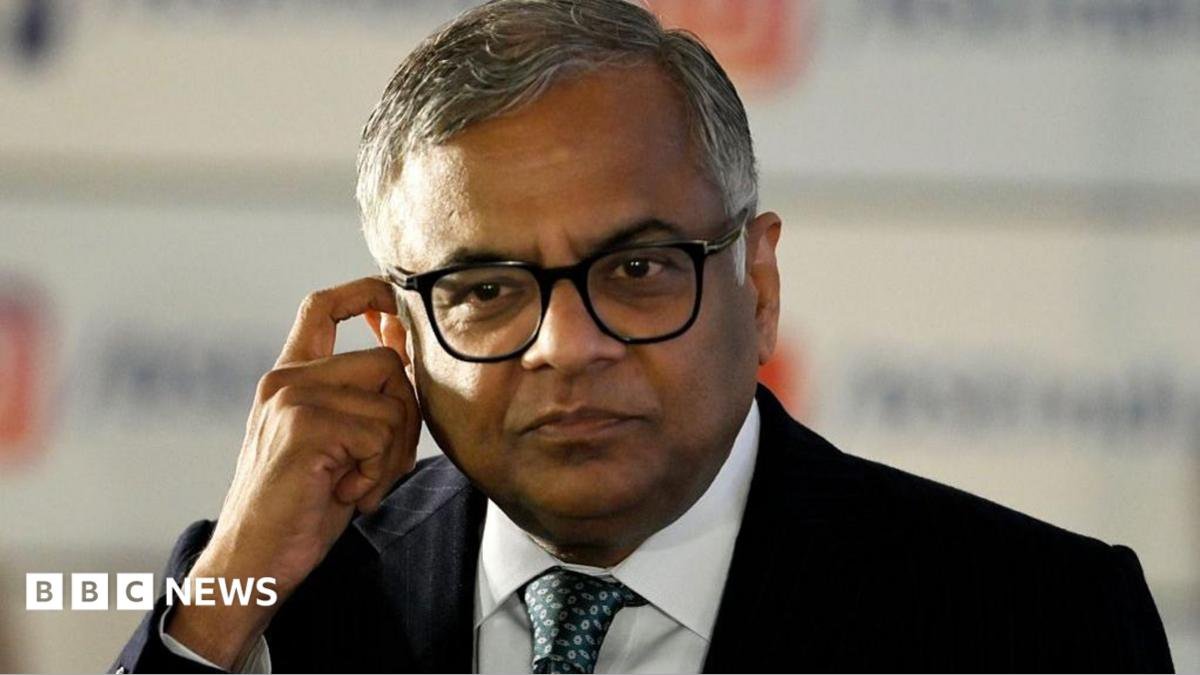
N Chandrasekaran, the chairman of Tata Group, has announced he will not seek reappointment when his current term concludes in February. The 63-year-old stated that this decision was made after the board of Tata Sons failed to reach a resolution on a proposed five-year extension of his tenure, a proposal first tabled months ago.
The news immediately sent shares of listed Tata companies plummeting, raising significant questions about the future direction of the vast salt-to-steel conglomerate, which encompasses major entities like Air India, Tata Steel, and Jaguar Land Rover.
Chandrasekaran’s impending departure, revealed just days before Tata Sons’ annual general meeting, underscores underlying tensions that have reportedly simmered for months, following a boardroom power struggle among trustees. The unique structure of the Tata Group, where a charitable arm known as Tata Trusts holds a 66% stake in the parent company, Tata Sons, provides tax and regulatory advantages and facilitates philanthropic activities. However, experts note that the inherent duality of its non-profit and commercial objectives has occasionally led to governance challenges.
Reports indicate that the three nominees from Tata Trusts on the Tata Sons board have been at odds over various issues, including board appointments, funding approvals, and the potential public listing of Tata Sons. The group has yet to publicly address this internal discord. These internal rifts have threatened to divert the group’s focus at a critical time, as it grapples with significant business headwinds, including the complex revival of Air India, which it acquired from the Indian government in 2022.
Chandrasekaran revealed in his statement that when the proposal for his extension was brought before the board in February, one board member withheld support, though he did not name the individual. “In the absence of unanimous support, I chose to defer the decision,” he explained, noting that no resolution was reached even six months later.
He further emphasized the importance of leadership clarity for the conglomerate, stating, “Tata Sons is a very large institution and there are many strategic projects that are under critical stages of execution. It is not only necessary to have a leader in place to lead the Group beyond Feb 2027, but also clarity on leadership is important for employees, investors, partners and other stakeholders.”
Chandrasekaran was appointed chairman in 2017, succeeding the late Cyrus Mistry, whose abrupt removal months prior had ignited a contentious legal battle. Before assuming the chairmanship, Chandrasekaran served as the CEO and managing director of Tata Consultancy Services, the group’s prominent global IT service provider. He joined the group in 1987, and a 2017 press release announcing his elevation to chairman described him as a “Tata lifer.”
Ambareesh Baliga, an independent market analyst, commented that the negative market reaction to the departure of a figure of Chandrasekaran’s stature was inevitable. However, Baliga added, “they have six months to find a good successor,” expressing his belief that the next leader would likely be chosen from within the group.