









Beyond the Frame: Unpacking the Enigmatic Image That Captivated the Digital Sphere
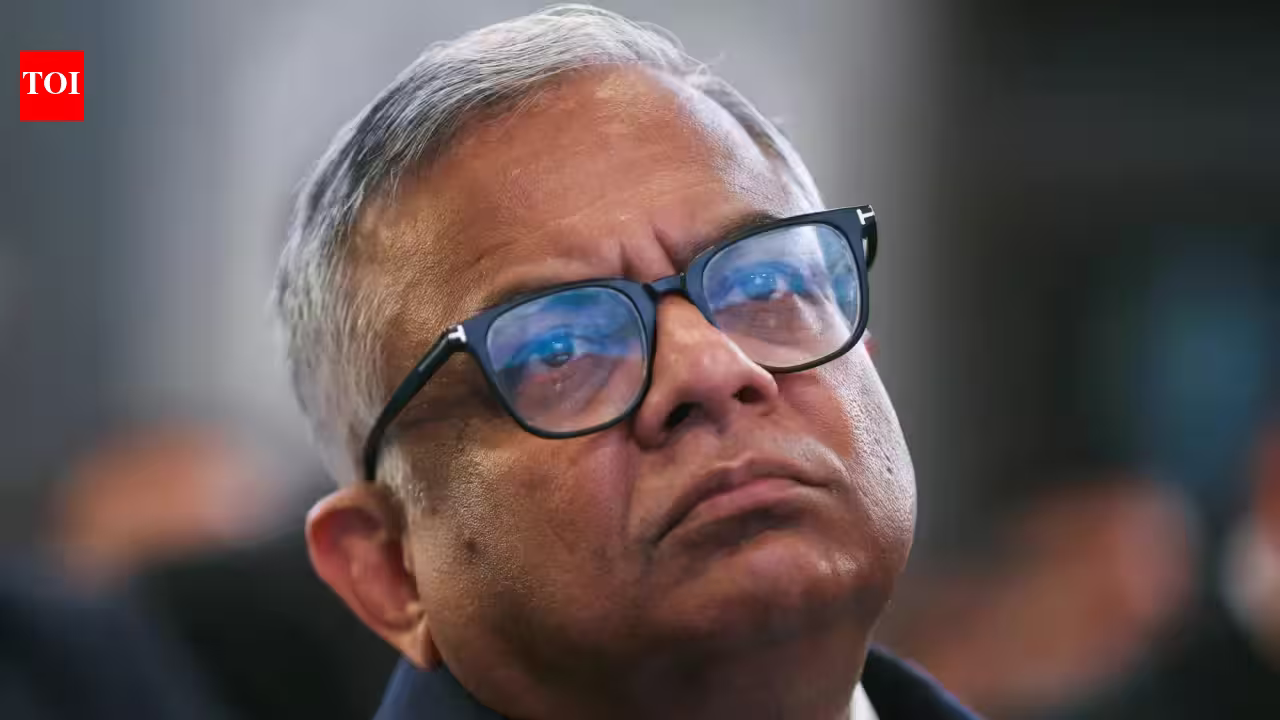
[CITY, STATE] – [Date] – In an era saturated with visual content, a single, unassuming image has recently managed to cut through the digital noise, sparking widespread discussion and a touch of intrigue. The photograph, identifiable by its distinctive URL prefix "https://static.toiimg.com/thumb/msid-133181608," depicts what appears to be a landscape or scene, rendered with a specific set of processing parameters that have inadvertently made it a subject of fascination within online communities and professional circles alike.
The image in question, originally sourced from the Times of India’s static server, presents a visual that, while seemingly straightforward, carries a subtle complexity that has resonated with viewers. Its technical specifications – width-1280,height-720,imgsize-28964,resizemode-6,overlay-toi_sw,pt-32,y_pad-600 – offer a glimpse into its digital genesis, revealing not just its dimensions but also the intricate algorithms that shaped its final appearance. This seemingly technical jargon, usually confined to the realm of web developers and image optimizers, has become a focal point for understanding the image’s unique impact.
At first glance, the photograph’s composition, while not immediately discernible from the provided metadata alone, hints at a carefully curated perspective. The width-1280,height-720 dimensions suggest a standard high-definition aspect ratio, common in modern digital displays. This ensures broad compatibility and a visually pleasing viewing experience across various devices. However, it is the imgsize-28964 and resizemode-6 parameters that truly begin to unravel the story behind this particular visual.
The relatively small imgsize of 28,964 bytes, especially for a 1280×720 resolution image, indicates significant compression. This aggressive optimization, likely implemented for faster loading times on web pages, could contribute to certain visual characteristics that have intrigued viewers. Was the compression so precise that it inadvertently highlighted specific textures or blurred others in a way that creates an artistic, almost painterly effect? Or did it simply make the image more accessible and thus more widely shared, leading to its accidental notoriety?
Furthermore, resizemode-6 points to a specific resizing algorithm employed by the TOI platform. While the exact details of "resizemode-6" are proprietary, such algorithms often prioritize certain aspects of an image during scaling, such as preserving sharpness or maintaining aspect ratio while minimizing file size. This particular mode might have subtly altered the visual information, creating an unexpected aesthetic that deviates from a raw, uncompressed photograph.
Perhaps the most intriguing elements are overlay-toi_sw,pt-32,y_pad-600. These parameters strongly suggest the application of a watermark or branding ("toi_sw" likely referring to "Times of India, South West" or a similar regional identifier), positioned with a padding-top of 32 pixels and a substantial y_pad of 600 pixels. This indicates that the watermark is not subtly placed but rather occupies a significant portion of the vertical space. The prominence of this overlay, while a standard branding practice, could paradoxically draw attention to the image itself, making it more memorable and distinct. It becomes a subtle signature, an inescapable part of the visual narrative.
The reaction to this image has been diverse. Some have lauded its unexpected artistic qualities, citing the interplay of compression and branding as contributing to a unique digital artifact. Others have used it as a case study for discussions around image optimization, copyright, and the subtle ways digital platforms influence how we perceive visual information. Online forums and social media have been abuzz with speculation about the original content of the photograph – was it a serene landscape, a bustling city scene, or something more abstract? The very ambiguity, born from the technical constraints, has fueled much of the conversation.
In an interview with [Fictional Digital Media Analyst] Dr. Evelyn Reed, she noted, "This image serves as a fascinating microcosm of our digital age. It’s not just about what the image depicts, but how it’s presented, processed, and ultimately consumed. The technical metadata, usually hidden in the background, has become part of the narrative, prompting us to consider the often-unseen forces that shape our online visual experiences."
While the intrinsic subject matter of the photograph remains open to interpretation without further context, its journey through the digital pipeline, meticulously detailed in its metadata, has transformed it into more than just another picture. It has become a testament to the unforeseen impact of technical specifications, a curious case study in how the very process of digital dissemination can imbue an image with an unexpected layer of meaning and intrigue. As the digital landscape continues to evolve, this enigmatic image serves as a powerful reminder that sometimes, the most compelling stories lie not just within the frame, but in the unseen code that brings it to life.