






Leadership Upheaval at Tata Sons: Chandrasekaran’s Exit Signals Deepening Power Struggle
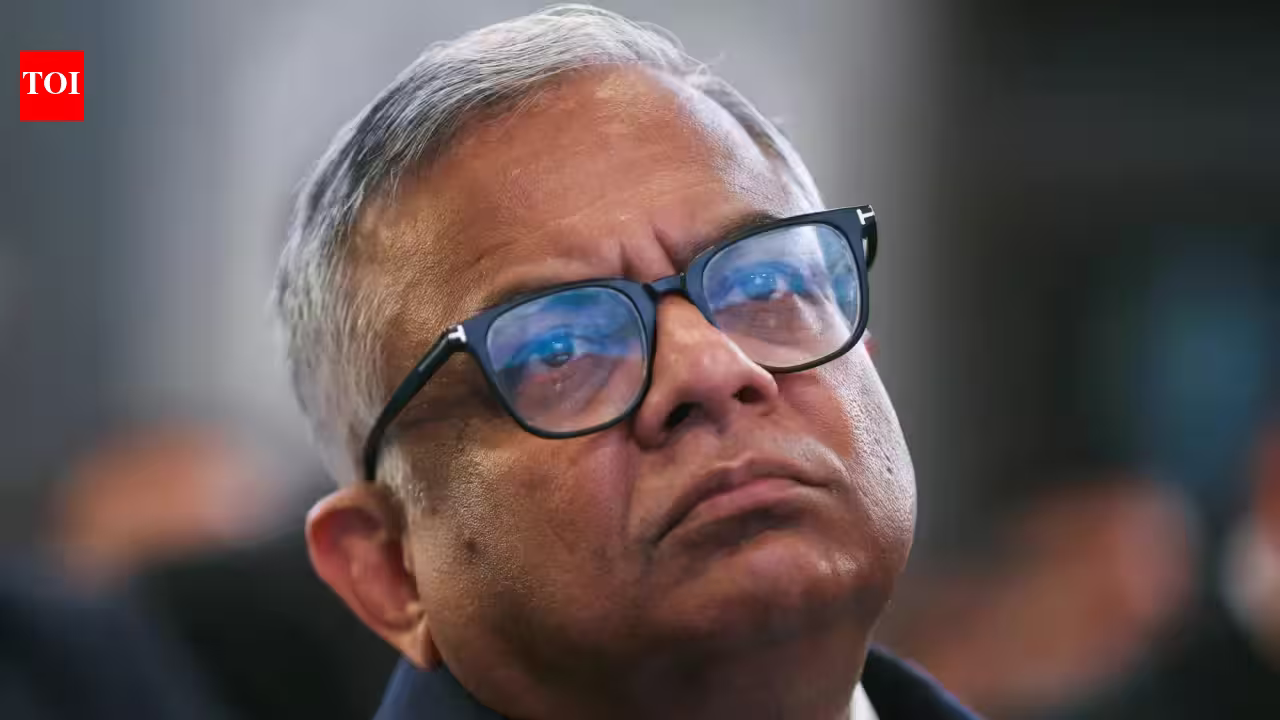
Mumbai, India – The Indian business landscape is abuzz with the news of N. Chandrasekaran’s decision not to seek re-appointment as Chairman of Tata Sons, marking a pivotal moment for India’s largest conglomerate. His announced departure, effective February 20, 2027, has cast a spotlight on an intensifying power struggle within the Tata Group, particularly concerning the influence wielded by Tata Trusts. This development necessitates the board’s immediate attention to select a new chairman amidst unresolved internal differences.
The succession process for the chairmanship of Tata Sons, the nucleus of the Tata Group’s ownership, will be under intense scrutiny. Tata Trusts, holding a majority stake, maintains significant sway over the conglomerate’s long-term strategic direction, making the selection a critical juncture.
This latest leadership shift follows a series of high-profile exits of senior leaders closely associated with the late former chairman, Ratan Tata, who passed away in 2024. These departures have undeniably reshaped the leadership dynamics of the conglomerate, as detailed in a PTI report. Chandrasekaran’s decision follows the gradual exits of Ratan Tata’s long-time confidants, Vijay Singh and Mehli Mistry, further indicating a broader realignment within the group.
Heart of the Dispute: Tata Trusts at the Helm
At the core of the ongoing leadership tussle lies Tata Trusts, which commands approximately 66 percent of Tata Sons, effectively holding decisive control over the salt-to-semiconductor conglomerate’s holding company. The current Tata Sons board consists of Chairman N. Chandrasekaran, Tata Trusts Chairman Noel N. Tata, Tata veteran and Tata Trusts Vice-Chairman Venu Srinivasan, Group Chief Financial Officer Saurabh Agrawal, and independent directors Harish Manwani and Anita Marangoly George. Noel Tata, Ratan Tata’s half-brother, assumed the chairmanship of Tata Trusts in 2024.
The composition of the Tata Sons board has seen considerable changes amidst the broader governance disputes involving Tata Trusts. Notably, Vijay Singh, a former defence secretary and Tata Trusts nominee, stepped down in 2025, alongside the retirement of independent directors Ajay Piramal and Ralf Speth.
Tata Sons: Understanding its Ownership Structure
Tata Sons, the ultimate holding company of the Tata Group, is predominantly owned by a consortium of philanthropic trusts. The Sir Dorabji Tata Trust holds the largest individual stake at 27.98 percent, followed by the Sir Ratan Tata Trust with 23.56 percent. Combined, these two trusts hold a significant 51.54 percent of Tata Sons. Additional trust-held stakes are distributed among entities like the JRD Tata Trust (4.01 percent), Tata Education Trust (3.73 percent), and others.
Since October 2024, Noel N. Tata has chaired Tata Trusts while also serving as a non-executive director on the Tata Sons board. The Sir Dorabji Tata Trust recently appointed Neville Tata, Noel Tata’s son, and former Titan chief Bhaskar Bhat as trustees for three-year terms. Venu Srinivasan also serves as a trustee and vice-chairman of SDTT.
The Sir Ratan Tata Trust (SRTT) has become a focal point of recent governance disputes. Vijay Singh, formerly its vice-chairman and a trustee of Tata Trusts, has stepped down from SRTT, though he will continue as a trustee of SDTT. Venu Srinivasan has also played a crucial role as an SRTT trustee, while Mehli Mistry, a long-time associate of Ratan Tata, has exited the trusts.
Deepening Divisions and Governance Disputes
The governance dispute within Tata Trusts intensified throughout 2025, leading to a split among trustees. One faction coalesced around Noel Tata, while another was led by Mehli Mistry, including trustees Pramit Jhaveri, Jehangir H.C. Jehangir, and Darius Khambata. Mistry’s association with the Shapoorji Pallonji family, which holds an 18.37 percent stake in Tata Sons, added another layer to the conflict.
Initially, Noel Tata found support from Venu Srinivasan and Vijay Singh as disagreements over board appointments and governance issues escalated. Vijay Singh later stepped down from the Tata Sons board following opposition from the Mistry faction. The primary point of contention revolves around the composition of the Tata Sons board and the distribution of seats within the holding company that oversees the vast 156-year-old Tata Group. The escalating disagreement even drew the attention of the Indian government, with key figures meeting Union Home Minister Amit Shah and Finance Minister Nirmala Sitharaman last October.
The Listing Dilemma and Internal Friction
A significant point of contention has been the future of Tata Sons, specifically the prospect of its public listing. Noel Tata has reportedly opposed a public listing, while Venu Srinivasan and Vijay Singh have openly supported the idea. Chandrasekaran reportedly did not agree to Noel Tata’s request to definitively rule out taking Tata Sons public, further straining relations.
Another source of friction was Noel Tata’s proposal to appoint his son, Neville Tata, as a trustee of the Sir Ratan Tata Trust, a move reportedly opposed by Srinivasan and Singh. These internal divisions have impacted the trust’s operations, with Sir Ratan Tata Trust meetings being canceled twice this year.
Mehli Mistry’s Retreat and Shifting Alignments
Mehli Mistry, a vocal proponent of governance concerns across various Tata Trust bodies, has gradually distanced himself from entities within the Tata Group. His notable decision to step down from the board of RNT Associates Pvt Ltd, Ratan Tata’s personal investment company, marked a significant development. Following Mistry’s exit, the differences between Noel Tata and Venu Srinivasan and Vijay Singh became more pronounced, with the future governance and ownership structure of Tata Sons becoming the central point of disagreement.
In April, Venu Srinivasan resigned as a trustee of the Bai Hirabai Jamsetji Tata Navsari Charitable Institution, citing other business commitments. Most recently, Vijay Singh resigned as a trustee of the Sir Ratan Tata Trust just a day before Chandrasekaran’s announcement, choosing not to seek an extension of his tenure which concludes on August 14. He will, however, continue as a trustee of the Sir Dorabji Tata Trust.
Why Chandrasekaran Stepped Down
According to Chandrasekaran, both the Sir Dorabji Tata Trust and the Sir Ratan Tata Trust had unanimously supported a five-year extension of his tenure. This recommendation was subsequently endorsed by the Tata Sons Nomination and Remuneration Committee and approved by the board. However, the proposal did not pass during the February 24 board meeting due to one board member withholding support.
"In the absence of unanimous support, I chose to defer the decision," Chandrasekaran stated. With the matter unresolved for six months, he emphasized the importance of providing certainty regarding the group’s leadership for all stakeholders, especially as Tata Sons is executing several strategic projects. Therefore, he informed the board that he would not seek reappointment after his current term ends on February 20, 2027, urging directors to identify his successor promptly to ensure a smooth transition.
The coming months will be critical for the Tata Group as it navigates this complex leadership transition and addresses the underlying governance challenges that have come to the fore. The world will be watching to see how one of India’s most respected conglomerates charts its future course.