








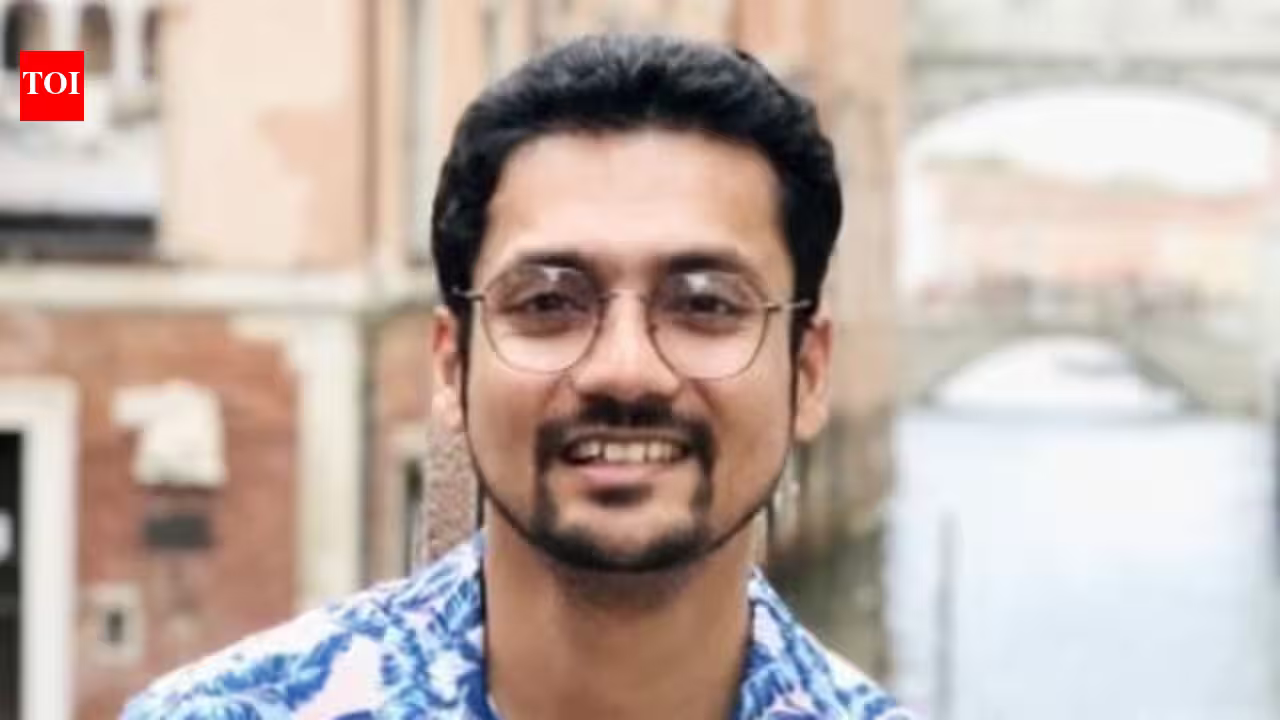
The burgeoning field of artificial intelligence is consistently birthing a new cohort of global technology luminaries, with one Indian-origin researcher recently captivating considerable attention. Last year, Trapit Bansal became a prominent fixture in news cycles following widespread reports indicating that Meta had extended an astonishing compensation package, reputedly valued at nearly Rs 800 crore, to secure his expertise for its newly established AI division. While the sheer magnitude of this figure undeniably seized headlines, a deeper examination of his distinguished educational and professional trajectory unveils a narrative far richer and more instructive than mere monetary value. Indeed, beneath the initial sensationalism lies a testament to over a decade dedicated to advanced higher education, rigorous research, invaluable internships, and highly specialized work within the intricate domain of artificial intelligence.
Bansal’s profound journey into the world of AI commenced at the Indian Institute of Technology Kanpur, where he pursued an integrated Master of Science in Mathematics and Statistics from 2007 to 2012. Diverging from the more conventional path often taken by technology professionals who typically begin with a traditional computer science degree, Bansal deliberately cultivated a robust foundational understanding in mathematics and statistics. These two disciplines are not merely ancillary but form the very bedrock of contemporary artificial intelligence, providing the theoretical underpinnings for complex algorithms and data analysis. Following his graduation from IIT Kanpur, his intellectual curiosity led him to the Machine Learning Lab at the Indian Institute of Science (IISc) in Bengaluru. There, he dedicated over two years as a research assistant, immersing himself in early research that predominantly focused on Bayesian modelling and intricate inference methods. This formative period afforded him invaluable exposure to sophisticated machine learning techniques long before the widespread public recognition and explosive growth of the current AI boom.
His academic pursuit then transitioned from India to the United States, as Bansal relocated to the University of Massachusetts Amherst to further his studies in computer science. At this esteemed institution, he successfully completed both his master’s degree and his Ph.D., dedicating more than six years as a graduate research assistant. His doctoral research delved deeply into natural language processing, the transformative power of deep learning, and the innovative methodologies of meta-learning – all fields that have subsequently become absolutely central to the ongoing AI revolution. His extensive academic journey underscores a crucial lesson for aspiring students: true expertise in artificial intelligence is typically forged through years of dedicated, specialized study and persistent inquiry, rather than through reliance on short-term courses alone, which often merely scratch the surface of these complex subjects.
Even prior to his eventual pivotal role at OpenAI, Bansal had already meticulously curated an exceptionally impressive research portfolio. His professional development was significantly augmented by completing research internships at several of the world’s most influential technology behemoths. These included significant stints at Facebook, Google, Microsoft, and OpenAI itself. At Facebook, he was deeply involved in applying deep learning methodologies to the intricacies of natural language processing. His research at Google concentrated on the interplay between deep learning and the construction of knowledge graphs. Microsoft saw him exploring advanced meta-learning techniques specifically tailored for natural language processing applications. Furthermore, his time as an OpenAI research intern allowed him to contribute meaningfully to cutting-edge projects, particularly those involving competitive self-play within the realm of multi-agent reinforcement learning. For many students contemplating their career paths, these diverse and high-impact internships vividly illustrate another vital lesson: hands-on research experience frequently unlocks unparalleled opportunities and provides practical insights that traditional classroom learning, while foundational, simply cannot deliver on its own.
In 2022, Bansal officially joined OpenAI as a member of its technical staff, marking a significant milestone in his career. Publicly available information indicates that he played a crucial role in developing reinforcement learning and reasoning-focused AI models. In this capacity, he collaborated closely with some of the most influential and pioneering researchers in the field, notably including OpenAI co-founder Ilya Sutskever. He has been widely credited as one of the key contributors to the development of OpenAI’s advanced reasoning models, which include the foundational technology behind the o1 model family. By 2025, his exceptional talent and deep expertise led him to Meta, where he joined as a founding researcher for its newly established AI research division. In his current role, he is at the forefront of innovation, actively working on developing the next generation of advanced AI systems that promise to reshape technological landscapes.
Trapit Bansal’s extraordinary story serves as a potent reminder that beneath every seemingly unbelievable salary package or meteoric rise in the tech world lies a foundation built upon years of relentless learning, meticulous research, audacious experimentation, and unwavering persistence. For students who may be enticed by the allure of quick success or immediate gratification, Bansal’s journey offers a profoundly compelling message: sometimes, the most profoundly valuable investment one can make is not in securing a lucrative job offer at the earliest opportunity, but rather in the dedicated, patient, and methodical development of an expertise so profound and indispensable that the world ultimately finds it impossible to ignore. His trajectory epitomizes the profound impact that sustained intellectual curiosity and diligent application can have in shaping the future of technology, making him a true pioneer in the rapidly evolving domain of AI research.