







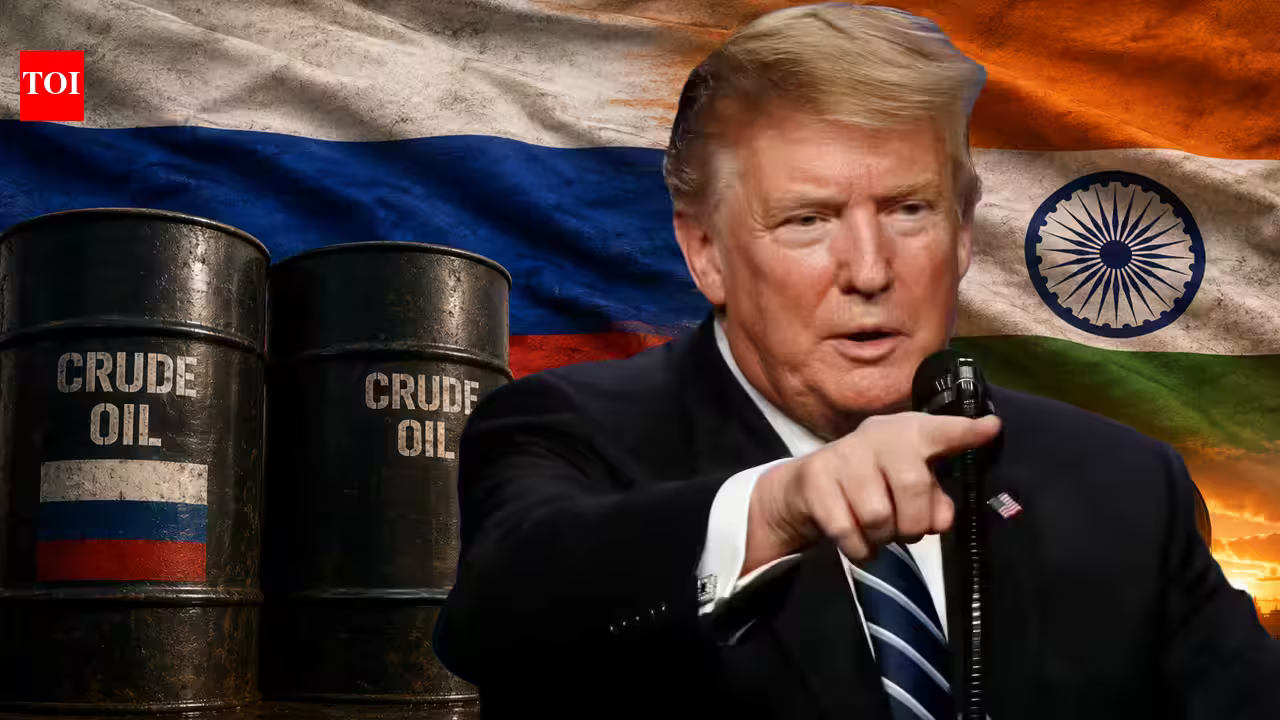
India is grappling with the significant implications of a proposed United States bill that could impose substantial tariffs on nations procuring Russian oil. Should the Donald Trump administration successfully push through this new Russian sanctions legislation, it would grant the US President the authority to levy duties of up to 100% on countries importing large volumes of Russian crude oil and natural gas. An Indian government source, speaking to Reuters, acknowledged the concern surrounding this potential sanctions bill but also indicated that ongoing discussions have provided a degree of reassurance.
The specific legislation in question is the Lindsey O. Graham Sanctioning Russia and Iran Act of 2026. This bill aims to empower the US President with discretionary power to implement these tariffs, with the final decision on their imposition resting solely with the Oval Office. Based on current global import trends, several nations are anticipated to be most affected by such measures, including China, India, Slovakia, Hungary, and Azerbaijan, as they are among the largest purchasers of Russian energy.
Amidst these developments, White House Trade Adviser Peter Navarro conveyed on Tuesday that US President Donald Trump and Indian Prime Minister Narendra Modi share a “very good working relationship.” He expressed optimism that any disagreements regarding Washington’s proposed tariffs on Russian oil imports would be resolved through direct engagement between the two leaders. Navarro’s comments followed the US Senate’s approval of the bipartisan bill, which is designed to intensify economic pressure on Moscow by targeting nations whose energy purchases are perceived as financing Russia’s military actions in Ukraine.
When questioned by ANI, Navarro emphasized that the resolution of this matter would be handled by Trump and Modi themselves, rather than lower-level officials. He reiterated his critical stance on India’s increased imports of Russian crude, arguing that this surge occurred primarily after Russia’s invasion of Ukraine in 2022. India has, indeed, emerged as one of the largest buyers of Russian crude since the conflict began, with access to discounted oil enabling Indian refiners to reduce input costs and maintain consistent supplies during a turbulent period in global energy markets.
Navarro’s recent statements mark a notable shift towards a more conciliatory tone regarding India-US relations, particularly after months of sharp criticism. Earlier in 2026, he had repeatedly criticized India’s reliance on Russian oil and had even referred to the country as the “Maharaja of tariffs.” This latest commentary suggests a softening of rhetoric and a preference for high-level diplomatic solutions to the complex issue of energy trade amidst geopolitical tensions.