


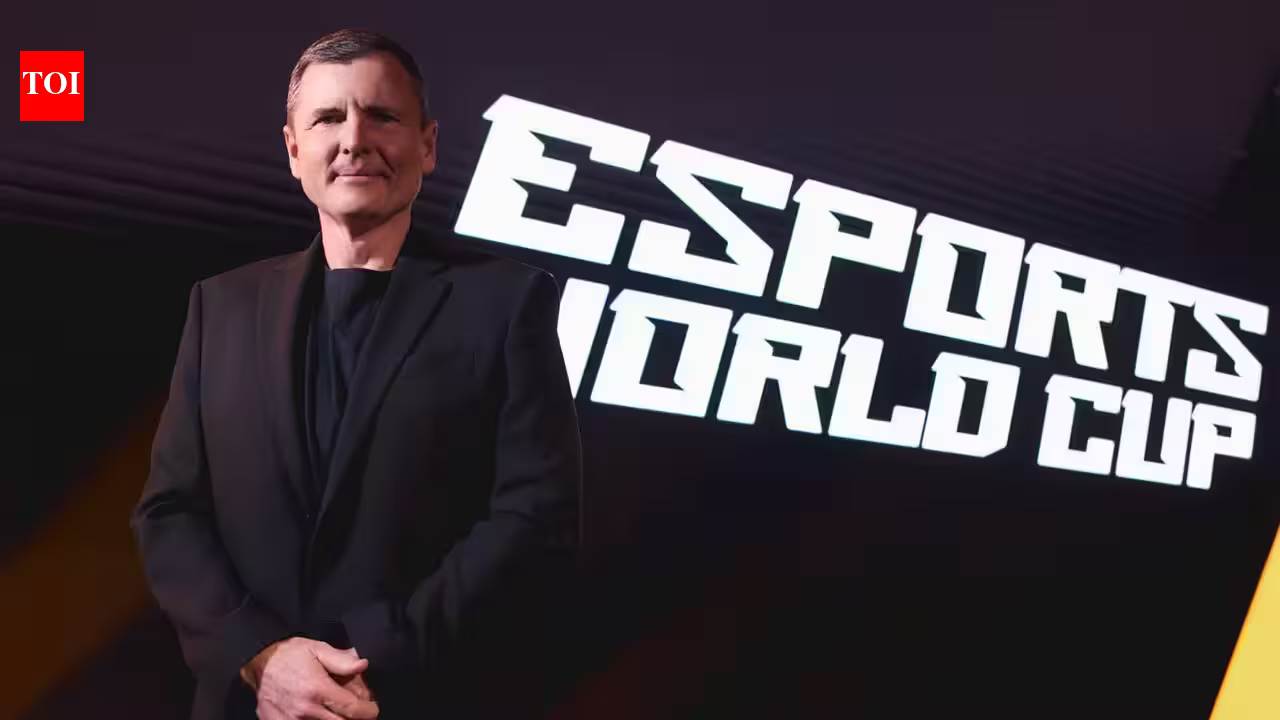
The spectacle of the Esports World Cup 2026 at Paris Expo Porte de Versailles presents a striking image: a chessboard prominently displayed on the large screens, enveloped by the vibrant production, palpable energy, and distinct visual language that characterize competitive gaming events. For Mike McCabe, COO and Deputy CEO of the Esports Foundation, this isn’t an anomaly, but rather a revealing insight into the evolving trajectory of esports.
Chess made its debut at the Esports World Cup in 2025 and has returned to Paris for this year’s iteration, with the 2026 tournament boasting a substantial $1.5 million prize pool. The formidable roster of participants includes acclaimed players such as Magnus Carlsen, Alireza Firouzja, and India’s four Grandmasters: Arjun Erigaisi (representing Gen.G Esports), Nihal Sarin, Aravindh Chithambaram, and Pranesh M (all from S8UL Esports).
Undeniably, chess stands out as a unique inclusion within the EWC program. Its competitive history spans centuries, its rules did not originate from a video game publisher, and its luminaries did not emerge from within the confines of the esports industry. Yet, despite these distinctions, McCabe firmly believes chess harmonizes with the other titles showcased in Paris. He articulates, “For us, what qualifies as an esport really comes down to the community and the ecosystem.” He elaborates that any digital game boasting a robust competitive ecosystem, complete with organized events, rankings, and a significant audience keen on watching and spectating, can comfortably reside within the esports domain.
McCabe clarifies that his perspective doesn’t imply chess has transformed into a video game. Instead, it signifies a shift in how the EWC perceives and integrates the game. The crucial questions, he asserts, are not whether chess resembles Rocket League or League of Legends, but whether it is played competitively, supported by an organized circuit, features meaningful rankings and rivalries, and, most importantly, captivates an audience. This perspective positions chess in a fascinating light within the Paris event. It is not required to shed its rich heritage to coexist with newer games; it can bring its centuries of tradition, its iconic board, and its celebrated Grandmasters, all while being an integral part of this modern, dynamic form of competitive sport. This inclusive approach might be precisely what makes chess more compelling to the EWC than merely being another item on the schedule. It pushes the boundaries of the esports definition without compromising the inherent nature of the game itself.
McCabe highlights the singular nature of chess: “What’s unique about chess versus all the other esports, the other 23 games that we include in the tournament, is that it has a heritage that goes way beyond any of us and any of the world of traditional digital interactive entertainment.” He emphasizes its generational appeal, observing parents introducing their children to the game, creating a bridge between generations that other esports might not readily offer. This intergenerational connection, he believes, is a significant factor in chess’s successful integration into the EWC. McCabe notes that the chess audience at the tournament exhibits different engagement patterns compared to other games, attracting new interest and tickets, suggesting a broader appeal beyond traditional esports enthusiasts.
The EWC strategically leverages chess to expand its reach beyond its existing audience. In return, chess gains a unique platform to showcase its top players in a distinctly modern setting. McCabe envisions a future where the definition of games within the EWC remains fluid, constantly evolving based on ecosystem, audience engagement, viewership, and overall spectacle. This year’s EWC is built for massive scale, featuring 24 games and an unprecedented $75 million prize pool.
The current Paris location for the EWC 2026 was not the initial plan. Riyadh was slated to host the event again, but security concerns in the region necessitated a last-minute relocation. The Foundation deftly repositioned Paris as the inaugural international chapter of the EWC, a move McCabe views as validation of the event’s adaptability and capability to operate beyond its home market. He anticipates continued evolution, pondering what new games, formats, and competitions might emerge in the next five years. McCabe believes the inherent human passion for competition is timeless, and unlike traditional sports, esports is not constrained by fixed traditions, allowing for continuous exploration of new competitive landscapes. Chess, then, serves as a contemporary example of this expansive philosophy, emphasizing competitive spirit and audience engagement over rigid definitions of what constitutes an esport.
McCabe harbors a bold ambition for the EWC, particularly in India. When asked about his hopes for the next five years, he expresses a desire to see esports players mobbed on the streets of Chennai, much like IPL cricketers. This aspiration highlights his vision for esports players to attain a similar level of recognition and fandom enjoyed by established sports personalities. The IPL’s success in cultivating recognizable sporting figures through franchises, rivalries, extensive broadcasts, and dedicated fan bases serves as a powerful model. This ambition has also influenced the EWC’s expansion beyond individual games to include clubs, teams, and a broader organizational competition.
The successful, rapid relocation to Paris from Riyadh further reinforces McCabe’s belief in the EWC’s model. He acknowledges that esports events have always been mobile, but the speed and efficiency with which this global event was moved, designed, built, and operated in a completely different country was extraordinary. This “miracle,” he asserts, underscores the effectiveness of partnerships between governments, publishers, clubs, and the Foundation itself.
Thus, Paris addresses two critical aspects for McCabe: chess demonstrates the EWC’s capacity to transcend conventional esports boundaries, while the relocation to Paris proves its ability to operate effectively beyond a single geographic location. The sustainability of both these ideas remains a key challenge. McCabe recognizes that the EWC has grown aggressively, with significant investment enabling it to achieve scale that traditional sports properties took decades to build. The focus now shifts to commercial viability, as evidenced by the increasing involvement of major brands like Allianz, Hilton Hotels, and Sony, alongside traditional gaming and technology sponsors. The next crucial step, he notes, is securing media rights, which will provide vital funding for clubs, partners, publishers, and ensure long-term sustainability.
While much remains to be proven, chess has already provided McCabe with a unique asset that more conventional games cannot: a connection to an audience that might not typically identify as esports fans. The sight of parents introducing their children to a familiar game, Grandmasters representing esports organizations, traditional chess enthusiasts engaging with a gaming-centric environment, and a new generation discovering chess through an unconventional tournament, all represent the beginning of a broader movement for McCabe. The EWC will return to Riyadh next year, may relocate again, and its roster of games and defining criteria will likely continue to evolve. Ultimately, McCabe’s vision for the next five years isn’t about statistics but about expanding reach, connecting with more people, and hosting the event in increasingly larger venues.