








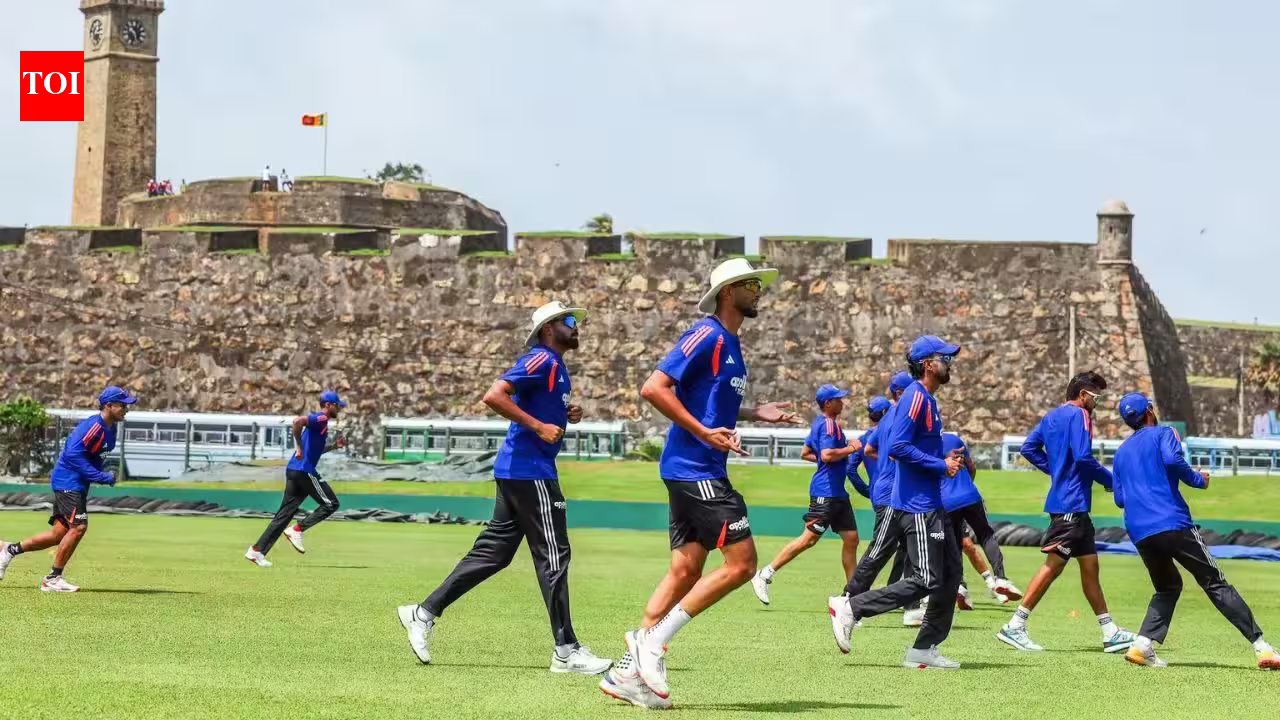
The serene coastal city of Galle, Sri Lanka, finds itself at the epicenter of an unusual cricketing mystery as the Indian and Sri Lankan teams prepare for their highly anticipated Test series opener. Contrary to the common expectation of a parched, turn-friendly pitch that typically characterizes Galle International Stadium, the playing surface has generated considerable intrigue just days before the match. Reports from both camps suggest that this is not the usual dry, crumbling wicket, leading to speculation that it may not offer the sharp turn anticipated at the outset of the series.
The pitch’s current condition, characterized by generous watering on Thursday, indicates a deliberate effort to prevent it from cracking open on the very first day. Historically, Galle has been a batsman’s paradise for the initial couple of days of a Test match, with spin gradually becoming a more potent weapon as the game progresses. Those who have closely inspected the surface describe it as a “good wicket.” This assessment was echoed by India’s bowling coach, Morne Morkel, who, during a media interaction, emphasized that “something will start to happen” as the match unfolds. Morkel acknowledged the good appearance of the surface, expressing mild surprise if it were to behave drastically differently from its historical pattern. He stressed the importance of discipline, whether batting first and aiming for a substantial total or bowling first and maintaining accuracy. His philosophy is clear: “If you bat first, make sure you go big. And if you bowl first, get the ball in the right area.”
This unexpected twist in the pitch’s character presents a significant tactical dilemma for the Indian team: should they opt for three spinners or three fast bowlers? Currently, the former appears to be the more reliable choice, primarily because it offers crucial batting depth, a factor that head coach Gautam Gambhir is consistently reluctant to compromise. Ravindra Jadeja is a certainty, slotting in as the premier all-rounder. Mohammed Siraj is set to lead the fast-bowling contingent. Kuldeep Yadav is considered a guaranteed selection for this series, leaving two pivotal spots to be filled. The expectation is that Prasidh Krishna will narrowly secure the second pace bowler’s spot over Gurnoor Brar. Furthermore, Manav Suthar, who impressed with a notable performance in a one-off Test against Afghanistan, is likely to be chosen for his ability to provide batting support at number eight and add variety to the spin attack.
Should this configuration come to fruition, it would mark a rare instance where the visiting side fields an all left-arm spin attack. However, this prospect does not seem to concern the Indian camp. Morkel clarified that despite all being left-arm spinners, each possesses distinct qualities, making it “not a massive concern” for the team. He highlighted Kuldeep’s attacking prowess and Jadeja’s wealth of experience and class. Morkel believes their individual differences in approach, despite their shared left-arm orthodox style, will be an asset. He concluded by stating, “In terms of skill, they’ve got the skill there to get the 20 wickets first.”
The last Test match played at this venue, between Sri Lanka and Bangladesh in June 2025, saw two totals exceeding 450 runs, four centuries, and four half-centuries, indicating its batter-friendly nature. Notably, Sri Lanka’s leading spinner, Prabath Jayasuriya, went wicketless in the first innings despite bowling 48 overs and managed only one wicket in the second. Even in the two India A fixtures held at the same venue last month, runs flowed freely, and fast bowlers found success. Gurnoor Brar, in particular, showcased his talent with an impressive ten-wicket haul in the second game. This young talent is on the cusp of earning his Test cap, with the team management highly impressed by his fiery spells in the nets. They believe he possesses the potential to serve Indian cricket for a significant period, provided he maintains his fitness. Brar has left no stone unturned since his arrival with the team in early August, bowling with intensity in Colombo, impressing during the warm-up game at the Nondescripts Cricket Club (NCC) Ground, and exhibiting immense effort in the first training session in Galle. However, a slightly longer wait for his Test debut is anticipated.
While much of the pre-match discussion naturally revolves around the spin factor, Galle unequivocally presents a golden opportunity for batsmen from both teams to make a substantial impact, particularly on the first two days. As the match draws closer, both sides will be hoping for a favorable toss. The historical data from Galle reveals a significant disparity between first and fourth innings totals, underscoring the critical advantage of batting first and setting a formidable target. The prevailing mantra for success at this venue, before the spinners truly come into their own against the magnificent backdrop of the Galle Fort, will be to win the toss, bat first, and amass a monumental score.