







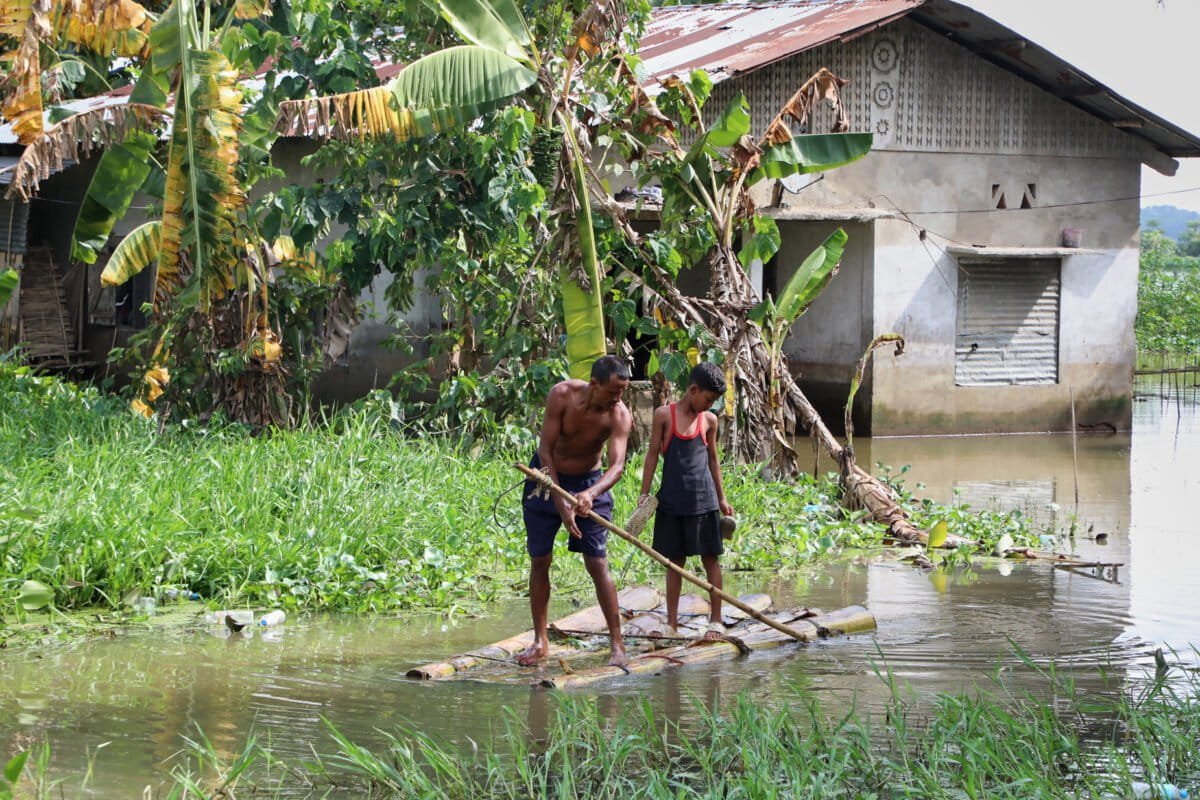
Recent catastrophic flooding in northeastern India, which tragically claimed at least 99 lives and impacted over half a million people between June and August 2026, was primarily a consequence of human-induced factors rather than climate change, according to new research. The comprehensive analysis, conducted by the World Weather Attribution (WWA) network, a global consortium of researchers dedicated to scrutinizing the role of climate change in extreme weather events, highlights rapid urbanization, widespread deforestation, and the destruction of vital wetlands as the main culprits. The study also points to significant structural failures in existing flood management systems.
The Brahmaputra River and its numerous tributaries regularly overflow their banks during the monsoon season, inundating vast swathes of India’s Assam state. This recurring phenomenon prompted researchers to concentrate their efforts on upper Assam, a region that consistently experiences severe socio-economic and environmental damage from these annual deluges. As research co-author Arpita Mondal, from the Indian Institute of Technology Bombay (IIT Bombay), explained during a press briefing, the focus was on understanding the collective devastation caused by these catastrophic floods year after year.
To determine the drivers of the 2026 floods, scientists meticulously analyzed historical weather records and sophisticated climate models. Their investigation specifically examined rainfall patterns over a three-day period (June 26-29) and a more extended 30-day period (June 20 to July 19). Surprisingly, the findings revealed that the heavy rainfall experienced in 2026 was not an anomalous event; such intense precipitation recurs every one to two years. Crucially, the research team found no discernible connection between the increased rainfall and human-induced global temperature rises. Mariam Zachariah of Imperial College London, another co-author, emphasized at the briefing that "when we combine the observational results with the climate models, we again found no detectable climate change signal in either type of events."
Instead, the study definitively concluded that the principal drivers of this year’s devastating floods were extensive land-use changes, accelerated sedimentation, and inherent structural vulnerabilities within the region. The Brahmaputra River naturally transports substantial amounts of sediment during each monsoon, which gradually elevates its riverbed and diminishes its channel capacity, leading to water overflowing its banks. However, the 2026 flooding was severely exacerbated by uncontrolled and unplanned urbanization and deforestation, which have severely degraded natural wetlands and disrupted critical drainage systems.
Sneha Ganguly, a study co-author from the Red Cross Red Crescent Climate Centre, further elaborated during the briefing that a review of 35 previous studies provided compelling evidence. This evidence suggests that "unplanned urbanization, deforestation, poor drainage, inadequate structural flood management measures, and other anthropogenic changes now outweigh natural rainfall variability in explaining flood frequency."
The report also delves into the historical roots of Assam’s vulnerability to flooding. Colonial land appropriation for extensive tea plantations historically displaced indigenous communities, forcing them onto marginal, highly flood-prone riverbanks and sandbars, known locally as char areas. This historical context has created systemic patterns of exposure that regrettably persist to this day.
While Assam has invested significantly in the construction of concrete embankments, the report issues a stark warning: an over-reliance on rigid infrastructure can paradoxically worsen flooding by trapping silt and significantly increasing the risk of catastrophic breaches. Therefore, future adaptation strategies must shift their focus. As Ganguly advocated, "Future adaptation will therefore need to focus less on controlling rivers and maybe more on working with them to combine targeted engineering with floodplain restoration, wetland conservation, reducing development in floodplains, improved drainage, and community preparedness." This approach emphasizes a more harmonious coexistence with the natural riverine systems rather than attempting to completely subjugate them.
The detailed findings are available in the World Weather Attribution report. Further evidence regarding the influence of human factors can be found in a review of 35 studies on the role of natural and anthropogenic factors in causing floods.