




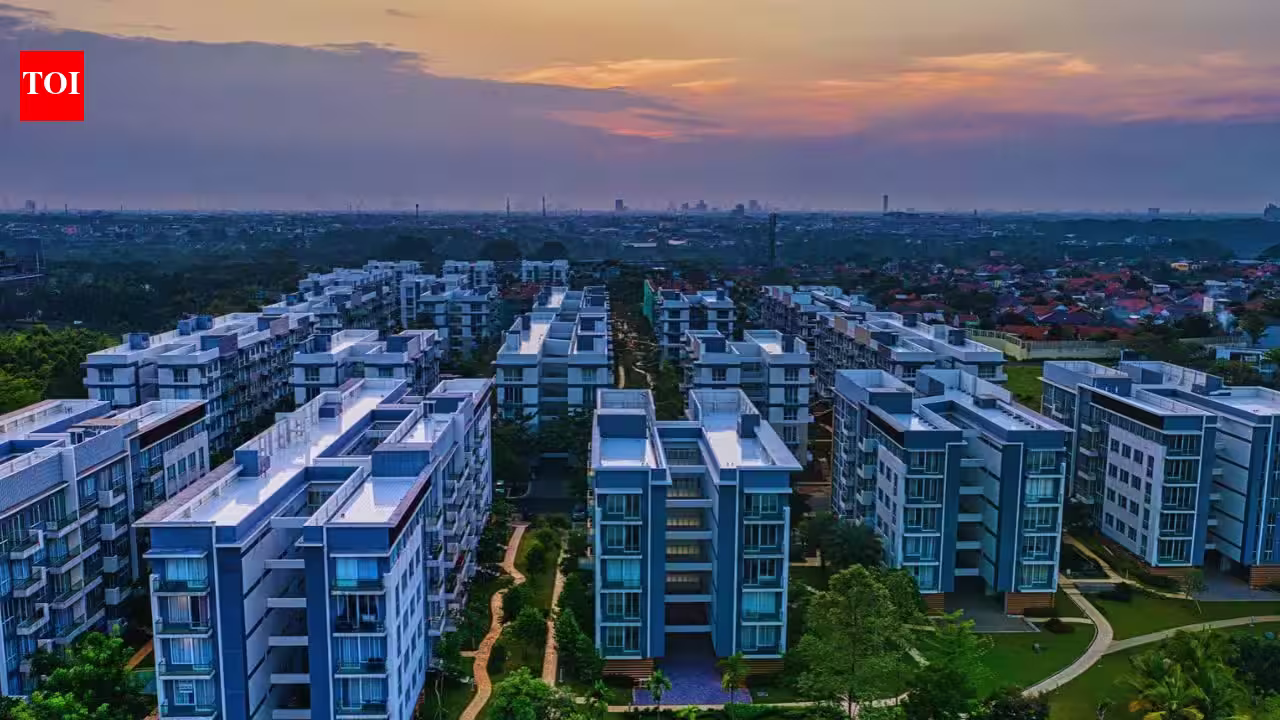
Beyond the Metros: India’s Real Estate Growth Shifts to Tier 2 Cities
India’s economic narrative is undergoing a significant spatial transformation. While the country’s massive metropolitan hubs have long served as the primary engines of capital and global business, a new geography of growth is emerging. Tier 2 and Tier 3 cities are rapidly evolving, mirroring the developmental foundations—such as infrastructure, employment, and improved quality of life—that once propelled the major metros to international prominence.
The Rapid Rise of Secondary Markets
The momentum in these smaller cities is accelerating at an unprecedented pace. Enhanced digital connectivity, superior mobility, and a more geographically distributed talent pool are allowing businesses to scale operations far more easily than in previous decades. Recent research from CII–Knight Frank underscores this potential, projecting that Tier 2 and Tier 3 markets could contribute a staggering 25 to 30 percent of India’s projected US$5.8 trillion real estate economy by 2047.
Unlike the slower, organic expansion of the past, these cities are now developing the conditions to support growth much faster. The evolution is being driven by a synergy of local manufacturing, service-sector expansion, and the rise of new-age startups, all bolstered by a growing consumer class with rising disposable incomes.
Employment as the Catalyst for Urban Growth
The heartbeat of any thriving city is its ability to generate and sustain high-quality employment. In India’s metros, the concentration of technology, financial services, and global corporations dictated urban planning and real estate demand. A similar, albeit more modern, phenomenon is unfolding in secondary cities.
Global Capability Centres (GCCs) are increasingly adopting multi-city strategies to tap into diverse talent networks. As businesses diversify their footprint, the demand for high-quality commercial infrastructure—characterized by sustainability, digital integration, and employee-centric design—is becoming a standard requirement rather than an luxury. When jobs move into these regions, they bring with them a ripple effect: a surge in demand for professional services, retail, hospitality, and residential development.
Redefining Residential Aspirations
As economic stability takes root in Tier 2 cities, the residential landscape is undergoing a qualitative shift. Homebuyers are moving beyond the basic necessity of shelter, increasingly prioritizing neighborhoods that offer connectivity, open spaces, top-tier schools, and healthcare facilities.
Exposure to global digital trends and increased domestic travel have raised the bar for what residents expect from their living environments. For real estate developers, this transition presents a distinct challenge and opportunity: they must balance the local cultural context and specific income patterns with the growing demand for modern, high-standard community living. Success in these markets requires a nuanced understanding of local lifestyles to ensure that residential projects align with the actual needs of the people they serve.
Building a Connected Future
The ultimate goal for India’s growth trajectory is the creation of a more integrated, cross-country ecosystem. By learning from the development models of primary metros, Tier 2 cities are currently in a unique position to design better, more efficient urban spaces where residential, commercial, and social infrastructures reinforce one another.
While India’s largest cities will continue to act as the nation’s primary global face, the rise of the next generation of cities is ensuring that the benefits of growth are more widely distributed. By fostering innovation, enterprise, and improved quality of life across a broader geography, India is effectively paving the way for a more resilient and connected future. The next decade will not just be about the growth of cities; it will be about the strengthening of a unified, nationwide network of economic powerhouses.
Disclaimer: This content is auto-generated for informational purposes only.
Source: Read Original News