








The United States has recently escalated its stance against Iran, threatening to impose an indefinite naval blockade on Iranian ports. This aggressive posture comes amidst stalled ceasefire negotiations between the two nations, prompting the US to consider unprecedented economic isolation measures against Tehran. However, this strategy faces growing internal scrutiny within the US, particularly concerning the sustainability of such a prolonged naval presence and the well-being of its military personnel.
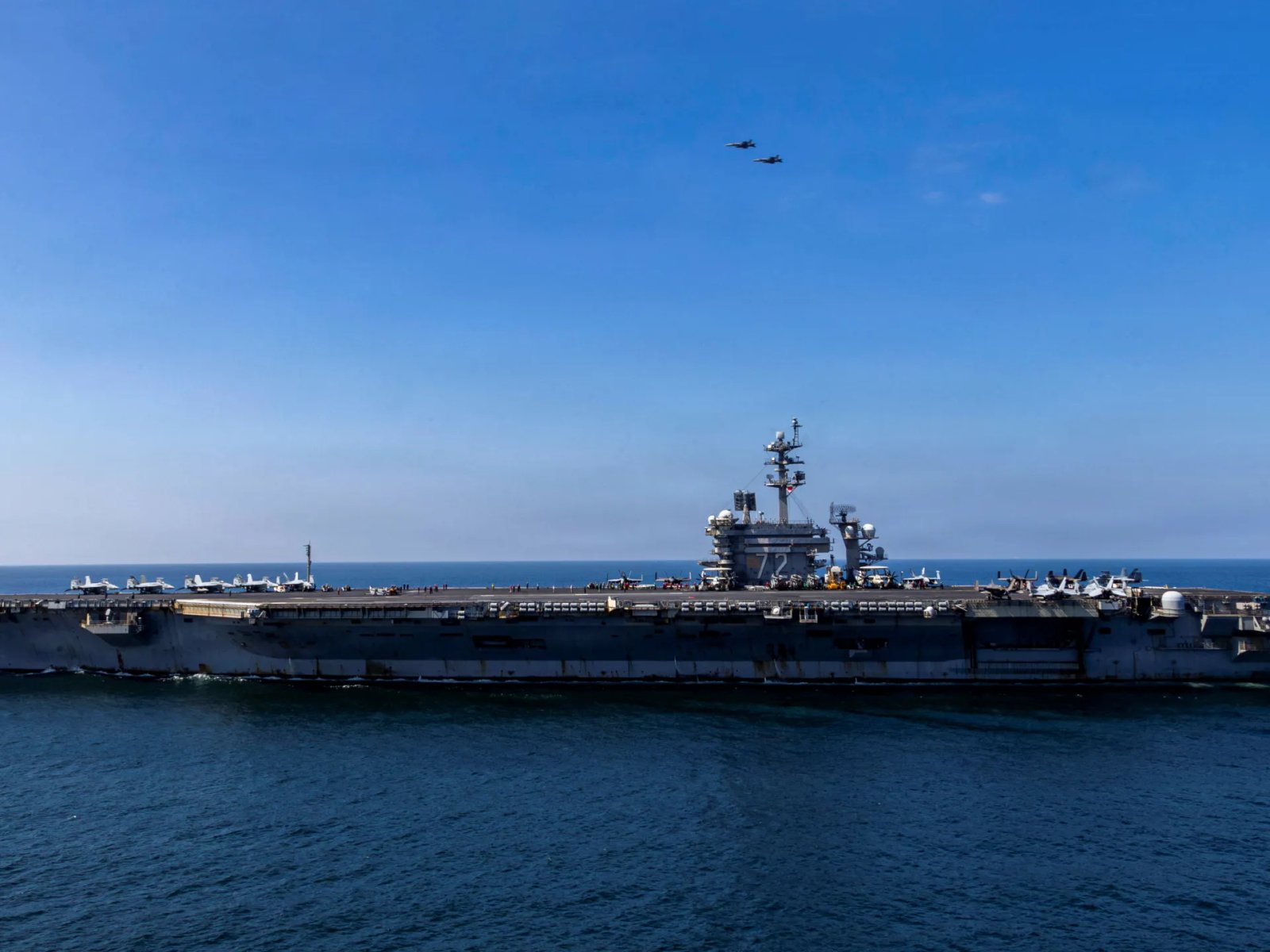
Alarming reports have emerged from the flagship aircraft carrier, the USS Abraham Lincoln, currently engaged in maritime security operations around the Strait of Hormuz. Lawmakers in the US have expressed grave concerns following accounts of severe mental health deterioration among the crew, including instances of suicidal ideation and attempted jumps overboard. Senator Richard Blumenthal highlighted that the USS Abraham Lincoln has been continuously at sea for nearly seven months, a record for a US aircraft carrier without a port call. This extended deployment, far exceeding previous operational durations, has reportedly led to shortages of basic supplies, water contamination, increased safety incidents, and even disruptions to mail services, which are crucial for crew morale. Such conditions have led to calls for the removal of US Defense Secretary Pete Hegseth, with Senate Minority Leader Chuck Schumer deeming him “completely incompetent” and directly responsible for the plight of the sailors. California lawmakers, led by Representative Mike Levin, have also demanded a comprehensive explanation from the Department of Defense regarding the operational failures that led to these issues. Despite these concerns, Hegseth has dismissed the reports as “completely misrepresented,” and US Central Command (CENTCOM) has denied claims of fatalities or widespread suicidal ideation among the crew, asserting the resilience of the Abraham Lincoln Carrier Strike Group.
The feasibility of maintaining such an extensive naval presence is a subject of intense debate. Defense Secretary Pete Hegseth has publicly stated that the US Navy can sustain an indefinite blockade by rotating ships in and out of the region, a claim seemingly supported by reports of the USS George Washington heading towards the Middle East. However, experts like Harlan Ullman, a retired senior naval officer, argue that complex vessels like nuclear-powered aircraft carriers require routine onshore maintenance that cannot be performed at sea. Prolonged deployments without proper port calls severely erode a ship’s readiness and capability, jeopardizing its advanced weapon systems and overall operational effectiveness. Ullman emphasized that naval readiness should take precedence over political posturing, urging the administration to address these issues proactively.
The US strategy aims to cripple Iran’s economy by cutting off its primary revenue source: crude oil. Since the blockade began on April 13, Iran has reportedly lost at least $6 billion in oil revenues, a move Tehran has branded as an “act of piracy.” US Treasury Secretary Scott Bessent has promised an unprecedented combination of economic isolation measures and a continued blockade of the Strait of Hormuz to prevent any goods from entering or leaving Iranian ports. President Trump has repeatedly claimed that Iran’s economy is in “very bad shape,” attributing this to the naval blockade.
However, experts suggest Iran may be in a stronger position than the US portrays. Ali Vaez of the International Crisis Group believes Iran could escalate the situation by targeting US naval assets or encouraging proxy groups to disrupt regional energy exports. Tehran’s past experience with Washington suggests a belief that the US will ultimately back down, a pattern observed in several instances where Trump threatened military action before de-escalating. Furthermore, Iran’s control over the Strait of Hormuz remains a significant bargaining chip. Iran has explicitly stated that it will not reopen the vital waterway until the US naval blockade is lifted, sanctions are removed, and its assets are unfrozen. Rear Admiral Ali Azmaei of Iran’s Islamic Revolutionary Guard Corps Navy asserted Iran’s “complete and decisive control over all movements” in the strait.
Mostafa Khoshcheshm, a professor at the University of Applied Sciences and Technology in Tehran, views the current conflict as an economic war where asymmetrical tactics, particularly control of the Strait of Hormuz, are paramount for Iran. He believes Iran aims for the US to “acknowledge defeat and leave the region.” Iran is also employing economic pressure on neighboring countries by targeting US military assets and infrastructure, hoping these nations will, in turn, pressure the US to negotiate. Mehran Kamrava of Georgetown University in Qatar is skeptical about the effectiveness of US economic pressure, highlighting that Iran’s leadership, operating within a repressive political system, may not be as susceptible to internal economic pressures as the Trump administration. Their primary objective, he suggests, is to retain power, making the current US tactic potentially ineffective. This complex geopolitical standoff continues to unfold, with significant implications for regional stability and global energy markets. For more information on ongoing developments, one can refer to breaking news reports.