








A comprehensive report issued by the United States government has leveled serious accusations against over 40 nations, including India, for allegedly facilitating China’s evasion of tariffs imposed by the Trump administration. Titled “The Great Transshipment Scam: Rise, Scope, and Costs,” the 25-page document, released on August 13, 2026, by the White House Office of Trade and Manufacturing Policy under the direction of Peter Navarro, claims that Chinese exporters are systematically circumventing higher US duties by rerouting their goods through a sophisticated “shadow transshipment network” spanning numerous countries.
The report contends that while the Section 301 tariffs implemented against China in 2018 did succeed in reducing direct Chinese exports to the United States, an unintended consequence was the proliferation of this global transshipment network. Within this intricate system, Chinese products are allegedly being relabeled, repackaged, re-invoiced, or undergoing minimal processing in countries that benefit from lower US tariff rates. Subsequently, these goods are then exported to the United States under a falsified country of origin, thereby sidestepping the intended tariffs.
The sheer magnitude of this alleged evasion is highlighted through various estimates presented in the report, though their differing methodologies preclude direct comparison. These figures range from $40 billion (Goldman Sachs) to $303 billion (Altana) in annual transshipment or related exposure, with the US Commerce Department estimating $109 billion.
The report categorizes the over 40 implicated nations into three distinct tiers based on their alleged involvement in these transshipment activities. India finds itself placed in Tier 1, designated as “Diversified Scale Leaders,” alongside developed economies such as Canada, the European Union, Israel, Japan, Mexico, South Korea, and Taiwan. This categorization suggests that these nations possess substantial industrial manufacturing bases, where the alleged transshipment risks are intricately woven into legitimate trade flows. Tier 2, characterized by “Significant Economic Integration with China,” includes countries like Brazil, Indonesia, Malaysia, Thailand, Turkey, and Vietnam. Finally, Tier 3, labeled “Small, Opportunistic Targets,” encompasses Bangladesh, Cambodia, the Philippines, Singapore, Sri Lanka, and the UAE.
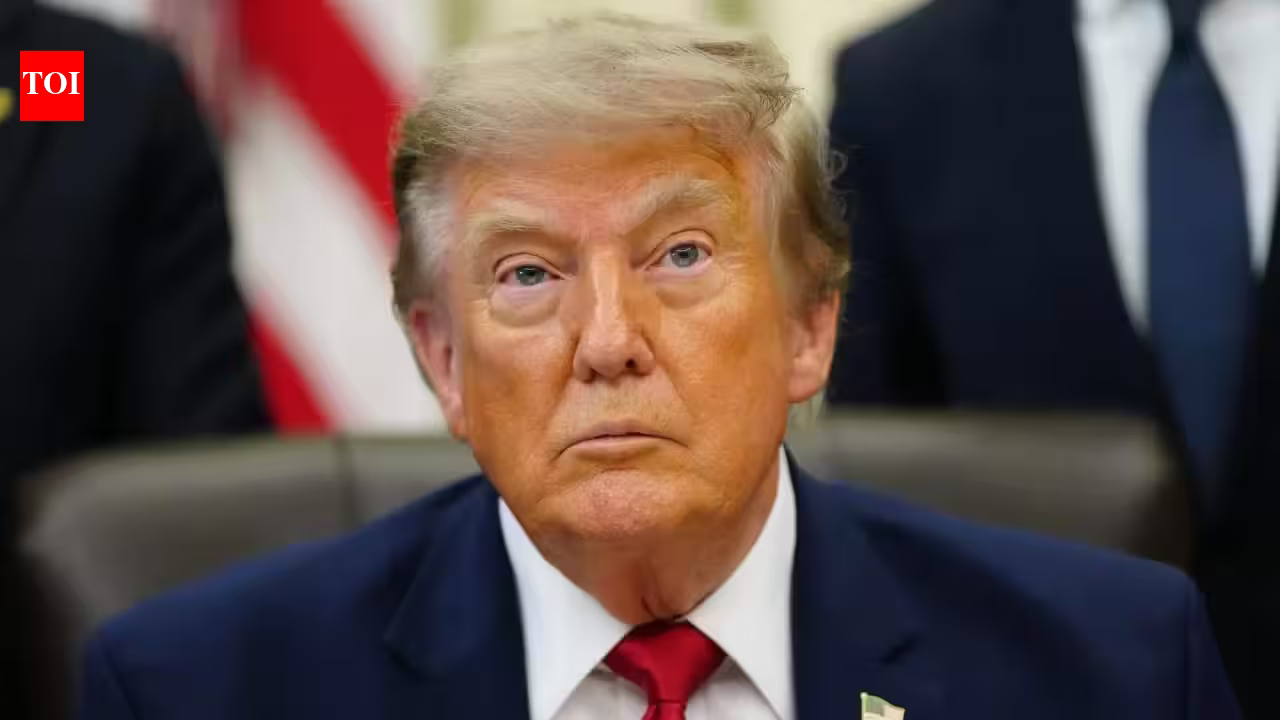
During a media briefing, Peter Navarro, a senior White House trade adviser, specifically singled out India. He cautioned that as Washington expands its tariff measures, countries like India and Vietnam might attempt similar transshipment tactics. Navarro’s message was unequivocal: “The way to pay less is not to cheat; it is to stop dumping, respect intellectual property, drop your barriers to American goods and move towards reciprocity. Our warning to the lower tariff countries facilitating and enabling the transshipping is this: preferential access to the American market is not a license to launder somebody else’s exports.”
The report refers to a US Commerce Department projection indicating that goods valued at $67 billion were transshipped through India, Mexico, and Vietnam in 2025, leading to an estimated tariff loss of $28 billion. However, it notably refrains from specifying India’s precise share of this estimate, identifying any specific Indian exporter, or providing concrete details of any individual fraudulent shipment.
Further scrutinizing the allegations, the report specifically points to India’s Pune-Gujarat-Chennai manufacturing corridor for products classified under HS codes 8413-8414, which encompass pumps and compressors. However, an analysis by the Global Trade Research Initiative (GTRI) challenges this assertion, highlighting India’s substantial domestic manufacturing capabilities in these very product categories.
For instance, during fiscal year 2026, India’s worldwide exports of liquid pumps totaled $1.61 billion, with $414.5 million destined for the United States, while imports from China amounted to $326.4 million. Similarly, global exports of air pumps and gas compressors from India reached $1.48 billion, with $335.4 million going to the US, even as imports from China stood at $1.63 billion. Given the significant scale of India’s global exports in these sectors, GTRI argues that it is difficult to conclude that shipments to the United States solely consist of Chinese products merely being rerouted through India.
According to GTRI, this new report might serve as a strategic maneuver to deflect attention from the actual outcomes of the Trump administration’s tariff policies. While US imports from China did decrease from $525.8 billion in 2017 to $327.5 billion in 2025, America’s overall imports paradoxically increased from $2.41 trillion to $3.50 trillion during the same period. GTRI founder Ajay Srivastava notes, “The US therefore replaced many Chinese finished goods with imports from other countries rather than with domestic production. Trump’s tariffs changed the source of imports but failed to reduce America’s overall dependence on imported goods.”
Meanwhile, China appears to have strategically adapted its export approach. Instead of predominantly relying on direct exports of finished goods to the United States, it has increasingly focused on supplying components and intermediate products to manufacturers in nations such as Mexico, Vietnam, India, and various European and Asian economies. These inputs are then processed, assembled, or incorporated into finished products before being exported to the US. GTRI emphasizes that “where such processing results in substantial transformation, these are genuine exports of the manufacturing country and an established feature of global value chains. They cannot be treated as Chinese transshipment merely because they contain Chinese inputs. China has, in effect, responded to US tariffs by strengthening its position as a global supplier of intermediate goods.” The report further cautions that aggregate trade figures alone do not definitively prove widespread rerouting of Chinese exports, as Chinese imports could be used for domestic consumption, legitimate manufacturing, or exports to destinations other than the United States.
GTRI identifies four significant shortcomings in the US report. Firstly, it broadens the traditional definition of transshipment, which typically refers to cargo being unloaded and reloaded without alteration, to include activities like assembly, testing, finishing, and component integration. This expanded definition, GTRI argues, conflates genuine manufacturing with origin fraud and risks mischaracterizing legitimate production within global supply chains as transshipment without concrete evidence of violation. Secondly, the report relies heavily on trade correlations as evidence. A decrease in direct imports from China accompanied by a rise in imports from another country, by itself, does not conclusively prove that the same goods were simply relabeled and rerouted. Thirdly, GTRI asserts that it is the United States’ own country-specific tariff structure that has created the substantial tariff differentials, thereby making evasion financially appealing. Fourthly, despite the United States already employing non-preferential rules of origin based on the principle of substantial transformation, the report contends that these rules remain complex, inconsistent, and vulnerable to misuse, advocating for stricter statutory standards.
In response to these allegations, Ajay Srivastava suggests that India should actively seek evidence and conduct its own thorough verification. GTRI recommends that India request the United States to disclose the detailed basis of its accusations, including country-specific, product-level, and shipment-level data, as well as India’s specific share of the estimated $67 billion in alleged transshipped goods. Furthermore, GTRI advises India to independently scrutinize exports of pumps and compressors by comparing firm-level imports from China with exports to the United States and verifying the extent of domestic value addition. Such an exercise would be instrumental in identifying any actual misuse, protecting compliant exporters, and enabling India to effectively challenge unsubstantiated allegations with credible business evidence.