







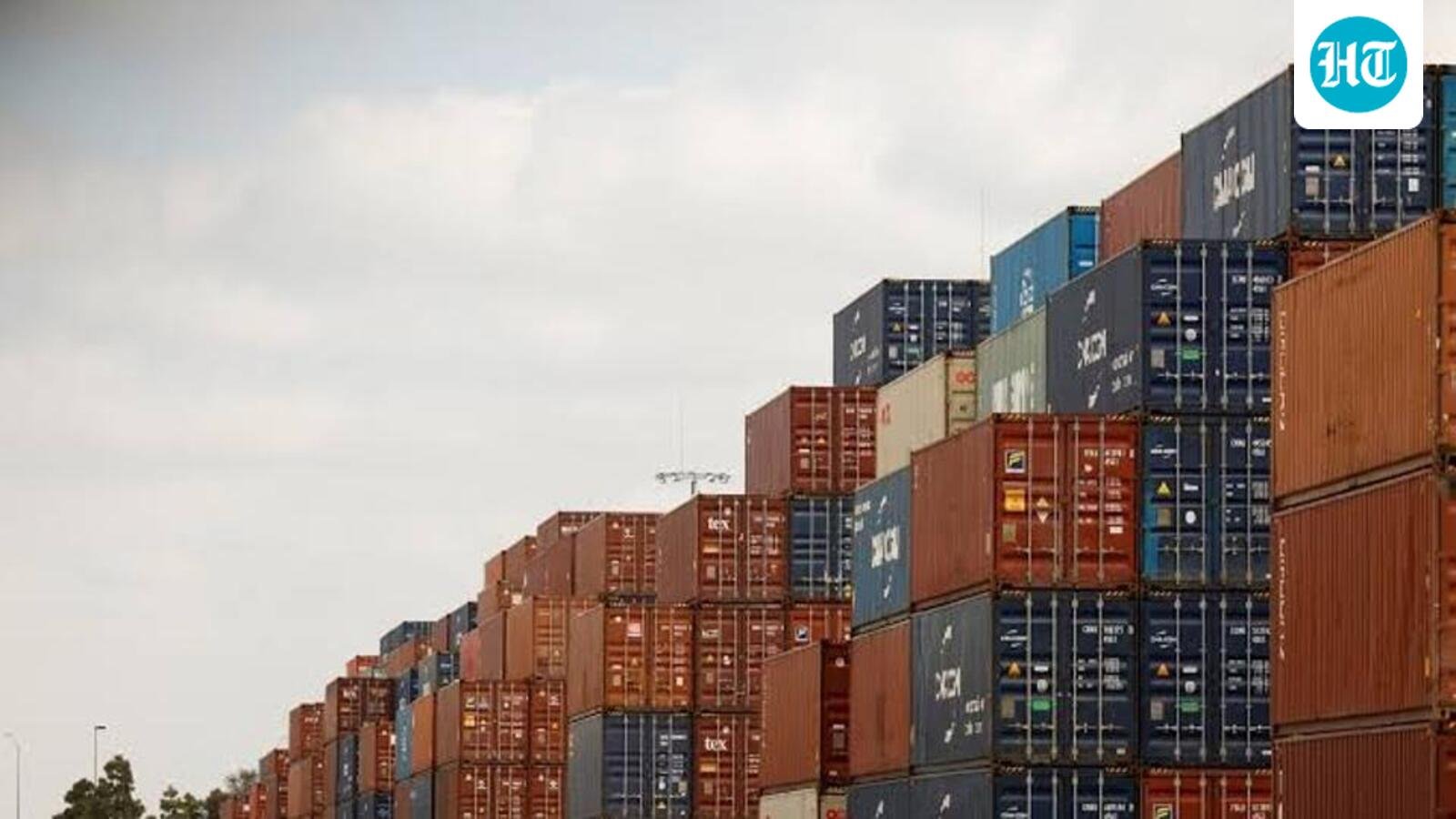
India is currently reviewing a recent White House report that identifies the nation as a primary conduit for the alleged transshipment of Chinese goods aimed at circumventing US tariffs. While acknowledging the report, India firmly asserts the integrity and robustness of its national legal and regulatory framework designed to prevent such illicit practices. The report, issued by the White House’s Office of Trade and Manufacturing Policy, forms part of a broader effort to mitigate the evasion of American tariffs on Chinese products through third-party countries. It places India among over 40 nations deemed vulnerable to transshipment risks associated with China, controversially labeling it as one of “China’s biggest enablers.”
Responding to inquiries about the report, Randhir Jaiswal, spokesperson for the external affairs ministry, stated, “We have seen some reports on this particular matter. We would like to study the findings and the methodology that has been adopted in detail.” He underscored India’s commitment to upholding strict compliance, elaborating, “We have robust laws and procedures governing customs, rules of origin and exports, and any instances of violation that may be there are dealt with in accordance with law.” Jaiswal noted that the Indian government only became aware of the US report on Friday morning and is actively engaged in analyzing its contents and the statistical approaches employed. He refrained from offering further immediate comments beyond emphasizing the ongoing review.
The report classifies India, alongside Canada, the European Union, Israel, Japan, Mexico, South Korea, and Taiwan, within Tier 1. This category encompasses “countries and trading blocs that account for large absolute volumes of China-linked goods while maintaining diversified industrial bases and major US-bound export platforms.” The White House document posits that in these regions, the “illegal transshipment risk is embedded within broad legitimate trade flows.” It further elaborates that nations forming “China’s Shadow Transshipment Network” include many of America’s key trading partners, identifying “China’s biggest enablers” to range from Mexico and Canada on US land borders to major economic powers like the European Union, India, Japan, and South Korea. The White House also projected that approximately $67 billion worth of goods destined for the US would be transshipped from China via primary hubs like Mexico, India, and Vietnam in 2025, leading to an estimated loss of $28 billion in tariff revenue.
In a separate development, Jaiswal firmly refuted speculative reports suggesting that the Indian government referred a bill proposing amendments to the Foreign Contribution (Regulation) Act (FCRA) to a joint parliamentary committee due to pressure from the United States. He reiterated India’s sovereign stance on legislative matters, stating, “As I have informed you earlier and let me reiterate again that legislative matters concerning India are our own internal matters on which the Parliament of India is there to decide, and only the Parliament of India is there to decide.” He urged the public to “disregard mischievous and misleading reports on this particular issue.” These reports had claimed that US Vice President JD Vance had communicated with Prime Minister Narendra Modi, and US ambassador Sergio Gor had met with Foreign Secretary Vikram Misri and National Security Adviser Ajit Doval concerning the Foreign Contribution (Regulation) Amendment Bill 2026. These meetings were reportedly prompted by concerns raised by several American lawmakers regarding the bill’s potential impact on various Christian organizations and charities operating in India.