





In the early morning hours of July 26th, New Delhi authorities swiftly dispatched workers to paint over the walls surrounding the Jantar Mantar observatory. This rapid cleanup followed a significant wave of protests the previous day, which had culminated in the resignation of India’s Education Minister, Dharmendra Pradhan, amidst an exam leak scandal. These demonstrations, spearheaded by the Cockroach Janta Party (CJP), saw the protest strip near Jantar Mantar emblazoned with the rallying cry, “#2026 Gen-Z REVOLUTION!!!”
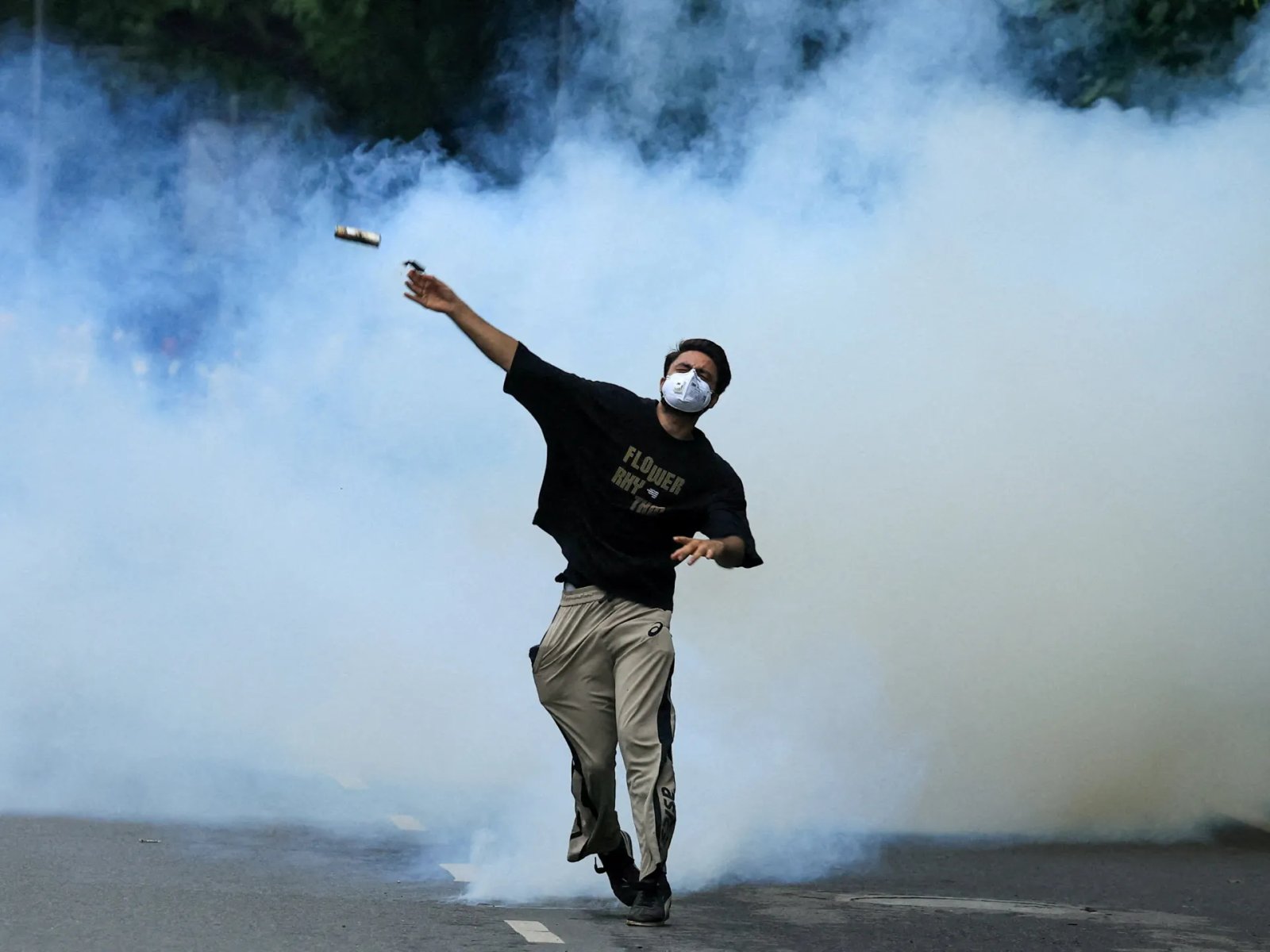
During the height of the protests, a young man, barely in his twenties, scaled a tree, loudspeaker in hand, to project a powerful song: "Azadi, give me freedom! Azadi, give me freedom! Azadi, give me freedom!" The crowd, with hands raised high, echoed these words. "Azadi," meaning "freedom" in English, is a popular hip-hop track from the Bollywood film "Gully Boy," and it quickly became the unofficial anthem of these student-led protests. These demonstrations represent one of the most significant challenges to Prime Minister Narendra Modi’s Hindu nationalist government in recent years. Viral video footage, depicting police personnel violently confronting students on New Delhi’s Parliament Street, injected new life into this nearly decade-old song. The resonating chants of "Azadi" were not confined to Delhi; they reverberated across other major Indian cities like Jaipur, Lucknow, and Mumbai.
Interestingly, just a decade prior, "Azadi" was a deeply controversial term, often considered a criminalized protest slogan in Delhi, leading to the imprisonment of student leaders on charges of treason. Although thousands of protesters dispersed after the education minister’s resignation, the metal police barricades at Jantar Mantar remained, many still bearing protest graffiti, such as the stark red inscription: "Umar, Sharjeel, Gulfisha were here before you."
The evolution of the "Azadi" chant, from its origins in Pakistan’s feminist movement and the Kashmiri resistance to its mainstream adoption in India, reflects the changing landscape of both political discourse and student activism under Modi’s decade-long rule.
The year 2016 marked a pivotal moment, signaling a government crackdown on dissent within academic institutions, a trend that students believe has intensified over time. December 9, 2016, a seemingly ordinary evening at Jawaharlal Nehru University (JNU), a renowned public university and historical hub of political activism, became an unexpected national flashpoint. A student gathering to discuss capital punishment, specifically referencing the case of a Kashmiri man executed for a 2001 attack on India’s parliament, was misrepresented by Indian television channels perceived as government-friendly. These channels repeatedly aired footage of students chanting "Azadi" slogans, led by then-JNU student union president Kanhaiya Kumar, labeling them "sympathisers of terrorists" and even broadcasting doctored clips. Banojyotsna Lahiri, a close friend of student leader Umar Khalid and an organizer of the event, recounted to Al Jazeera how this controversy "blew out of proportion," transforming students like Khalid and JNU itself into household names. The "intense media trial," which propagated the narrative of "anti-national students" living off taxpayers’ money, quickly led to sedition charges and arrests, though Khalid and others were later released on bail.
JNU, a traditional stronghold of left-liberal politics, has often found itself at odds with the country’s Hindu majoritarian right, particularly under Modi’s administration. However, it wasn’t the only university experiencing anti-establishment sentiment. Following the suicide of Dalit student Rohith Vemula in Hyderabad, who alleged caste discrimination, protests erupted at the Central University there, met with a swift government response. These events in early 2016 initiated a concerted government effort to restrict avenues for dissent and expression in India’s public universities. The consequences were severe: right-wing elements attacked student leaders, Khalid himself was shot at in New Delhi, and universities began blocking permissions for discussions, film screenings, and protests. Apoorvanand, a professor of Hindi at Delhi University, commented on the unprecedented nature of this suppression, stating, "It is the first time in independent India where the government has undertaken a coordinated, well-thought-out attack on student activism." Lahiri emphasized the lasting impact of the media campaign, noting that the "tag of antinational was accepted in wider Indian imagination, outside universities and these students [like Khalid] could never shed it."
In 2019, fresh protests ignited against proposed amendments to India’s citizenship laws, widely perceived as discriminatory against Muslims. Several Muslim student leaders in Delhi gained national prominence for their impassioned speeches and their organization of protests against the proposed Citizenship Amendment Act (CAA). Although the government appeared to backtrack on a nationwide screening of Indian citizens amid the outcry, another wave of crackdowns followed, leading to the imprisonment of dozens of prominent student activists, their cases buried under a mountain of charges, including terrorism. Following the citizenship protests of 2019-2020, students reported a further shrinking of protest spaces within universities. Increased police presence, heightened inquiries, politically motivated appointments to university administrations, and cuts to research funding became commonplace. Six years later, student leaders like Khalid, who was re-arrested, and Sharjeel Imam remain incarcerated without trial.
The journey of "Azadi" as a protest slogan is complex and multifaceted. The visuals of JNU reverberating with "Azadi" chants in 2016 inspired music producer Dub Sharma to create a track by layering electronic beats over the crowd’s calls for freedom from caste hierarchy, capitalism, hunger, and the influence of the right-wing Rashtriya Swayamsevak Sangh (RSS), the ideological parent of Modi’s Bharatiya Janata Party. Three years later, director Zoya Akhtar incorporated this track into her 2019 Bollywood film, "Gully Boy," which drew inspiration from the lives of Mumbai’s slum rappers. Sharma recreated the song for the movie, featuring popular Mumbai artist Divine. However, the revised version retained only "freedom from hunger" from the original chants, omitting other calls for social justice. While the film’s team faced criticism for this perceived watering down, they defended it by explaining that the song was adapted to fit the film’s narrative. In its recreated form, Divine’s rap touched upon income inequality, the privileged children of politicians, and urged people to challenge a corrupt system—themes that have become central to Gen Z protests globally.
Under Modi’s leadership, India has continued to decline in various democratic indices. This year, Sharma’s rehashed score once again became the anthem for student resistance, this time advocating for broader educational reforms. The earliest modern political use of the "Azadi" chant can be traced to Pakistan’s feminist movement, which resisted General Zia-ul-Haq’s military dictatorship in the 1980s. The late Indian feminist activist Kamla Bhasin was inspired by the chant’s adaptability and adopted it for specific Indian protest contexts. The Kashmiri resistance also embraced the slogan in the late 1980s to express their opposition to Indian occupation. Similarly, the left-liberal movement in New Delhi adopted it, each group tailoring the calls for freedom to their unique circumstances. A year before her passing in 2021, Bhasin described the "Azadi" chant as "a living, breathing slogan," emphasizing its dynamic nature: "This slogan grows every day, it evolves every day. Its meaning is not set in stone."
The recent wave of protests in Delhi demonstrates a new approach to activism. Last June, after India’s chief justice controversially equated unemployed youth with "cockroaches and parasites," the insult sparked a national reaction. Abhijeet Dipke, a Boston University graduate, jokingly wondered on X, "What if all cockroaches come together?" This casual thought blossomed into a social media campaign under the self-proclaimed Cockroach Janta Party, quickly going viral and garnering over 22 million Instagram followers – more than double that of Modi’s ruling Bharatiya Janata Party (BJP). Dipke returned to India, pledging to launch an agitation demanding educational reforms, starting with the education minister’s resignation in the wake of widespread exam scandals affecting millions of students.
On June 6th, Dipke arrived at the Jantar Mantar protest site in New Delhi, where he was joined by Neha Bora, the national president of the All India Students’ Association (AISA), the student wing of the Communist Party of India (Marxist-Leninist). Bora, a 29-year-old who had been with AISA since her college days at Delhi’s JNU, noted that the Cockroach movement initially lacked direction. She told Al Jazeera, "They didn’t know what to do. They were excited but also scared." Bora explained that established student unions like hers played a crucial role in providing structure and sustaining the protest.
After the protest successfully occupied the Jantar Mantar strip, defying repeated police orders to vacate, Bora’s AISA, alongside the Student Federation of India (SFI), another prominent left-wing student organization, established a protest camp. Six students joined educator-turned-activist Sonam Wangchuk, 59, on a hunger strike. For a month, student volunteers from these organizations maintained a constant presence at the protest site, providing slogans, placards, and a voice that propelled the movement to international prominence. Bora described the challenges of sustaining a protest: "Sit-in means a lot of repetition for those people who you’re appealing to join." She added, "As a student organisation, we knew the science behind keeping protest alive: bring in different sections of society to support the movement, like lawyers, professors and farmers." Political analysts observed that experienced protest organizers, whose activism had been criminalized or sidelined for years, discreetly empowered this younger generation to organize what appeared, from the outside, to be a leaderless movement.
Predictably, opponents deployed their familiar tactics to delegitimize the students. Bora recounted how they spent weeks countering "baseless conspiracies and allegations of being antinationals or foreign-funded." At one point, Education Minister Pradhan even labeled the protesters the "B-team of terrorists." However, this time, the attempts to criminalize the young protesters failed, and the demonstration continued to gain popularity. Instead, Apoorvanand suggested, the education-focused movement provided student organizations with an opportunity to establish a foothold in national politics.
This summer’s Gen Z protest wave seemingly reversed the traditional dynamics of Indian politics. A stroll through the protest strip, filled with "Azadi" chants, prompted the question: what had changed in New Delhi since 2016? Lahiri, Khalid’s friend, emphasized the importance of understanding the context: "The earlier citizenship protests were for Muslims, led by Muslims. Their names were Muslims, therefore [they were] easier to criminalise." Many political analysts concur. In contrast, none of the most prominent figures in this year’s student protests were Muslim, even though organizers consistently denounced the ruling government’s "hate and divisive politics" and alleged targeted attacks on minorities. Mohammad Junaid, a volunteer, became the most visible Muslim face at Jantar Mantar. Even before all protesters had dispersed, Junaid and his family were reportedly picked up and harassed by police. Interestingly, at one point, the Cockroach leaders even requested protesters to refrain from chanting "negative" Azadi slogans, a request that largely went unheeded by the crowd.
N Sai Balaji, a student activist who served as AISA’s national president from 2019 to 2023, highlighted a clear distinction between student leaders before and after the citizenship protests. He observed a shift from being objects of representation to actively shaping their own narratives. "It’s just not the same kind. They are tech-savvy, know how to integrate their message, and they know the language of the internet so well because they grew up there," he told Al Jazeera, contrasting this with his own generation’s experience of growing up with television. "That is why the traditional media was useless for them. Rather, they became the media themselves," Balaji stated. "They owned their story. Something we could not do." Balaji stressed the crucial role of social media influencers and alternative media in amplifying the protest, becoming the primary channels for disseminating their message. Many began boycotting traditional media outlets perceived as government-friendly. Crucially, in this new media landscape, "no one was calling them antinationals," he noted. Instead, Balaji explained, when videos of Bora on hunger strike garnered millions of views, it prompted people to question the status quo. "India’s aspirational class, who felt betrayed by the government’s broken promises, found hope in people who were sitting selflessly," Balaji stressed. "That’s where the whole propaganda vanishes. Suddenly, the so-called antinationals become humans too," he concluded.
Lahiri noted that the current generation of student leaders has transcended traditional activism. "With their language, imagery, and Instagram reels, people outside universities are now able to connect more," she observed. With university spaces increasingly restricted, student politics are once again spilling onto the streets, Lahiri added. She further suggested that, unlike her generation, these new student protesters are "trying to do politics under even harsher circumstances." With a chuckle, Lahiri argued that a blunt "Fu** Modi" delivers a more impactful message than academically framed sentiments. Among the deluge of online memes and posters, one resonated with Lahiri: "Umar Khalid walked, so Gen Z could run." While she is unsure if Khalid would agree, she personally subscribes to this sentiment. For Bora, the 2019 citizenship movement led by Muslims "inspired a revolution inside" her, a force that continues to drive her today. She asserts that by labeling her predecessors as anti-nationals and traitors, the Modi government criminalized the very expression of "Azadi" by "creating so much noise around it." However, "when students faced police brutality — when the wounds of those batons were fresh on their bodies — one understands that the Azadi slogan is the most radical assertion of fundamental rights in India," Bora concluded.