






India and Russia are currently engaged in significant discussions aimed at strengthening their collaboration along the Northern Sea Route (NSR). This Arctic maritime corridor is a strategic priority for Moscow, which seeks to transform it into a crucial trade link connecting Europe and Asia. The Ministry of External Affairs confirmed these active deliberations, following Russian President Vladimir Putin’s recent remarks highlighting India’s growing interest in partnering with Russia on this vital route.
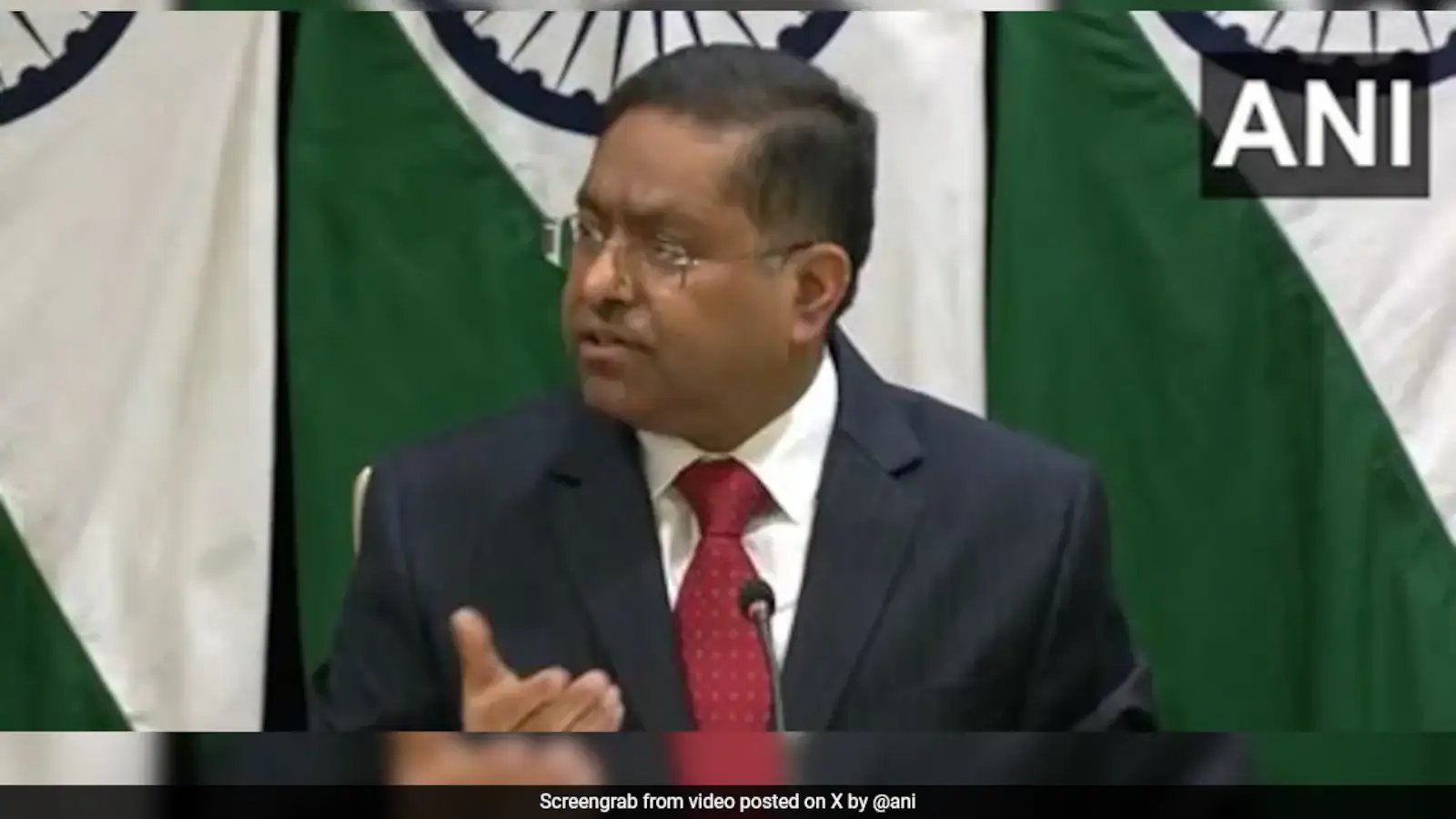
During a recent weekly press briefing, MEA spokesperson Randhir Jaiswal emphasized that enhancing logistical connections is a core component of India’s extensive cooperation with Russia. He clarified that discussions specifically concerning the Northern Sea Route are already well underway. Responding to inquiries, Jaiswal stated, “With Russia, we have a multi-faceted cooperation of which connectivity is an important part. We have discussions with them on this particular issue as well. So this is something that is ongoing.”
Earlier this week, President Putin, while addressing Pacific Fleet personnel aboard the missile cruiser Varyag, explicitly mentioned India, alongside China, as key partners in the development of this transit corridor. Putin underscored Russia’s unwavering commitment to international frameworks, stating, “Although Russia has consistently voiced, and continues to reaffirm, its readiness to cooperate and leverage the advantages of the Northern Sea Route, strictly within the bounds of existing international maritime law.”
The NSR, which traces Russia’s Arctic coastline north of Siberia, offers a substantially shorter shipping route between Europe and Asia compared to the conventional Suez Canal passage. This route effectively links the Atlantic and Pacific oceans, promising significant time and cost savings for international trade. To develop the Northern Sea Route into a reliable commercial artery capable of accommodating increased international trade volumes, Russia has made substantial investments in its infrastructure. These investments include the development of ports, sophisticated navigation facilities, and a fleet of powerful nuclear-powered icebreakers, all crucial for navigating the challenging Arctic environment.
For India, engagement with the Northern Sea Route represents a pivotal strategic opportunity to deepen trade relations and improve connectivity with Russia. This collaboration complements existing connectivity initiatives such as the International North-South Transport Corridor and the Chennai-Vladivostok maritime route. Prime Minister Narendra Modi has previously articulated India’s long-term vision for maritime and Arctic cooperation, indicating that both nations would work with “renewed energy” on these connectivity initiatives. Furthermore, a key focus will be on training Indian sailors for specialized Arctic navigation, recognizing the unique challenges of operating in this region. Beyond its commercial applications for trade and energy supplies, this resource-rich Arctic corridor holds a critical position in regional development. The increasing commercial adoption and growing participation from Asian markets are solidifying the NSR’s status as an essential global shipping channel.