






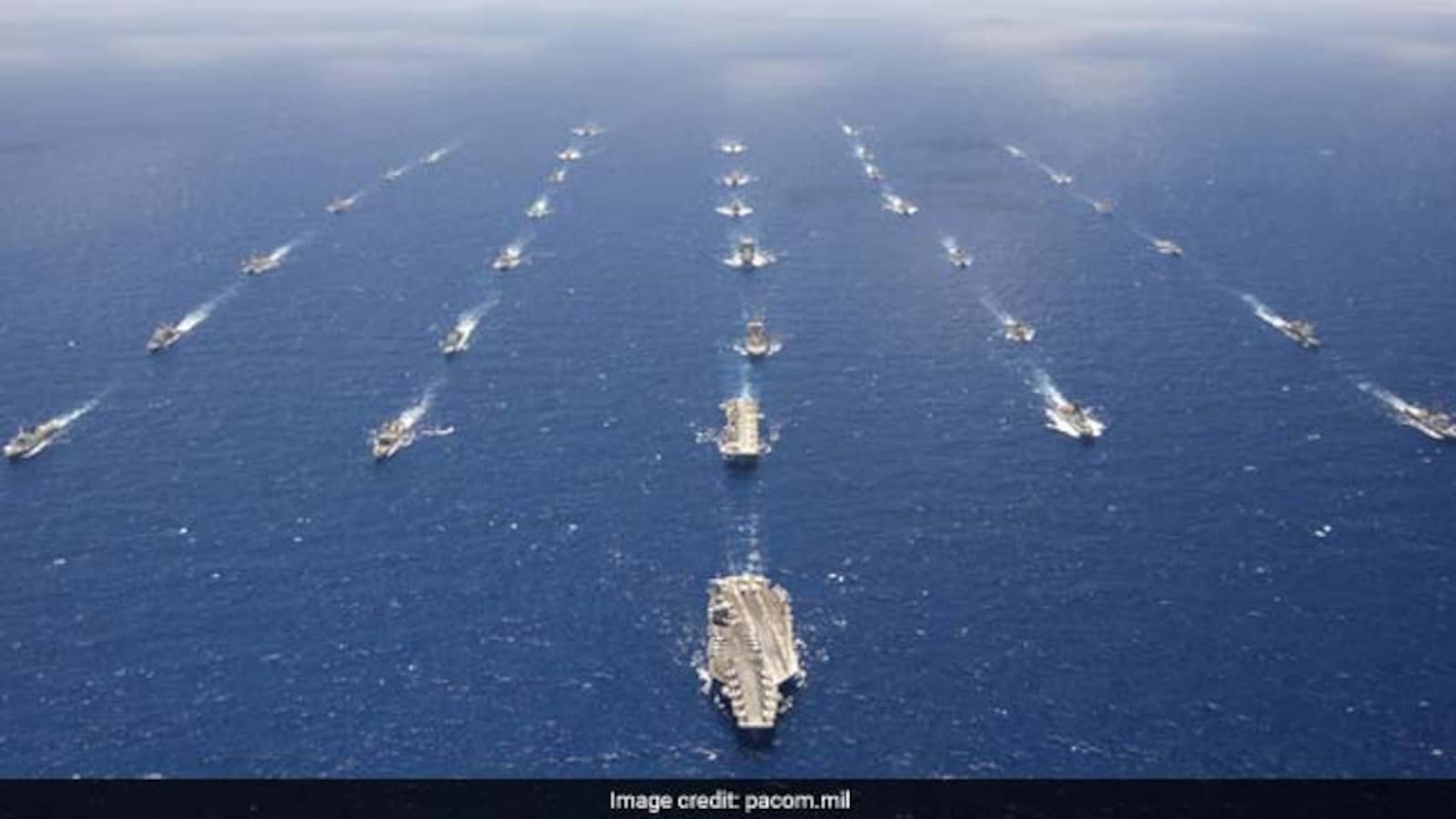
The United States views India as a critical power and is committed to strengthening its partnership with New Delhi, a high-ranking Pentagon official affirmed. This statement comes amidst discussions and some speculation regarding the recent alteration of the US military command’s designation. Elbridge A. Colby, the Under Secretary of Defense for Policy, explicitly refuted any suggestions that the decision to revert the command’s name from Indo-Pacific Command (INDOPACOM) to Pacific Command (PACOM) implies a diminished focus on India or the broader Indian Ocean region.
Colby clarified that the change was primarily a reflection of Washington’s strategic military priorities, specifically emphasizing the Western Pacific and what is commonly referred to as the first island chain. This arc extends from Japan through Taiwan and the Philippines, reaching into parts of Southeast Asia, and is a cornerstone of US defense planning in the Western Pacific.
During an online briefing organized by the State Department’s Asia Pacific Media Hub, Colby stressed, “This is not in any way a sort of denigration of the importance of the Indian Ocean area or of India itself.” He underscored the ongoing robust engagement between the two nations, citing his own visit to India in March, alongside numerous other visits by senior US administration officials, as concrete evidence of this sustained relationship. He reiterated, “We really see India as a critical power, and the Indian Ocean, of course, is very important.” He further added that the US maintains multiple significant relationships within the region.
Colby emphasized that the United States perceives its relationship with India as vital, recognizing a natural alignment of interests that fosters a strong partnership, even if disagreements may occasionally arise. “If anything, we really see India as a vital relationship where there’s a natural partnership,” he remarked. “Let’s look where our interests align. We’re going to have areas where we don’t always agree. But we’re looking for a stronger India.”
The revised command nomenclature, Colby explained, is intrinsically linked to the strategic priorities outlined in the US’s national security and defense strategies. He stated that the “strategic focus of the United States military is really – and consistent with the National Security Strategy, the National Defense Strategy – is on the first island chain.” Therefore, the “Pacific element to that is really the focus, the Western Pacific area, obviously stretching into Southeast Asia here.” Colby also acknowledged the varying geographical lexicon, noting that “Indo-Pacific has one meaning, the Pacific has another, the Asia Pacific has a third,” to avoid confusion.
These remarks were made while Colby was on a diplomatic tour that included visits to the Philippines, Indonesia, Thailand, and Cambodia. Throughout his briefing, he characterized the Trump administration’s regional strategy as one founded on military strength, practical collaboration, and a deep respect for national sovereignty.
He explicitly clarified that Washington is not coercing countries into choosing sides. Instead, the US is seeking cooperation on practical matters such as access, training, intelligence, surveillance and reconnaissance, foreign military sales, and the enhancement of maritime capabilities. “We’re not asking for fealty; we’re asking for practical things: access, collaboration, these kinds of things,” Colby articulated.
The official concluded by asserting that the United States desires regional partners to bolster their own defense industries and military capabilities. He emphasized that the efficacy of such efforts should be measured by their contribution to deterrence, rather than being solely driven by domestic political or industrial objectives. The ongoing partnership between the United States and India is a significant aspect of global diplomacy and India news.