







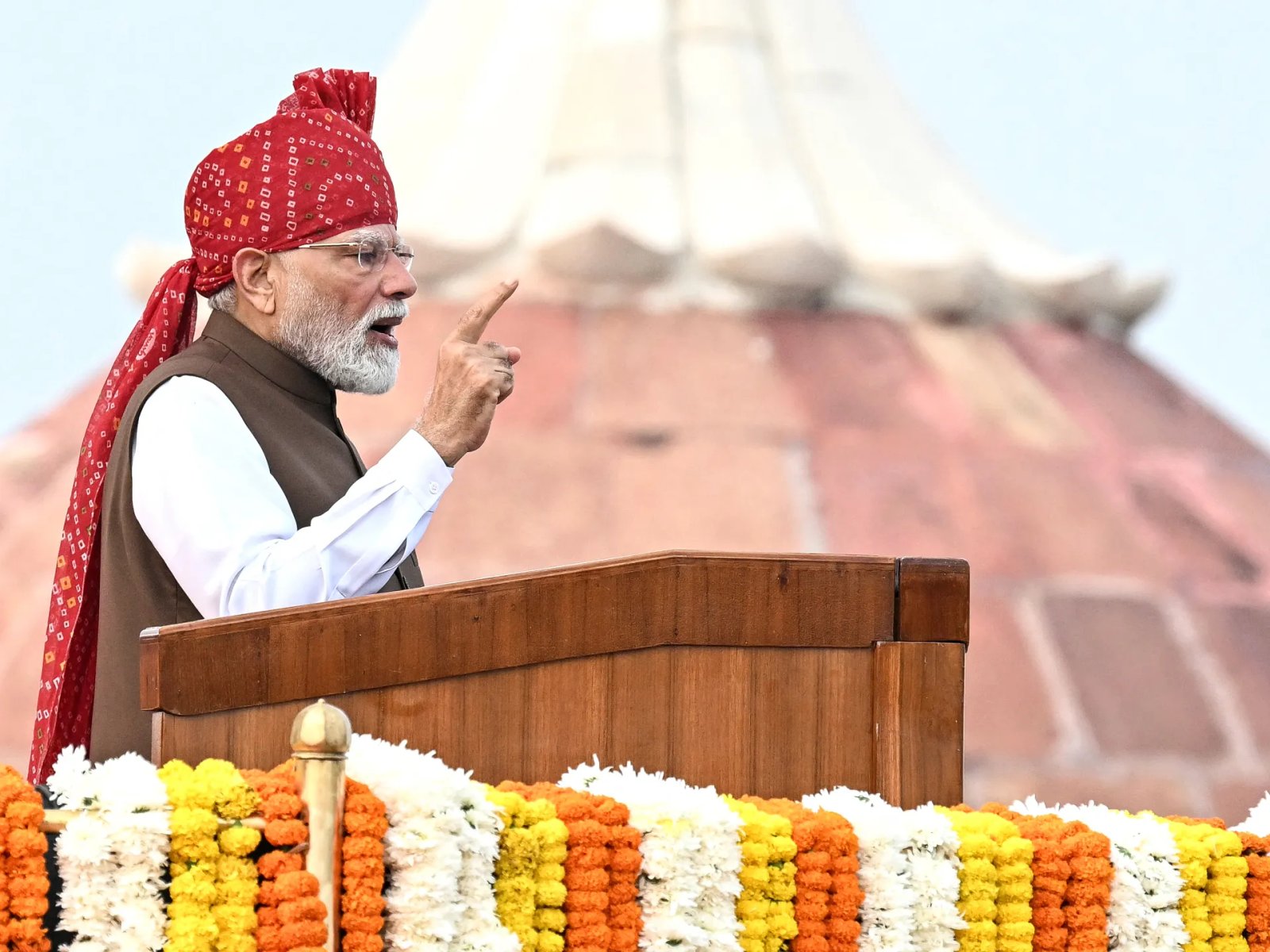
Prime Minister Narendra Modi, addressing the nation on India’s Independence Day, declared a significant victory in the decades-long struggle against the Maoist-influenced Naxalite movement. He asserted that India has largely succeeded in getting rid of armed Naxals, referring to the insurgency that once challenged state authority across vast regions of central and eastern India. However, the Prime Minister cautioned that while the armed rebellion might be subdued, a new and insidious threat remains: “dimagi Naxals” or intellectual Naxals. Modi stressed the importance of identifying and isolating these ideological backers, whom he accused of actively seeking opportunities to instigate violence.
This pronouncement regarding “dimagi Naxals” resonates strongly with the controversial term “urban Naxal,” a label frequently employed by Modi and other leaders of his Bharatiya Janata Party. This term has historically been used to characterize activists, academics, intellectuals, and various government critics, implying their covert support for Maoist ideologies despite not being directly involved in armed conflict. The timing of these remarks is particularly noteworthy, coming just weeks after the emergence of a youth-led protest movement, the Cockroach Janta Party. This movement presented an unusual and significant challenge to the Modi government, ultimately contributing to the resignation of his education minister. While Modi did not directly reference these protests in his speech, his emphasis on initiatives targeting young Indians, such as AI skills training and free online coaching for competitive examinations, could be seen as an indirect response to recent youth discontent.
Reflecting on India’s economic trajectory, Modi proudly stated that the nation has transitioned from a “fragile” economy to become the world’s fastest-growing major economy over the past decade. He reiterated his government’s ambitious objective of transforming India into a developed nation by 2047, coinciding with the centenary of its independence. The Naxalite movement, which began with an uprising in the village of Naxalbari in eastern India in 1967, evolved into a protracted armed rebellion. This insurgency advocated for the rights of landless farmers, the rural poor, and Indigenous communities, resulting in the tragic deaths of thousands of civilians, rebels, and security personnel. Modi attributed the sharp reduction in Maoist violence since his government took office in 2014 to a combination of enhanced security measures and focused development policies, asserting that the Maoist movement had “destroyed the future” of generations of young people. However, human rights organizations have consistently voiced concerns for years, alleging that the Indian government has utilized anti-terror laws, sedition provisions, and regulations governing foreign funding to squeeze civil society and suppress dissent, targeting activists, journalists, and organizations critical of its policies. This ongoing tension between government action and concerns for civil liberties remains a significant aspect of the broader political landscape in India.