









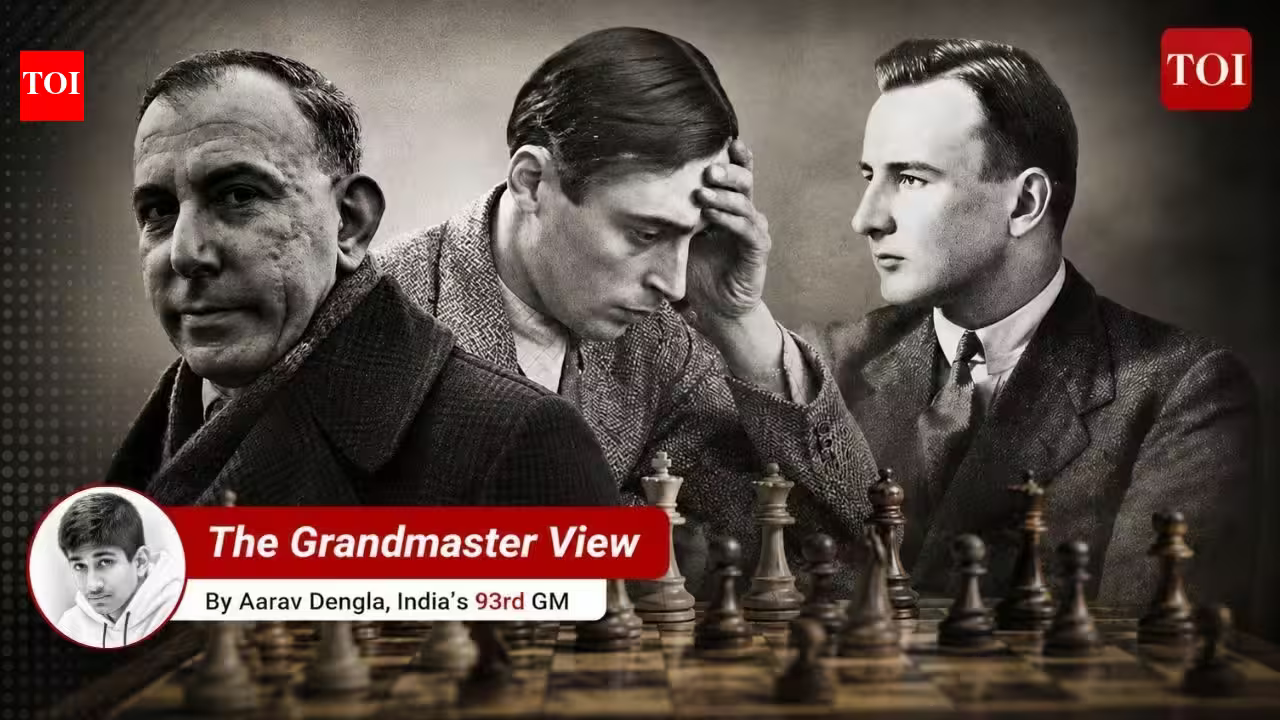
The fateful convergence of Germany’s invasion of Poland on September 1, 1939, and the ongoing 1939 Chess Olympiad in Buenos Aires created an extraordinary backdrop for a pivotal moment in history. This particular Olympiad marked a significant milestone as it was the first to be held outside of Europe, boasting an unprecedented participation of twenty-seven national teams. England’s five-man delegation, comprising the reigning British champion Hugh Alexander, Sir George Thomas, Stuart Milner-Barry, Harry Golombek, and Baruch Wood, had successfully navigated the preliminary stages, securing their spot in the championship final after finishing third in their group.
However, the escalating geopolitical turmoil in Europe cast a long shadow over the competitive spirit of the tournament. With Britain’s declaration of war on Germany on September 3rd, England made the difficult decision to withdraw from the competition, their players returning home as the rest of the teams continued. In a somewhat ironic twist of fate, Germany ultimately claimed victory in the Olympiad, narrowly triumphing over Poland by half a point.
For three members of the English team – Alexander, Milner-Barry, and Golombek – their journey home marked the beginning of an entirely different kind of contest, one shrouded in secrecy for decades. These formidable intellectuals were recruited into the Government Code and Cypher School at Bletchley Park, a clandestine hub where Britain had meticulously assembled a diverse cohort of brilliant minds. This assembly included elite chess players, mathematicians, linguists, engineers, intelligence analysts, and machine operators, all tasked with the monumental challenge of breaking the Enigma code, the complex encryption system employed by the German armed forces for their communications.
The presence of these leading chess players within such a highly classified and top-security codebreaking operation wasn’t merely a coincidence, nor did it solely imply an inherent aptitude of chess players for cryptanalysis. Instead, it underscored the value of a multidisciplinary approach to codebreaking, a team effort that relied on individuals with a wide array of specialized skills. Nevertheless, the particular cognitive abilities honed through years of playing chess – intense concentration, the systematic narrowing down of possibilities, an acute sense of pattern recognition, and an unwavering patience in the face of seemingly intractable problems – proved incredibly beneficial in their demanding roles at Bletchley.
Hugh Alexander’s contribution began in February 1940, initially within Hut 6, which was dedicated to deciphering codes used by the German Army and Luftwaffe. His expertise quickly led to a transfer in March 1941 to Hut 8, the section responsible for solving codes utilized by the German Navy. Here, he ascended to the position of Alan Turing’s deputy and, later, acting head. When Turing journeyed to the United States in November 1942, Alexander assumed leadership of the section, playing a critical role during the harrowing Battle of the Atlantic. His team’s success in decrypting German naval signals was paramount in locating U-boats and effectively mitigating attacks on Allied convoys, directly impacting the war effort.
Stuart Milner-Barry, another key figure, dedicated his efforts to Hut 6, where he led a team meticulously searching for “cribs.” These were anticipated pieces of plaintext that might appear within an encrypted message. While a crib alone couldn’t reveal the encryption settings, it provided a crucial hypothesis that could be rigorously tested using specialized codebreaking machines. His invaluable contributions led to his appointment as the head of Hut 6 in March 1943.
Harry Golombek initially worked in Hut 8 on naval Enigma before transitioning to another section in late 1942. The complexity of Enigma, with its constantly changing and vast array of possible configurations, made it an exceptionally difficult cipher to crack. A successful decryption one day could be rendered obsolete by a simple change in settings the next. This necessitated a delicate balance between human judgment and technological capability. Codebreakers relied on various clues such as captured materials, an in-depth understanding of German operational procedures, the identification of repeated phrases, operator errors, and the inherent mathematical properties of the machine itself to narrow down the immense possibilities. These refined possibilities were then subjected to testing using advanced machinery.
The striking parallels between the analytical processes employed by human codebreakers and elite chess players are undeniable. Just as it’s impossible for a chess player to calculate every single possible move on the board, experienced players instead identify a select number of plausible moves and analyze them with profound depth. Similarly, at Bletchley, codebreakers had to make strategic decisions about where to allocate their limited time and computational resources.
It is crucial to recognize that the chess trio did not single-handedly break the Enigma code. The initial breakthroughs were made by Polish cryptanalysts before the war, and the British effort at Bletchley Park built significantly upon these foundational discoveries. The success of Bletchley was a testament to a colossal collaborative effort, with thousands of individuals contributing to every stage of intelligence gathering, from interception and analysis to processing and distribution.
Following the cessation of hostilities, these intellectual heroes quietly reintegrated into civilian life. Golombek returned to the world of chess as a respected writer and arbiter, while Milner-Barry joined the Treasury. Alexander, however, remained within the shadowy world of intelligence, rising to lead codebreaking operations at GCHQ, the British agency responsible for signals intelligence. For many decades, the extraordinary nature of their wartime work at Bletchley remained classified, a secret they were forbidden to discuss. These unsung heroes, by design, went uncredited for their monumental contributions.
In September 1939, five Englishmen departed a tournament in Buenos Aires, their hopes of victory eclipsed by a looming global conflict. They returned home to participate in a different kind of game, one with infinitely higher stakes and no established rules of fair play. While they may not have lifted the trophy in 1939, the profound impact of their clandestine work played an undeniable role in securing victory in the most consequential war of their lives.