








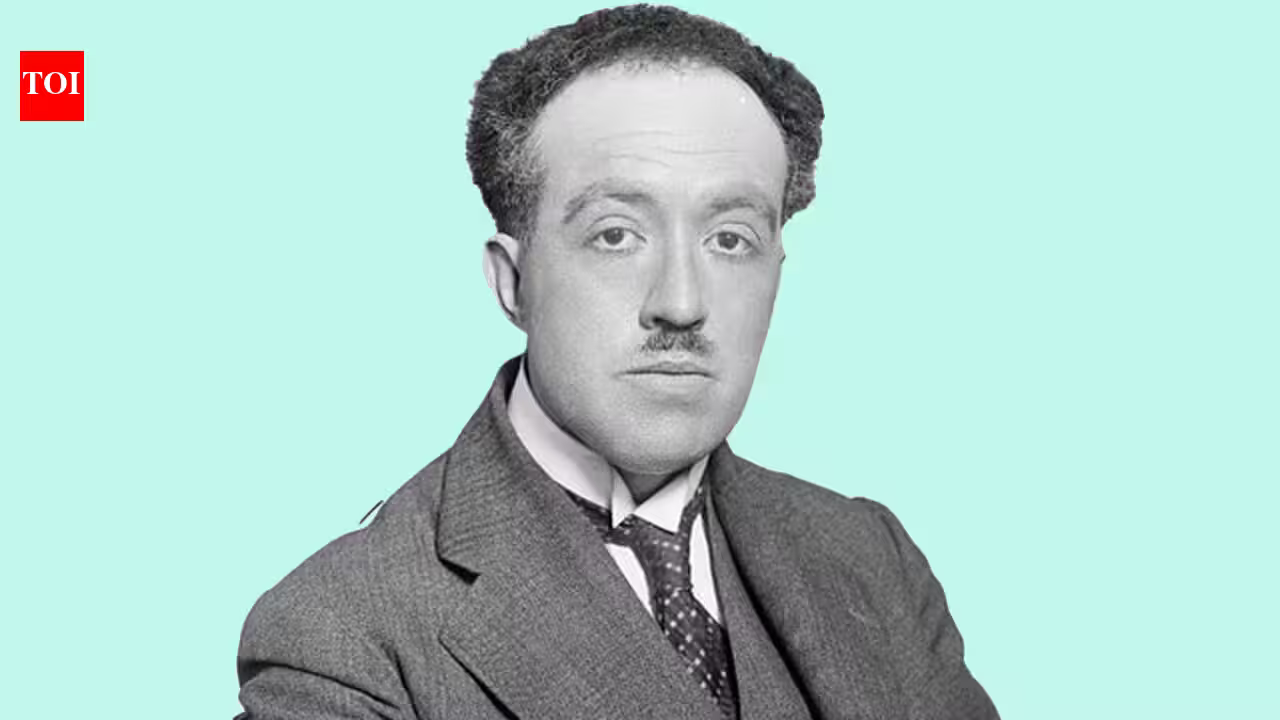
Louis de Broglie, a figure whose intellectual journey dramatically altered the landscape of modern physics, did not initially embark on a scientific career. Born into an aristocratic French family on August 15, 1892, de Broglie’s academic pursuits began in the humanities. He enrolled at the Sorbonne in Paris, where he dedicated himself to the study of history, successfully completing his degree in 1910. At this juncture, his professional aspirations lay firmly within the humanities. However, a nascent and increasingly compelling interest in mathematics and the natural sciences began to steer him down an entirely different path, a pivotal shift that would ultimately influence foundational theories in quantum mechanics and lead to the development of instruments like electron microscopes.
At the turn of the 20th century, the scientific community grappled with a fundamental conundrum concerning the nature of light. Was it a wave, exhibiting phenomena such as diffraction and interference? Or was it a particle, capable of discrete interactions? Pioneering work by eminent scientists like Albert Einstein and Max Planck had already suggested that light possessed a perplexing dual nature, behaving as both a wave and a particle depending on the observational context. Louis de Broglie, however, dared to pose an even more profound and radical question: if light, conventionally understood as a wave, could exhibit particle-like properties, then why couldn’t matter, typically considered particulate, also possess wave-like characteristics?
This singular inquiry formed the bedrock of his groundbreaking 1924 doctoral thesis, “Researches on the Quantum Theory.” In this seminal work, de Broglie proposed that all matter, not just light, exhibits wave-like properties, a revolutionary concept that became famously known as the de Broglie hypothesis. The narrative surrounding the thesis’s acceptance is as compelling as the theory itself. Initial skepticism from his examiners, who found his ideas challenging to conventional thought, led to the thesis being sent for review to Albert Einstein. Einstein, with his profound intuition, immediately recognized the immense significance of de Broglie’s work, reportedly remarking that the young French physicist had “lifted a corner of the great veil.” This powerful endorsement from one of the scientific giants of the era played a crucial role in bringing de Broglie’s unconventional ideas to serious academic attention.
The true test of any scientific theory lies in its experimental verification, and de Broglie’s hypothesis met this challenge with remarkable speed. Just three years after the submission of his thesis, in 1927, American physicists Clinton Davisson and Lester Germer conducted experiments demonstrating electron diffraction, unequivocally proving that electrons, previously considered discrete particles, indeed behaved like waves. Simultaneously, an independent experiment by British physicist George Paget Thomson yielded similar conclusive results. These experimental confirmations transformed de Broglie’s once-controversial doctoral thesis into one of the fundamental pillars of quantum mechanics.
In recognition of this profound contribution, Louis de Broglie was awarded the Nobel Prize in Physics in 1929, at the remarkably young age of 37, for his “discovery of the wave nature of electrons.” His pioneering work served as a direct inspiration for Erwin Schrödinger, who subsequently developed wave mechanics, a cornerstone of quantum theory, encapsulated in the famous Schrödinger equation that remains indispensable in quantum physics today.
The enduring legacy of Louis de Broglie extends far beyond the realm of theoretical physics. His journey offers a powerful lesson in intellectual curiosity and the courage to challenge established paradigms, a lesson particularly relevant for students today. He was not a lifelong scientific prodigy; rather, he was a history student who dared to transition disciplines, question prevailing scientific dogma, and forge an unexpected connection between two seemingly disparate concepts. His theoretical insights paved the way for practical applications such as the electron microscope, an instrument that allows scientists to visualize structures at resolutions far exceeding the capabilities of traditional light microscopes. Over a century after his doctoral thesis, Louis de Broglie’s story continues to inspire, reminding us that some of the most transformative discoveries originate from the simple yet profound act of asking: “What if everyone else is looking at the problem the wrong way?” This enduring spirit of inquiry is vital for continued progress in education and scientific advancement.