






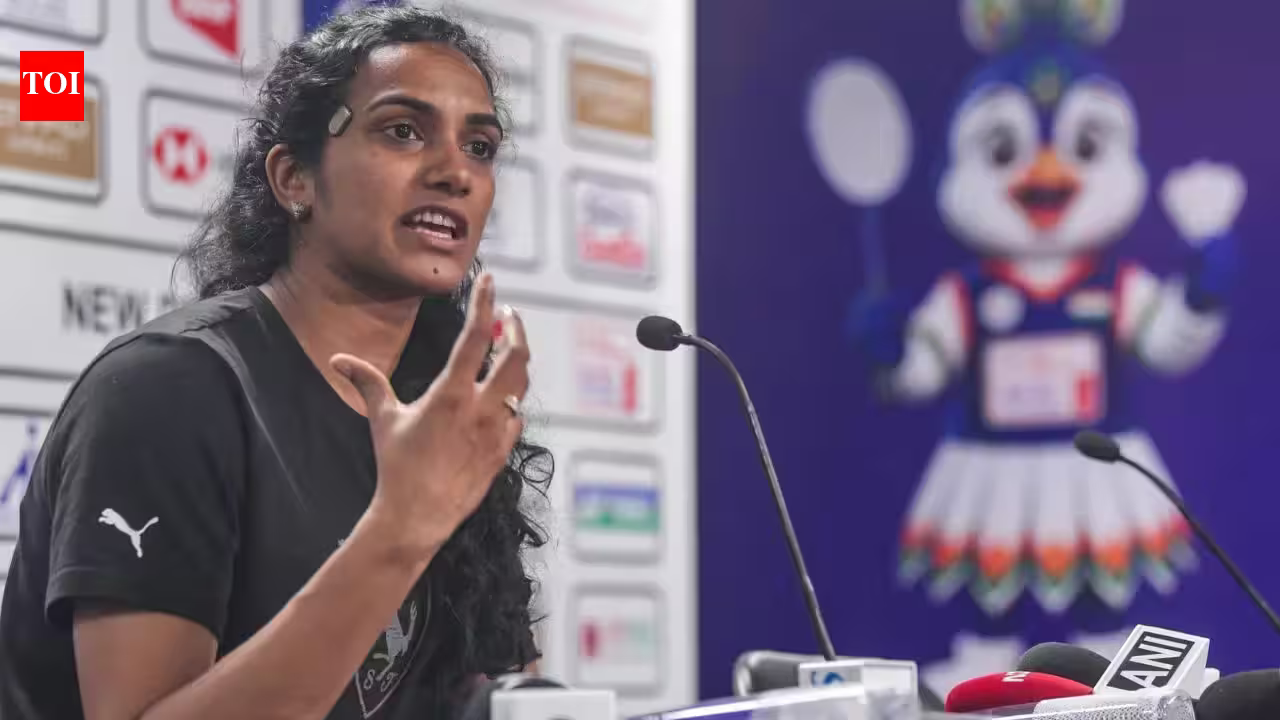
In a decisive push to secure a record-breaking sixth medal at the upcoming BWF World Championships, renowned badminton player PV Sindhu has significantly intensified her focus on sports science and strength and conditioning. This strategic shift reflects a broader understanding within elite athletics that peak performance is not solely dependent on on-court skill but also on meticulous physical preparation, injury prevention, and scientific recovery protocols.
Sindhu’s dedication to these advanced training methods was evident during her practice sessions at the Indira Gandhi Indoor Stadium. She was seen engaging in rigorous drills with emerging talents like Ayush Shetty and Unnati Hooda, under the watchful eye of coach Irwansyah Adi Pratama. These sessions, commencing as early as 8 AM, demonstrated the Indian contingent’s comprehensive preparation for the prestigious tournament. With other prominent players such as Satwiksairaj Rankireddy-Chirag Shetty, Lakshya Sen, and Hariharan Amsakarunan-MR Arjun also present, the atmosphere was charged with anticipation for the championships.
Currently ranked ninth globally, Sindhu’s recent performance trajectory suggests her renewed approach is yielding positive results. After starting the year at World No. 13, she has ascended four positions, demonstrating a remarkable return to form. Her recent victories, including a Japan Open Super 750 title in July, coupled with semi-final appearances in Australia and Malaysia, and quarter-final finishes in Singapore, Thailand, and Indonesia, underscore her competitive edge.
Central to this resurgence is the integration of a dedicated sports science team. This team includes Wayne Lombard, a highly experienced strength and conditioning coach with a background working with Indian athletes in various disciplines, along with physio Heera Mundluru and Shreyasi Sanjay. Sindhu emphasized the critical role of this support system, acknowledging that the human body is not always at 100% and that injuries can strike unexpectedly. The team’s proactive approach focuses on preventative measures and smart training adjustments, utilizing modern gadgets to monitor strain and fatigue levels. This data-driven methodology allows for informed decisions regarding training intensity and recovery, ensuring Sindhu pushes her limits effectively while minimizing injury risks. She confidently expressed that this focused attention has positively impacted her physical and mental state, resulting in noticeable improvements in her game and movement on the court.
Sindhu’s long and illustrious career, marked by five World Championships medals (one gold, two silvers, two bronzes), speaks to her enduring commitment to the sport. Should she clinch the title this year, she would surpass Zhang Ning to become the most decorated female shuttler in the women’s singles category. Despite the passage of seven years since her last World Championships gold – a memorable victory against Nozomi Okuhara – her hunger for success remains undiminished.
Reflecting on her evolution as a player over the past seven years, Sindhu highlighted the significant changes in both her personal approach and the sport of badminton itself. She noted a shift in women’s singles from a predominantly attacking, fast-paced game to one characterized by longer rallies and increased demands for endurance and patience. This evolution has made experience a vital asset, enabling her to adapt to various on-court challenges, such as drift or unexpected shuttle behavior. Even with extensive experience and two Olympic medals, she candidly admits to still experiencing pre-match jitters, a testament to the persistent pressure and her deep passion for the game. However, she also views this pressure as motivation, stating that she has “nothing to lose” and aims to deliver her best performance, regardless of the outcome.
The road ahead at the BWF World Championships presents a formidable challenge for Sindhu. Her initial match against Ireland’s Sophia Noble is merely a prelude to tougher encounters. A potential clash with Wang Zhi Yi in the Round of 16 looms large, given Zhi Yi’s three victories over Sindhu this year. Further into the tournament, a quarter-final against Putri Kusuma Wardani, who defeated Sindhu at last year’s World Championships, could also prove difficult. The tournament’s structure places top seed An Se-young on the opposite side of the draw, meaning a potential semi-final match. An Se-young currently holds a dominant 10-0 head-to-head advantage over Sindhu.
The badminton landscape is also witnessing a generational shift, with a blend of seasoned veterans and rising young stars competing for glory. Sindhu, having witnessed numerous changes throughout her career, acknowledges the impending evolution of the scoring system to a 15-point format next year. She recognizes that this change will demand even greater intensity from the outset of a match, as early deficits will be harder to overcome. This adaptation to quicker, more intense rallies will require players to be “on their feet from point number one.” Despite these looming challenges and constant transformations within the sport, Sindhu embraces the changes, signaling her readiness to adapt and continue her pursuit of excellence.