





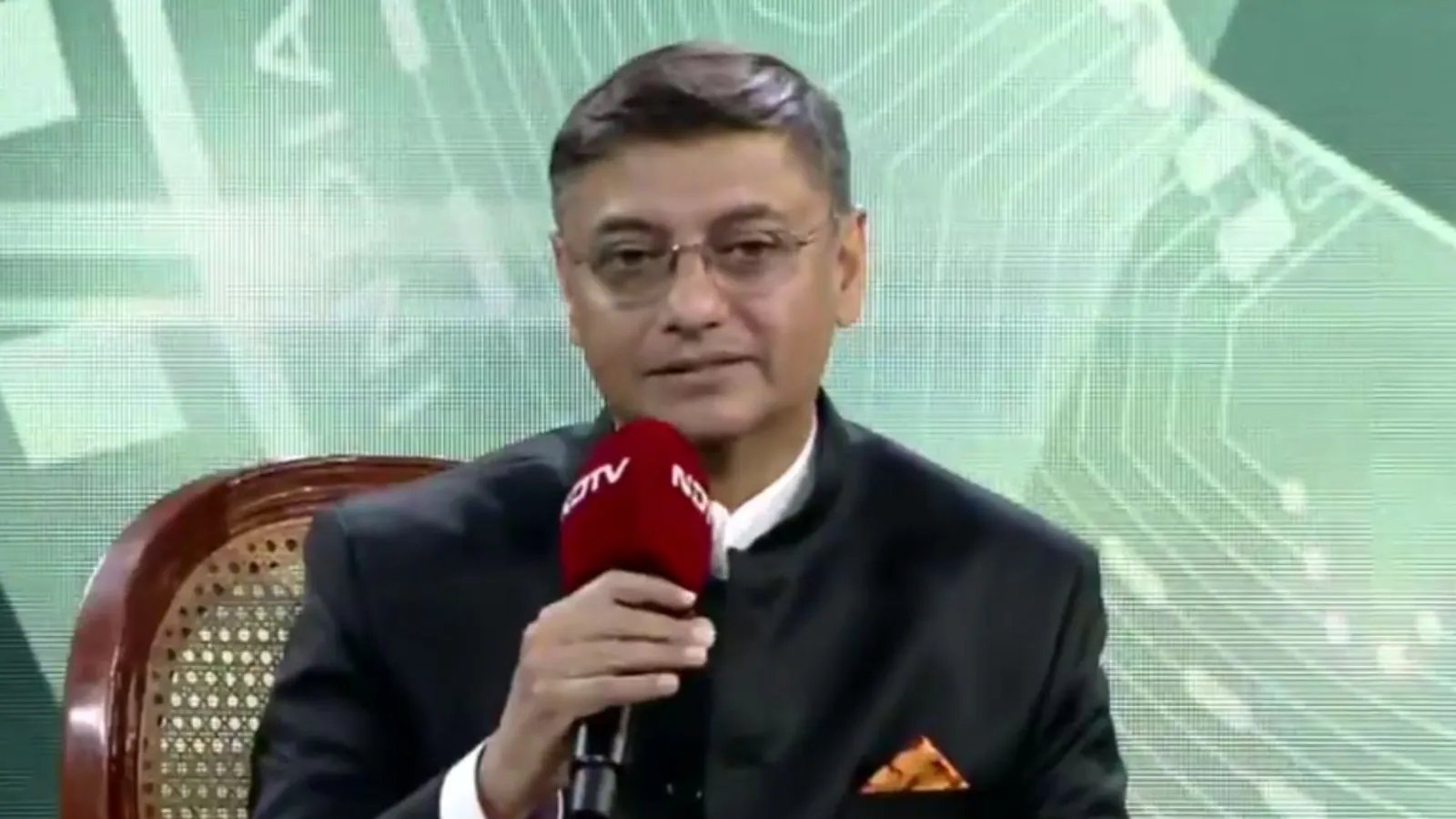
On India’s Independence Day, a fascinating national dialogue frequently emerges, intertwining the aspirations of a modernizing nation with the imperative to shed its colonial past. Sanjeev Sanyal, a distinguished member of the Prime Minister’s Economic Advisory Council and a respected historian, insightfully connects these seemingly disparate conversations. He posits that the energetic pursuit of global opportunities by Gen Z, a generation actively engaged in startups and international ventures, is inextricably linked to the broader national effort to overcome the lingering influence of colonialism. Sanyal views both as manifestations of a nation, resilient after decades of survival, striving to realize its immense, untapped potential in a world where traditional certainties have crumbled.
This global uncertainty, Sanyal elaborates, extends beyond immediate geopolitical hotspots like Iran and the Gulf region. It permeates various aspects of modern life, from the transformative impact of artificial intelligence on supply chains and industries to the significant demographic dividend India is poised to leverage over the next quarter-century. This demographic window, he stresses, presents a crucial, time-bound opportunity that India must capitalize on before it diminishes.
Sanyal emphasizes that there is no singular, overarching “master plan” that dictates India’s trajectory, nor should there be. He dismisses the notion of a predetermined path, citing the unforeseen global disruption caused by COVID-19 in early 2020 as a stark example of the futility of such rigid projections. Instead, his guiding philosophy is one of flexibility and optionality – fostering a system robust enough to absorb unforeseen shocks, regardless of their origin. This principle underpins India’s multifaceted foreign policy, where the nation actively participates in diverse forums such as the G20, the Quad, and BRICS, while also engaging as an invitee at G7 tables. The same strategic flexibility, he notes, drives India’s expanding network of free-trade agreements.
Economically, Sanyal points to India’s significant progress, highlighting its status as the world’s third-largest economy by purchasing power parity, contributing nearly 8 percent of global output. In current dollar terms, India is the fifth-largest economy, valued at approximately $4.2 trillion, just behind Japan, and currently holds the distinction of being the fastest-growing major economy. However, he prudently tempers this optimism by acknowledging that when divided by the world’s largest population, India’s per capita income still places it as a relatively poor country. This reality, he argues, necessitates the continued development of robust social safety nets alongside the nation’s efforts toward economic ascent. When asked about a single policy intervention that could unlock the scale of wealth creation India aspires to, tracing the journey from post-1947 scarcity and the “licence raj” of the 1970s and 80s to its current ambitions as a top-three global economy, Sanyal unequivocally states that no such solitary lever exists.
Sanyal becomes particularly animated when discussing decolonization, a subject he has consistently argued extends far beyond academic texts. While acknowledging that the battle for decolonization in education is largely won, with school textbooks up to Class 9 having shed the colonial and Marxist frameworks that dominated Indian education for decades (an area where he directly contributed to rewriting economics portions), he identifies three subtle yet persistent areas where the colonial hangover endures.
The first is academia, where Indian professors are effectively compelled to publish in international journals, particularly those listed on the ABDC index (an index issued by an Australian body), for career advancement. This requirement, he contends, holds true irrespective of the quality of work published in Indian journals. Sanyal asserts that this practice amounts to self-colonization, “by perpetuating a system where we seek foreign validation.” The second area is certification. He highlights that Indian industry, and even the Indian government, frequently demand foreign certification for products and processes, despite India having failed to develop equivalent indigenous systems – a feat, he notes, even Thailand has achieved. The third, and perhaps most emotionally charged, concerns language. Sanyal vehemently objects to the classification of Indian languages as “vernacular,” identifying it as a marker of the very colonization under discussion. However, his critique is balanced; he is equally critical of the dearth of contemporary literary output in Indian languages. Reminding his audience that Rabindranath Tagore was a celebrated writer by the age of 40, Sanyal provocatively asks, “Where is today’s Tagore in Bengali? Where is today’s Premchand in Hindi?” He contends that Indian languages will only truly advance by generating new ideas and literature, not by being merely preserved as historical inheritances. English, he argues, remains a great language not solely due to Shakespeare, but because it has consistently produced groundbreaking new writing ever since. He does offer a glimmer of optimism in the realm of popular culture, particularly Bollywood, where less restrictive gatekeeping allows for fresh trends to emerge. This, he suggests, indicates what could be achieved elsewhere if Indian languages are treated as dynamic, living systems rather than static museum artifacts.
Shifting to Gen Z, often portrayed as unapologetic champions of Indian heritage, embracing everything from “bhajan clubbing” to a renewed interest in Indian attire and history, Sanyal challenges the universality of the “Gen Z” label itself. He expresses reservations about using it as an all-encompassing term, arguing that every generation, including his own Gen X, encompasses individuals with vastly different worldviews, sometimes even within the same family unit. Nevertheless, he acknowledges the tangible trend of renewed interest in Indian traditions. He points to a growing movement to revive ancient Indian martial arts and traditional games, alongside a surge in interest in Indian history – a phenomenon he personally benefits from, as much of his current reading list is now influenced by younger readers. However, he cautions against inflating this into a grand narrative, asserting that Gen Z, like all preceding and subsequent generations, will ultimately “find their own way through the world,” with some individuals contributing more significantly to India’s decolonization than previous generations.
Sanyal reserves some of his most incisive criticism for the way India’s independence movement has been historically portrayed. He argues that the prevailing narrative often depicts Indians as passive figures lacking agency, implying that they should be grateful for the civilizing influence of successive invaders. This narrative, he contends, frames the freedom struggle as almost entirely non-violent, centered on Gandhi politely requesting the British to leave. “The reality is that the history of our freedom struggle was absolutely brutal,” he states, citing the extensive armed resistance, including executions, hangings, and imprisonment in places like the Cellular Jail, culminating in pivotal events such as the naval mutiny. He clarifies that this is not a blanket rejection of everything from the colonial period, emphasizing that one can admire the Taj Mahal or enjoy an English breakfast without extending that appreciation to “celebrating the occupation of my country.”
He extends this critique to India’s maritime history, dismissing the popular notion that Indians were historically afraid of the sea as “completely bunkum.” Citing evidence of Indian seafaring dating back to the Bronze Age, with trade routes reaching Oman and Sumeria, and later voyages east to Indonesia and Vietnam, he highlights how this rich history explains the presence of the world’s largest Hindu temple in Cambodia, not India, and why countries like Indonesia bear India’s name in their own. He laments that none of this features prominently in textbooks or popular culture, though he notes that this too is beginning to change.
Looking ahead to 2047, a century after independence, and envisioning an India that has fully cast off these inherited frameworks, Sanyal expresses notable optimism. While the demographic dividend is undoubtedly important, he asserts that the more profound shift is a burgeoning national confidence that was absent even a decade ago. Today, he observes, it is commonplace for Indian multinationals to compete globally, for Indian startups to scale, and for the country to articulate its own history in its own voice, “without anything to be defensive about.” This alone, Sanyal concludes, represents significant progress, and this shift in confidence underpins his conviction that the next two decades will witness India assuming its rightful place on the global stage.