









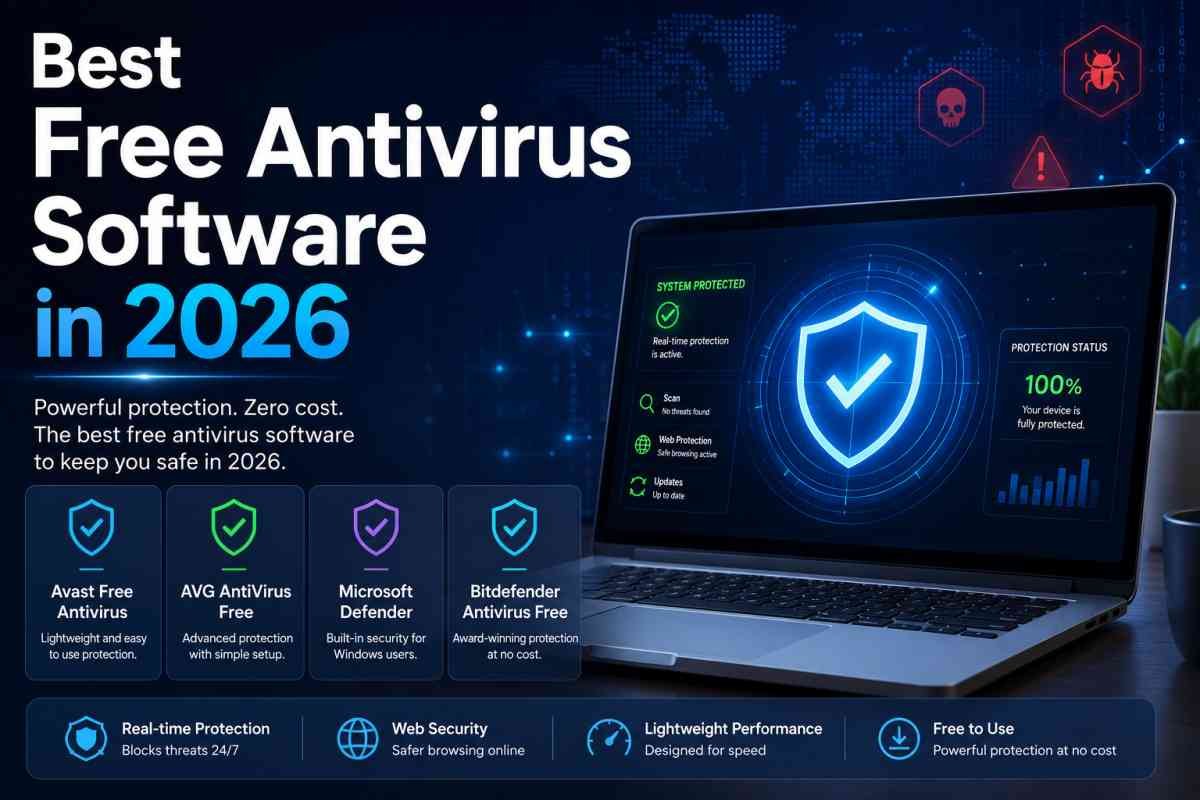
In the last decade, the landscape of free antivirus software has undergone a significant transformation, evolving to a point where numerous zero-cost options now rival the malware protection capabilities typically associated with premium, paid security suites. Recent independent evaluations, specifically conducted during 2026, unequivocally demonstrate that free antivirus solutions provided by industry leaders such as Avast and AVG consistently achieve maximum scores across critical metrics including protection efficacy, system performance impact, and overall user usability. Concurrently, Microsoft Defender continues to serve as a robust foundational security layer for Windows users who prefer not to install additional third-party software. The fundamental question surrounding free antivirus has shifted; it’s no longer about whether these solutions work, but rather if their free versions offer sufficient protection tailored to an individual’s specific computer usage patterns. For a substantial number of home users, the answer is a resounding yes.
Determining the "best" free antivirus software in 2026 involves a nuanced assessment that goes beyond simple malware detection. Based on comprehensive independent testing, which considers factors like malware protection rates, system performance, user-friendliness, and the inherent practical limitations of each free offering, several strong contenders emerge. These include Avast Free Antivirus, AVG AntiVirus Free, Microsoft Defender Antivirus, Bitdefender Antivirus Free, Avira Free Security, and Malwarebytes Free. It’s crucial to understand that no single antivirus product is universally optimal for every computer user. Some individuals prioritize lightweight malware protection, while others seek more advanced features such as enhanced web protection, sophisticated phishing detection, or a suite of supplementary security tools. The paramount consideration, however, is the antivirus’s ability to proactively intercept and neutralize malware before a system becomes compromised. This might sound obvious, but contemporary antivirus software performs functions far beyond merely scanning for known viruses. Modern security products are equipped to analyze suspicious behavioral patterns, identify malicious websites, scrutinize downloads, detect harmful scripts, leverage cloud reputation data, and even identify previously unknown or "zero-day" malware threats. AV-Comparatives, a leading independent testing organization, characterizes modern antivirus protection as a sophisticated amalgamation of technologies, encompassing URL blocking, cloud reputation systems, machine learning algorithms, behavioral detection, traditional signature-based detection, and heuristic analysis.
The term "antivirus" itself has become somewhat anachronistic, as traditional viruses constitute only a fraction of the vast and evolving threat landscape. Today’s computers face a barrage of sophisticated threats, including credential-stealing malware, debilitating ransomware, information stealers, malicious browser extensions, deceptive phishing pages, insidious remote-access trojans, and fraudulent software downloads. Microsoft’s 2025 Digital Defense Report painted a stark picture, revealing that a staggering 52 percent of global cyberattacks observed between July 2024 and June 2025 were financially motivated. Furthermore, approximately 80 percent of incidents investigated by Microsoft’s dedicated security teams involved either data theft or leakage. Identity-based attacks also witnessed a sharp escalation, with Microsoft reporting a 32 percent surge during the first half of 2025, where over 97 percent of these incidents were attributed to large-scale password attacks. The increasing financial toll of cybercrime underscores the heightened stakes. The U.S. Federal Trade Commission (FTC) received roughly three million fraud reports in 2025, with consumers reporting a staggering $15.9 billion in losses. By June 2026, the FTC indicated that reported fraud losses for 2025 had already climbed to approximately $16 billion, representing an increase of about 25 percent over the previous year. While antivirus software cannot unilaterally prevent all forms of online fraud, it plays a critical role in preventing many attacks from progressing to the stage where malware can exfiltrate browser sessions, passwords, cryptocurrency wallet data, or personal documents.
Avast Free Antivirus stands out as one of the most compelling free antivirus products currently available for Windows. Its superiority is not merely based on marketing claims but is strongly supported by consistent independent testing. In AV-TEST’s rigorous May and June 2026 Windows evaluations, Avast Free Antivirus versions 26.4 and 26.5 achieved a perfect score across all categories: 6 out of 6 for protection, 6 out of 6 for performance, and 6 out of 6 for usability, culminating in an immaculate total score of 18 out of 18. Similarly, AV-Comparatives included Avast Free Antivirus in its March 2026 malware protection test, which involved a challenging set of 10,000 recent malware samples, awarding Avast its highest "Advanced+" rating. What makes Avast Free particularly effective is its proactive real-time malware monitoring, rather than merely functioning as an on-demand scanner. It actively identifies malicious files, potentially unwanted programs, and suspicious activities, while also meticulously scrutinizing downloads and web browsing behavior. A key reason for Avast’s strong performance in real-world scenarios is its multi-layered approach to protection, operating at various stages of an attack chain. A malicious file, for instance, can be blocked when the website hosting it is accessed, during the download process, upon reaching the local disk, or when it attempts to execute. AV-Comparatives specifically designs its tests to replicate these complex, real-world attack chains. The primary drawback of Avast’s free offering is its strategic role as an entry point to its paid ecosystem. Users may frequently encounter upgrade prompts and advertisements for its more comprehensive security features. While its protection is undeniably strong, users seeking the least intrusive antivirus experience might find Microsoft Defender a more suitable option. Overall, Avast Free Antivirus is highly recommended in 2026, primarily because its claims of robust protection are consistently validated by current, credible independent laboratory results.
AVG AntiVirus Free serves as an excellent alternative to Avast Free, given their close relationship. Both products share underlying technology and operate under the same corporate ownership. AV-Comparatives specifically notes that AVG leverages the Avast antivirus engine, a fact that becomes abundantly clear when examining their laboratory test results. AVG AntiVirus Free versions 26.4 and 26.5 achieved identical AV-TEST scores as Avast during May and June 2026: 6/6 for protection, 6/6 for performance, and 6/6 for usability, resulting in another perfect score of 18 out of 18. Furthermore, AVG also earned the "Advanced+" designation in AV-Comparatives’ March 2026 malware protection evaluation. AVG excels in providing real-time protection against common malware threats, suspicious downloads, and potentially harmful applications. Its most significant selling point is its straightforward, high-quality malware protection without the necessity of a paid subscription. For users deliberating between AVG and Avast, the protection levels are likely to be very similar due to their shared technological foundation. The ultimate choice might therefore hinge on personal interface preference or how each product performs on a specific computer configuration. In conclusion, AVG AntiVirus Free remains one of the strongest free antivirus options available, a position consistently reinforced by current independent testing outcomes.
Microsoft Defender Antivirus holds a unique position as the best free antivirus solution already seamlessly integrated into Windows. Millions of users benefit from its protection without needing to install any additional software. Historically, this convenience came with a significant trade-off, as Microsoft’s antivirus technology often lagged behind established security vendors. However, this is no longer the case. In AV-TEST’s June 2026 Windows evaluation, Microsoft Defender Antivirus achieved impressive scores: 6 out of 6 for protection, 5.5 out of 6 for performance, and 6 out of 6 for usability, yielding a total score of 17.5 out of 18. AV-Comparatives also recognized Microsoft with one of its "Advanced+" ratings during the March 2026 malware protection test. For the average Windows user who maintains an updated operating system, avoids pirated software, and adheres to basic security hygiene, Microsoft Defender offers credible and sufficient protection. Its greatest advantage lies in its deep integration within the Windows ecosystem. There’s no extra software to install, it updates automatically through Windows security mechanisms, and it works synergistically with other features like Windows Firewall and SmartScreen. Moreover, Defender largely avoids the aggressive advertising and upgrade prompts often found in third-party free antivirus products. Where Microsoft Defender might fall short is in offering the extensive suite of additional features that some third-party solutions provide, such as stronger phishing controls, advanced browser security, identity protection services, VPN capabilities, or sophisticated ransomware protection tools. While it serves as an excellent baseline security system, users who frequently download unfamiliar files or navigate higher-risk websites might prefer a more comprehensive, feature-rich product. Ultimately, Microsoft Defender is arguably the best free antivirus for users who desire robust protection without the need to install any extra security software.
Bitdefender Antivirus Free has cultivated a formidable reputation for its highly effective malware detection combined with a relatively low degree of user interaction. Its paid counterpart, Bitdefender Total Security, received a perfect 18 out of 18 from AV-TEST in June 2026, with 6 points each for protection, performance, and usability. AV-Comparatives also included Bitdefender among its "Advanced+" performers in the March 2026 malware protection test. It’s crucial to differentiate: these specific AV-TEST and AV-Comparatives results pertain to Bitdefender Total Security, not directly to the company’s free antivirus edition. Nevertheless, they serve to illustrate the strength and efficacy of Bitdefender’s core detection technology. Bitdefender’s free antivirus product is ideally suited for users who seek traditional malware protection devoid of a vast array of additional tools. It tends to operate with a highly automated approach, intelligently detecting suspicious activities without demanding constant decision-making from the user. This characteristic can be particularly beneficial for less technically inclined users, as security warnings are only truly useful when the recipient understands the appropriate action to take. In conclusion, Bitdefender Antivirus Free is a strong contender for users who prioritize a lightweight and largely automated security solution, though it is important to carefully interpret independent testing results, as laboratories frequently evaluate Bitdefender’s paid suite rather than its free version.
Avira Free Security distinguishes itself by integrating antivirus protection with a variety of additional security and system utilities. The company’s broader Windows security technology consistently performs well in protection tests. AV-TEST awarded Avira Internet Security perfect scores of 6 out of 6 for protection and usability in its June 2026 evaluation, though its performance score was slightly lower at 4.5 out of 6. Again, it is important to note that this independent test specifically relates to Avira Internet Security, not Avira Free Security. Avira Free Security is a sensible choice for users who desire more than just a basic virus scanner but are unwilling to invest in a full, paid security suite. The trade-off, however, is that free security suites offering numerous additional features can sometimes feel more complex and less streamlined than simpler antivirus products. Despite this, Avira Free Security remains a worthwhile consideration, though users with older or less powerful computers should pay particular attention to its potential impact on system performance.
Malwarebytes Free occupies a distinct niche, differing somewhat from traditional antivirus software. It is especially valuable as an supplementary malware scanner when a computer already exhibits suspicious behavior. Malwarebytes has earned a strong reputation for its proficiency in detecting adware, potentially unwanted applications (PUAs), and various forms of malware that users might need to investigate post-infection. The primary limitation of Malwarebytes Free is that it functions primarily as an on-demand scanner, meaning it does not offer continuous real-time protection in its free tier. Users must grasp the critical distinction between manually initiated, on-demand scanning and constant, always-active protection. A scanner that only runs when manually opened should not be considered equivalent to a perpetually active antivirus product. Therefore, Malwarebytes Free is best utilized as a secondary tool for malware detection and removal, rather than being the sole security product installed on a computer.
When comparing leading free antivirus solutions, certain key characteristics stand out. Avast Free Antivirus and AVG AntiVirus Free are highly recommended for most users, offering excellent independent test results and strong malware detection, respectively, both featuring real-time protection. Their main limitation, however, is the presence of upgrade advertising. Microsoft Defender is ideal for Windows users, benefiting from seamless integration into the operating system and real-time protection, though it offers fewer additional tools compared to third-party options. Bitdefender Antivirus Free excels in lightweight, automated security with real-time protection, though its free extras are limited. Avira Free Security provides a broad set of free features and real-time protection, but users should be mindful of its potential impact on performance. Finally, Malwarebytes Free is best for malware removal and acts as a strong secondary scanner, with limited real-time protection in its free tier, making it unsuitable as a sole defense.
For those wondering which free antivirus provides the absolute best malware protection, current 2026 laboratory evidence places Avast Free Antivirus and AVG AntiVirus Free in a particularly strong position. Both products achieved perfect 18 out of 18 scores in AV-TEST’s June 2026 evaluations. Additionally, both received the prestigious "Advanced+" recognition from AV-Comparatives after undergoing rigorous testing against 10,000 recent malware samples. Microsoft Defender was a close contender, earning 17.5 out of 18 from AV-TEST and an "Advanced+" rating from AV-Comparatives. For most consumers, the functional differences between these top-tier free products increasingly revolve around features, user experience, and system performance, rather than significant disparities in their core malware detection capabilities.
A common concern is whether free antivirus software will slow down a computer. The answer is, potentially, yes. Antivirus software operates continuously in the background, actively inspecting files as they are opened, downloaded, copied, or executed. This intensive process naturally consumes CPU cycles, memory, and storage access. AV-Comparatives conducts dedicated performance testing precisely to evaluate this impact. Their April 2026 test meticulously examined antivirus performance during common everyday tasks, including file copying, archiving and extracting, application installation, software launching, file downloading, and website browsing. The test was performed on a Windows 11 system equipped with an Intel Core i3 processor, 8GB of RAM, and SSD storage, which AV-Comparatives described as a "low-end configuration." It is crucial to remember that performance results are not universally applicable. AV-Comparatives itself cautions that security software can behave differently depending on the specific computer hardware, installed applications, and overall workload. A modern desktop with 32GB of RAM might barely register an antivirus scan, whereas an older laptop with limited memory could experience a noticeable slowdown.
The safety of free antivirus software is another critical consideration. Reputable free antivirus software from established security companies can indeed be safe and effective. The greater risk often stems from deceptive or "fake" antivirus software. Cybercriminals frequently employ convincing security warnings and fabricated malware alerts to trick users into installing malicious programs. Therefore, users should always download antivirus programs directly from the official vendor website or a trusted operating system application store. It is imperative to avoid downloading antivirus installers from suspicious software download websites, misleading advertisements, or pop-ups that falsely claim your computer is already infected. A legitimate website, simply by virtue of your visit, cannot typically perform a comprehensive malware scan of your Windows computer.
The debate between free and paid antivirus often boils down to features versus cost. Free antivirus software primarily focuses on its most essential function: detecting and blocking malware. Paid antivirus subscriptions, in contrast, typically bundle a host of additional services. These can include unlimited VPN access, comprehensive password management tools, identity monitoring, dark web monitoring services, parental controls, cloud backup solutions, advanced ransomware protection, webcam monitoring, dedicated customer support, and the ability to protect multiple devices. Whether these extra features justify the cost depends entirely on the individual user’s needs. Someone who already uses a separate password manager, a dedicated VPN service, and a secure cloud backup solution may find little additional value in purchasing an all-in-one antivirus package. Conversely, another user might prefer the convenience of having all these security functionalities managed through a single application.
A frequently asked question is whether Macs require antivirus software. While macOS incorporates several built-in security technologies and generally imposes stricter restrictions on application execution compared to traditional Windows systems, Macs are not entirely immune to malware. Mac users can still encounter malicious browser extensions, credential theft, adware, phishing attacks, fraudulent applications, and information-stealing malware. A more pertinent question is whether installing additional antivirus software provides a significant enough enhancement in protection to warrant the potential performance impact and added complexity. Users who primarily install software through Apple’s official ecosystem and practice strong security hygiene may find the built-in protections sufficient. However, individuals who frequently download third-party applications from less curated sources or handle sensitive business information might benefit from an additional layer of security.
Similarly, the question arises for Android devices: does Android need antivirus software? Android includes inherent security protections, such as Google Play Protect, but malware can still infiltrate devices through sideloaded applications, fraudulent APK files, and malicious websites. Users who exclusively install applications via Google Play generally have a lower risk profile than those who regularly sideload software from external sources. This fundamental principle applies across virtually every operating system. While security software undeniably helps, user behavior remains one of the most critical determinants of whether a cyberattack will succeed.
It’s vital to recognize that installing antivirus software should never cultivate a false sense of security. Many sophisticated attacks today target user identities rather than directly compromising the computer itself. Microsoft reports that over 97 percent of the identity attacks it observed involved large-scale password attacks. Critically, antivirus software cannot prevent an attacker from logging into an account if they already possess the correct password. This necessitates additional layers of control. Therefore, users should always combine antivirus software with several other crucial security practices: employing unique and strong passwords for every important account, utilizing a reputable password manager, enabling multifactor authentication (MFA), maintaining automatic software updates, performing regular offline or cloud backups, exercising extreme caution with unexpected email attachments, being vigilant when downloading software, and leveraging browser-based phishing protection. Microsoft’s statistic that phishing-resistant multifactor authentication can thwart up to 99 percent of certain identity attacks powerfully illustrates this point. Good cybersecurity is inherently built from multiple, interconnected layers. Antivirus software constitutes one essential layer, but it should never be the sole line of defense.
For Windows 11 users, three products distinctly stand out. Avast Free Antivirus currently provides some of the strongest independently verified free protection. AVG AntiVirus Free offers very similar protection, leveraging the same Avast engine, making it a strong alternative. Microsoft Defender is perhaps the most convenient choice, as it is pre-installed and consistently performs exceptionally well in independent testing. For the majority of users who prefer a "set it and forget it" approach, Microsoft Defender may be all that is needed. However, for those desiring an additional third-party security layer, Avast Free Antivirus is currently the stronger recommendation, based on its impressive 2026 laboratory results.
In conclusion, the best free antivirus software available in 2026 is vastly more capable and sophisticated than its counterparts from a decade ago. Both Avast Free Antivirus and AVG AntiVirus Free have achieved perfect scores in protection, performance, and usability in recent AV-TEST evaluations, while Microsoft Defender is so close in performance that many Windows users have little reason to seek external solutions. Independent testing also confirms that these free products can effectively stand shoulder-to-shoulder with commercial security suites when confronted with thousands of contemporary malware samples. For most Windows users, the decision is relatively straightforward: choose Avast Free Antivirus for robust third-party protection, AVG AntiVirus Free if its interface is preferred, or simply rely on Microsoft Defender for capable protection with minimal additional software. Regardless of the chosen product, it is paramount to keep it updated and to combine it with multifactor authentication, strong unique passwords, regular software updates, and reliable backups. Antivirus software remains an indispensable component of digital security, but the most effective security strategy is one that acknowledges that any single defensive layer can eventually be breached, necessitating a comprehensive, multi-layered approach.