




Before the public announcement of N. Chandrasekaran’s decision to step down as chairman of Tata Sons in February, key figures within the Tata conglomerate proactively engaged with high-ranking government officials. These private discussions were aimed at apprising the government of significant internal issues and potential turbulences facing the vast business empire.
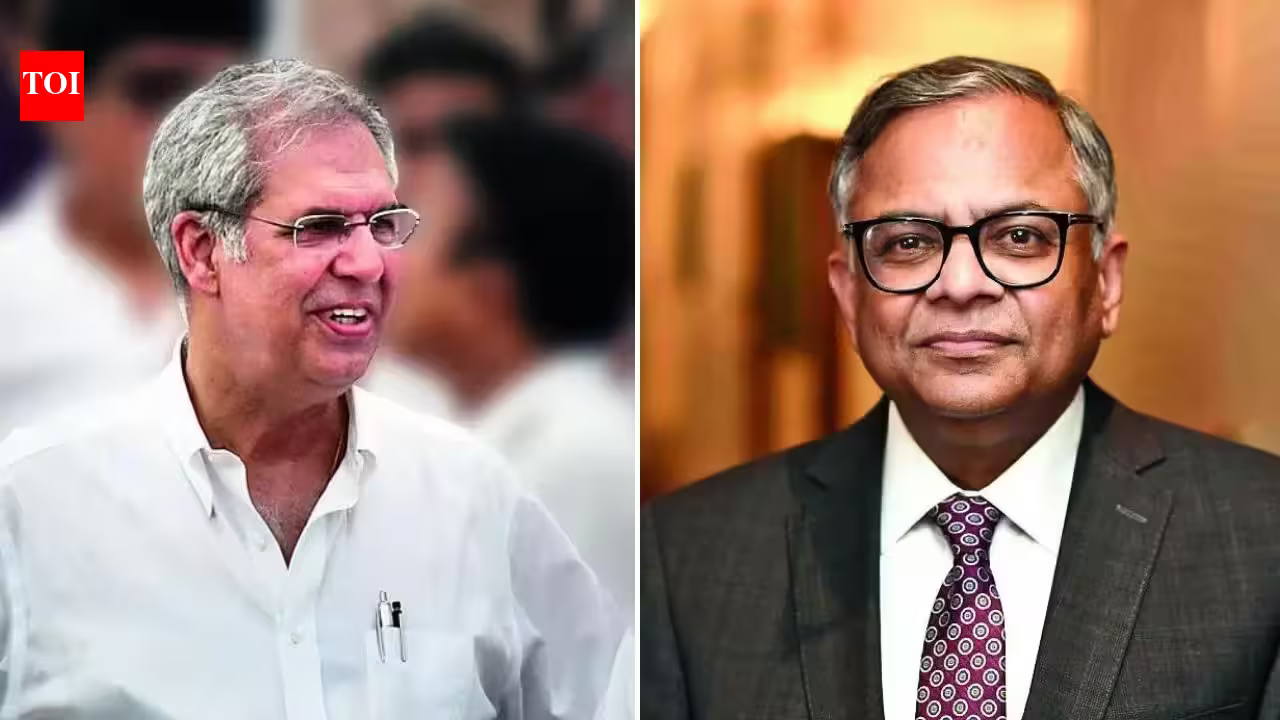
Among the critical topics addressed was a growing rift between Chandrasekaran and Noel Tata, chairman of the Tata Trusts. Their disagreements reportedly centered on strategic direction and governance principles for the group, particularly regarding the trajectory of new business ventures. Compounding this, there was considerable uncertainty surrounding Chandrasekaran’s potential reappointment, contributing to an atmosphere of instability.
Both Chandrasekaran and Noel Tata held separate, individual meetings with government leaders. While the precise dates and comprehensive details of these conversations remain undisclosed, sources indicate that these engagements highlighted specific concerns. These included questions around certain appointments, the financial losses sustained by prominent group entities such as Air India and Tata’s various digital platforms, and the substantial investments in semiconductor ventures.
It is worth noting that Noel Tata’s recent visit to Delhi, coinciding with the Independence Day and Parsi New Year holidays, initially raised eyebrows. However, sources close to him clarified that his trip was primarily related to Trent, the group’s retail arm, where he serves as non-executive chairman, a role he is set to relinquish in November due to the group’s retirement policy. Despite his limited day-to-day involvement with Trent, the timing of his visit fueled speculation, given the heightened anticipation surrounding Chandrasekaran’s successor.
While governments typically maintain awareness of major industrial players, it is unusual for the nation’s political leadership to be directly informed about the internal dynamics of a private-sector corporate group, especially when it is not embroiled in a financial crisis or insolvency proceedings. In this instance, it was the Tata group leadership itself that initiated contact with officials, who, in turn, listened attentively without overtly aligning with any particular faction within the company.
Government interest in the Tata group’s internal affairs is not without historical precedent. Approximately a year after Noel Tata succeeded his half-brother Ratan Tata as chairman of Tata Trusts in 2025, divisions within the Trusts, which are the controlling shareholders of Tata Sons, led to Noel Tata, Chandrasekaran, and other trustees, including TVS Motor chairman emeritus Venu Srinivasan, engaging separately with senior government functionaries. Those earlier discussions aimed to resolve internal divisions within the Trusts and navigate proposed regulatory changes impacting Tata Sons’ corporate structure. More recently, in June 2026, Noel Tata reportedly met with senior officials from the Reserve Bank of India to express reservations about a potential Initial Public Offering (IPO) of Tata Sons, a move that could potentially dilute the Trusts’ controlling stake in the company.
A trustee within the organization reflected on the recurring tensions between the chairmen of Tata Sons and the Tata Trusts, citing similar issues during the tenure of Cyrus Mistry and now under Chandrasekaran. This suggests a fundamental structural problem that demands a long-term resolution. The trustee posited that an IPO could serve as one such solution, potentially redefining the relationship between the operating company and its dominant shareholder.