




Underdog Spirit Shines Bright: The Untold Stories of Badminton’s Global Growth at the BWF World Championships
NEW DELHI – While badminton powerhouses like China, Chinese Taipei, Indonesia, Japan, and India dominate the entry lists for the 2026 BWF World Championships, which commenced on Monday, the true heart of the sport’s global expansion is beating in the inspiring narratives of athletes from lesser-known badminton nations. Despite facing significant hurdles, from limited resources to societal perceptions, these dedicated players are showcasing remarkable resilience and a burning desire to elevate their sport on the international stage.
The sheer scale of representation from leading nations is undeniable, with China fielding a formidable contingent of 30 athletes, followed closely by Chinese Taipei and Indonesia (24 each), Japan (23), and host nation India and Malaysia (20 apiece). European stalwart Denmark also boasts a strong presence with 13 members across the five draws. The commitment of these nations is further underscored by the dedicated media outlets – TV2 (Denmark), China Media Group (China), and Astro (Malaysia) – who have journeyed to New Delhi to cover the competition.
However, a different story unfolds for countries such as Bulgaria, Kazakhstan, Belgium, Croatia, Estonia, Guatemala, El Salvador, Brazil, Mexico, and Uganda. These nations are represented by a handful of players, and a traveling media contingent is a rarity. Yet, it is within these challenges that the true spirit of badminton’s global reach is revealed.
One such inspiring figure is Uganda’s Fadilah Shamika Mohamed Rafi. The 21-year-old, born in Tamil Nadu, faced a unique challenge in her early career: a lack of suitable training partners in her home country. This led her to relocate to Mauritius to pursue her passion. Introduced to the sport by her father at the tender age of nine or ten, Rafi’s journey received a significant boost through a scholarship and training stint in Dubai. Her perseverance paid off, culminating in her qualification for the ongoing World Championships after securing her second medal at the All Africa Senior Badminton Championships.
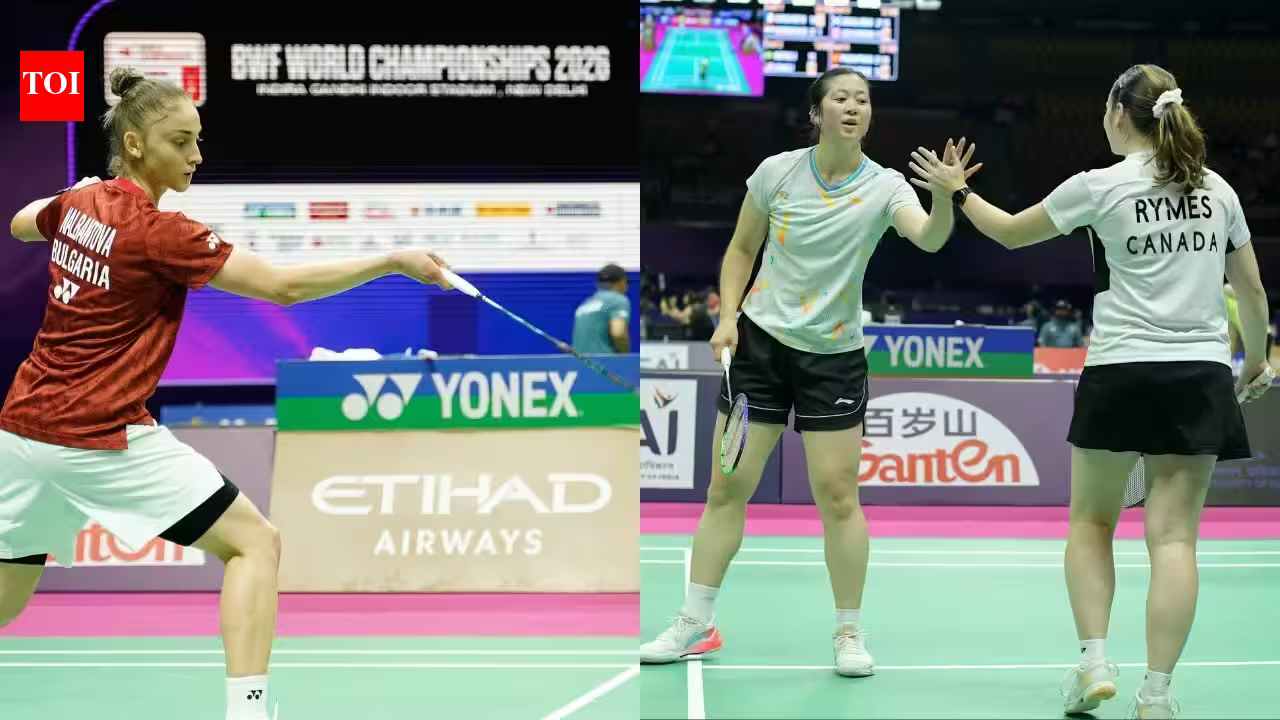
Bulgarian shuttler Kaloyana Nalbantova, a member of her nation’s victorious European Women’s Team Championships earlier this year, echoed the sentiment of battling against perception. Though she faced a tough opening match against the formidable World No. 1 and three-time Worlds medallist An Se-young, Nalbantova remains undeterred. When asked about her country’s underdog status, she powerfully stated, "Because we are Bulgaria and nobody believes in small countries. When we want to achieve something, we work really hard, it doesn’t matter what will cost us, I think that’s the part."
Bulgaria, with five athletes competing across three events, relies heavily on the talent of five-time European champions Gabriela and Stefani Stoeva. Nalbantova, at just 20 years old, passionately articulated the societal misconceptions surrounding badminton in her homeland: "It’s really not famous as a sport in Bulgaria and everybody underestimates our sport. They say it’s a ‘ladies sport’ but they (should) come here they see how hard it is." The financial realities are stark, with Nalbantova depending on European league play, her prize winnings, and federation support to fund her career due to a dearth of sponsors.
This struggle for funding is a common thread for many, including South African women’s doubles pair Amy Ackerman and Johanita Scholtz, who defied expectations by progressing to the Round of 32. Ackerman, 21, nurtured her initial interest by hitting shuttles with her father in their garden, using a telephone wire as a makeshift net, before receiving professional coaching. Scholtz, 26, stumbled upon badminton while accompanying her mother to squash sessions. Despite training together only a week before the World Championships, their regular communication and complementary playing styles have fostered a strong partnership. They also contend with external pressures, with skyrocketing petrol prices in South Africa and global conflicts exacerbating travel difficulties.
"It is a challenge because we have very big sports like rugby, swimming, athletics, cricket… But we’re trying to build. We’re going to get our name out there," explained Ackerman. Scholtz added, "The tricky thing is to get the schools and kids to play it."
Similarly, Brazilian men’s doubles duo Fabricio Farias and Davi Silva are banking on their impressive 21-14, 22-20 victory to attract much-needed sponsorship. Based in Sao Paulo, they currently receive financial assistance from the Olympic Association (COB) and the government.
The dynamism of these emerging badminton nations was perfectly encapsulated by Canada’s Johnna Rymes. She produced arguably the "play of the day" with a sensational behind-the-back, wristy return that left everyone, including her partner Eyota Kwan, astonished. Rymes and Kwan, who met at the Edmonton Club, are benefiting from the surging popularity of badminton ignited by last year’s world champion Victor Lai. "The sport is growing a lot because of Victor. We played a local tournament where even the umpires were distracted by watching his semifinals at Indonesia on their devices," Rymes humorously recounted.
While the BWF World Championships will undoubtedly see a traditional powerhouse claim medals, the tournament serves as a powerful reminder that badminton’s global reach extends far beyond the nations consistently topping the medal tables. The passion, dedication, and inspiring stories of athletes from developing badminton regions underscore the sport’s vibrant future and its profound ability to transcend borders and expectations. The challenge of badminton in these emerging countries is immense, but so too is the spirit of its players.