








Aerospace Giants Vie for Massive $10.5 Billion Indian Air Force Contract
NEW DELHI — A high-stakes battle for the Indian skies is intensifying as global aerospace titans Embraer and Lockheed Martin pull out all the stops to secure a lucrative $10.5 billion contract. The Indian Air Force (IAF) is currently seeking to procure 60 medium transport aircraft to replace its aging fleet, which includes the decades-old, Soviet-era Antonov An-32s.
The competition, which officially commenced in August with a formal Request for Proposal (RFP) issued to five domestic entities, represents one of the most significant defense procurement efforts in India’s history. Under the “Make in India” initiative, New Delhi has mandated that while the initial units may be delivered in fly-away condition, the bulk of the order must be manufactured within the country.
Embraer and Lockheed Martin Propose Domestic Manufacturing Hubs
Both global contenders have sought to leverage strategic partnerships with Indian industry leaders to meet the government’s stringent requirement for at least 40% domestic content.
Brazil’s Embraer has thrown its weight behind the C-390 Millennium. In a significant move on October 1, the company announced that it has identified Nagpur as the potential site for a dedicated production facility, should it secure the contract. Partnering with Mahindra Defence, Embraer aims to create a comprehensive aerospace ecosystem in central India, encompassing everything from assembly and manufacturing to long-term lifecycle support and crew training.
“Selecting Nagpur for a potential assembly line is a pivotal move toward establishing a robust, enduring aerospace footprint within India,” stated Bosco da Costa Junior, president and CEO of Embraer Defense & Security.
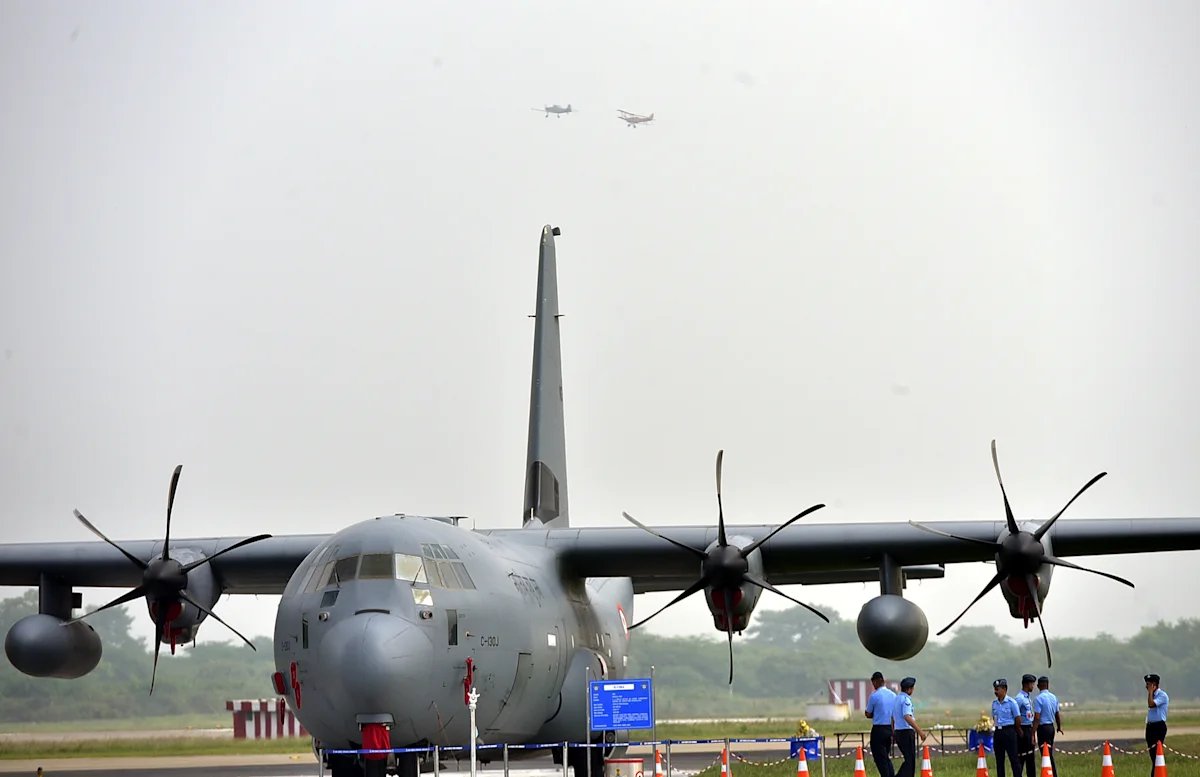
On the other side of the contest, Lockheed Martin is leveraging its existing, deep-rooted presence in the Indian market. The American giant has proposed the C-130J-30—a modernized, advanced iteration of the aircraft already in service with the IAF. Lockheed’s strategy involves a collaborative effort with Tata Advanced Systems Limited. If successful, the company plans to produce 12 aircraft in the United States while shifting the assembly of the remaining 48 to India.
Dan Tenney, Lockheed Martin’s senior vice president for global business development, noted that the company already maintains a mature production relationship with Tata, which currently manufactures empennages and other critical components for the C-130J. “We are looking to significantly expand our current industrial capabilities in India through this bid,” Tenney said.
Strategic Requirements for the Indian Theater
The IAF’s requirements reflect the unique geopolitical and environmental challenges India faces. The selected aircraft must demonstrate high-altitude performance, essential for operating along the nation’s rugged Himalayan borders with China and Pakistan. Furthermore, the planes need to be capable of landing on short, unpaved airstrips while retaining the versatility to conduct humanitarian relief and disaster response missions.
Beyond simple transport duties, the government views this procurement as a catalyst for industrial growth. By mandating significant technology transfer and domestic manufacturing, New Delhi intends to cultivate a self-reliant defense sector capable of sustaining its own military hardware.
As the December deadline for bid submissions approaches, both aerospace giants are positioning themselves not just as suppliers, but as long-term partners in India’s quest for strategic autonomy. Once the proposals are finalized, the IAF will embark on a rigorous technical evaluation process to determine which platform will serve as the backbone of India’s medium-lift capability for the coming decades.
Disclaimer: This content is auto-generated for informational purposes only.
Source: Read Original News