






Global Aerospace Giants Clash in Multi-Billion Dollar Race to Modernize Indian Air Force Fleet
The Indian Air Force (IAF) is moving closer to a transformative upgrade of its transport capabilities, with two global aerospace titans—Brazil’s Embraer and the U.S.-based Lockheed Martin—emerging as the frontrunners in a contest to secure a contract worth approximately $10.5 billion. The massive procurement program aims to replace India’s aging transport fleet, most notably the long-serving Soviet-era An-32 aircraft, which have long been the backbone of the nation’s tactical air-lift operations.
At the heart of the tender is the requirement for 60 medium transport aircraft. The deal carries significant weight not only for its financial scale but for its mandate to bolster domestic manufacturing. Under the terms set by the Indian government, the first unit must arrive in a flight-ready condition, while the remaining 59 must be manufactured indigenously within India.
High-Stakes Competition: C-390 vs. C-130J
The competition pits two highly regarded airframes against one another. Embraer is banking on the C-390 Millennium, a multi-mission jet that has gained significant traction globally for its versatility. In a strategic move to secure the contract, Embraer and its Indian partner, Mahindra Defence, announced on October 1 that they have selected Nagpur as their designated site for domestic production should they emerge victorious. Their proposal emphasizes a comprehensive plan to integrate Indian aerospace enterprises into the aircraft’s lifecycle, providing localized training and technical support.
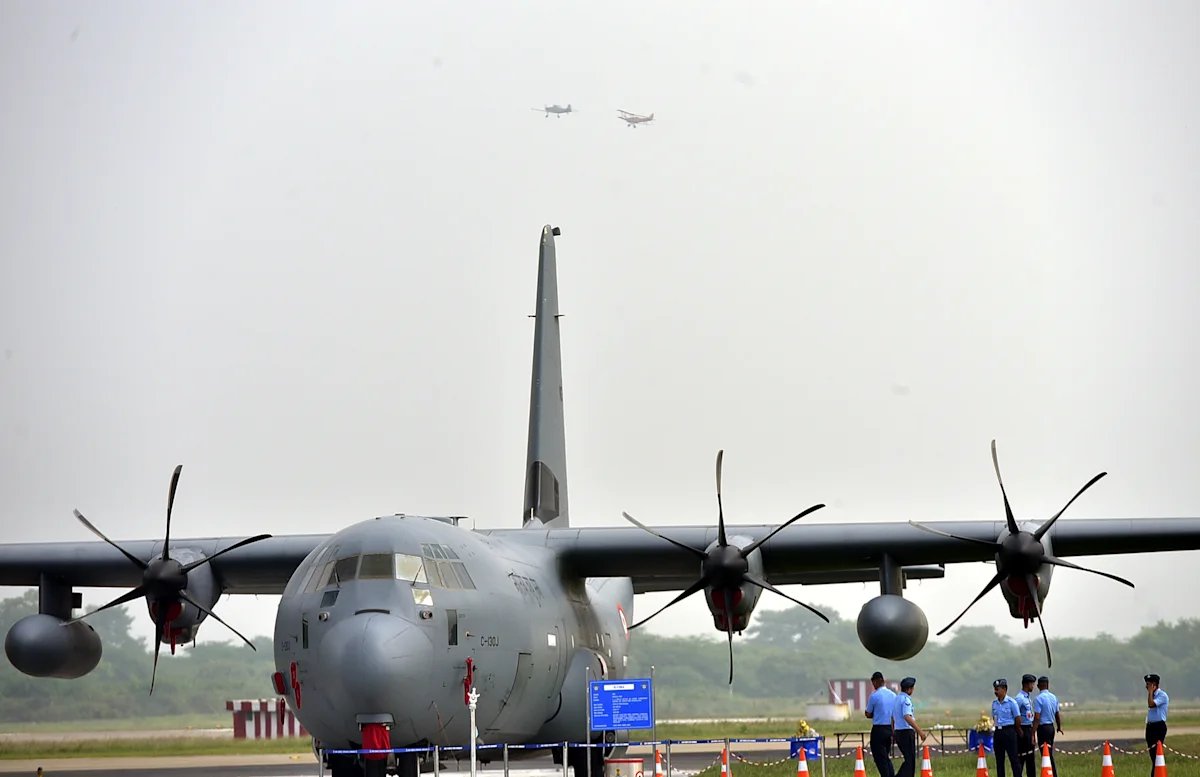
Lockheed Martin, conversely, is leveraging its established footprint in the Indian defense sector. Partnering with Tata Advanced Systems Limited (TASL), the U.S. giant already maintains an active production line in the country that manufactures key components for the C-130J, including tail assemblies. Lockheed is offering the C-130J-30 in the advanced Block 8.1.2 configuration. As part of their bid, the company has pledged to build 12 aircraft in the United States while shifting the production of the subsequent 48 units to India. Additionally, Lockheed has proposed an upgrade path for the 12 C-130Js already currently operational within the Indian Air Force.
Strategic Requirements and Indigenous Growth
The IAF’s technical specifications for this procurement are stringent, reflecting the unique geography of India’s borders. The new fleet must be capable of high-altitude operations and possess the durability to take off and land on temporary or unpaved runways. These capabilities are critical for logistical support along the Himalayan frontier, where the military faces the dual challenge of challenging terrain and proximity to borders with China and Pakistan. Beyond tactical deployment, these aircraft are essential for disaster relief and humanitarian missions across the region.
A cornerstone of the “Make in India” initiative is the stipulation that at least 40% of the project’s value must be generated through local production. This requirement ensures that the contract will act as a force multiplier for India’s domestic aerospace ecosystem, driving technological transfer and workforce development.
With requests for proposals sent to five major domestic firms this past August, the race is entering its decisive phase. Applications are due in early December, after which the Ministry of Defence will conduct a rigorous technical evaluation. For both Embraer and Lockheed Martin, the contract represents a major opportunity to cement their presence in one of the world’s most dynamic defense markets, ensuring a long-term partnership with the Indian Air Force that will span decades of service and maintenance.
Disclaimer: This content is auto-generated for informational purposes only.
Source: Read Original News