






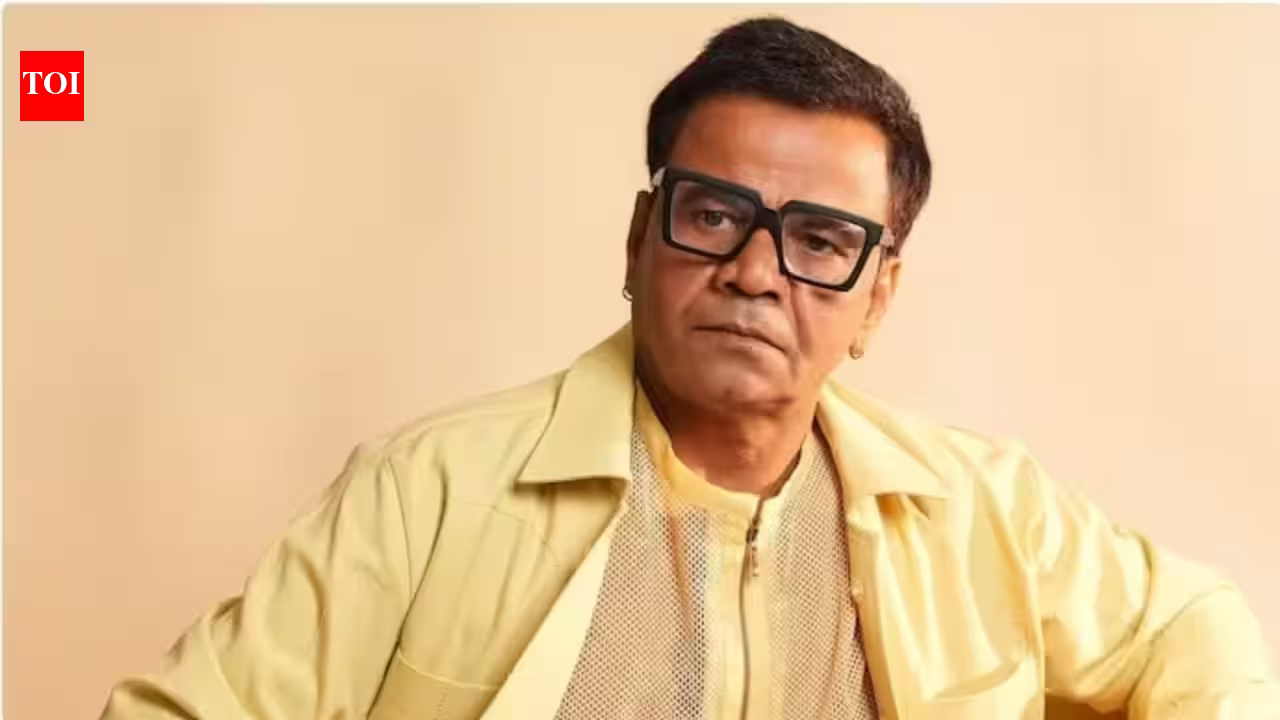
In a courtroom setting usually defined by stoic arguments and the weight of judicial procedure, a rare moment of levity—and poignant vulnerability—emerged this week involving one of Bollywood’s most beloved comedic faces. Actor Rajpal Yadav, a veteran of Indian cinema known for his impeccable timing and expressive persona, found himself at the center of the Supreme Court’s attention on Wednesday. However, the hearing, which concerned a long-standing, grueling legal saga regarding a cheque-bounce case, steered into an unexpected territory: the craft of filmmaking and the resilience of a man who has weathered a decade-and-a-half of professional and personal turbulence.
A Legal Battle Rooted in Creative Ambition
For the uninitiated, the legal troubles plaguing Rajpal Yadav are far from a recent development. The dispute dates back to the early 2010s, stemming from his ambitious 2012 directorial debut, Ata Pata Laapata. While the film was a labor of love for the actor, it became the epicenter of a financial catastrophe that would shadow him for years. Yadav reportedly suffered a staggering Rs 17 crore loss, an experience that transitioned from a professional setback into a protracted legal nightmare.
The ongoing litigation, revolving around a cheque-bounce case, has kept the actor entangled in the judicial system for 16 years. Yet, during Wednesday’s hearing, the discourse shifted from liabilities and demand drafts to the human toll of those years. Yadav spoke candidly before the bench, detailing the erosion of both his finances and his career trajectory over the past 13 years, painting a sobering picture of how a single venture can recalibrate the trajectory of a successful life.
From the Dock to the Director’s Chair
The atmosphere inside the courtroom transformed when Chief Justice of India (CJI) Sanjiv Khanna, presiding over the bench alongside Justices Joymalya Bagchi and V. Mohana, took a humanizing approach. Encouraging the actor to reclaim his narrative through his art, CJI Khanna lightened the mood with a suggestion that was both professional and deeply empathetic.
“Koi nayi movie aa rahi hai? Koi achi si movie banake logo ko dobara entertain karo,” the Chief Justice remarked. He pointedly suggested that returning to the screen would be the best way for the actor to rebuild his public image, even joking that the courtroom itself held potential talent, noting that several lawyers present were gifted actors who could potentially be cast in his future projects. It was a surprising, high-level endorsement for a man who has struggled to balance the demands of the courtroom with his livelihood.
‘Solah Sawan Jhel Ke’: A Title Born of Struggle
If there is one thing an artist like Rajpal Yadav understands, it is the transformation of pain into performance. Responding to the Chief Justice’s prompt, Yadav revealed that the experience of the last sixteen years has already been distilled into a creative concept. He shared that he has developed a title for a project based on his ordeal spanning from 2010 to 2026: Solah Sawan Jhel Ke.
The title, which translates to “Having Endured 16 Monsoons,” is a metaphor for the relentless, cyclical nature of his legal battles. In Indian culture, the monsoon is a season of change, renewal, and endurance. By choosing this title, Yadav is framing his legal struggle not just as a series of court dates, but as a long, arduous season of survival. It’s a title that hints at the weariness of a man who has been waiting for the clouds to break, signaling a potential return to the screen that would be meta-commentary at its finest. Whether or not the film ever makes it to theaters, the title stands as a testament to the actor’s ability to maintain his creative perspective even under the intense pressure of litigation.
A Path to Resolution: The Ancestral Settlement
Beyond the emotional exchange, the hearing resulted in concrete steps toward a resolution. The Supreme Court officially accepted Rajpal Yadav’s proposal to sell his ancestral property as a means to settle his long-standing debts. This is a significant turning point in a case that has seen numerous hurdles over the years.
Yadav demonstrated his commitment to settling the dues by submitting demand drafts worth Rs 1.15 crore during the session. Furthermore, the court was informed that the remaining Rs 85 lakh is expected to be paid by a prospective buyer of the ancestral property by October 12. The bench has taken these arrangements into account and is expected to outline a structured schedule for the clearance of the remaining liabilities in the coming sessions.
The Resilience of a Comic Icon
There is a profound irony in watching a man who has made millions laugh for decades now dealing with the somber realities of financial loss and legal scrutiny. However, if Wednesday’s proceedings are any indication, the judiciary sees more than just a case file; they see a contributor to the cultural landscape who has reached a crossroads.
Rajpal Yadav’s journey—from the highs of his Bollywood stardom to the lows of the Ata Pata Laapata debacle and his subsequent “sixteen monsoons” of legal strife—is a reminder of the fragility of fame. Yet, there is a distinct sense of closure beginning to form. As the actor looks toward clearing his financial slate, the prospect of Solah Sawan Jhel Ke serves as a powerful symbol of his intent to move forward. If he does eventually bring this story to the big screen, it will likely be one of the most honest films of his career—a blend of courtroom drama and the lived-in reality of a man who refused to let his legal history define his final act. For now, the courts remain the stage, but the exit door, at last, appears to be in sight.
Disclaimer: This content is auto-generated for informational purposes only.
Source: Read Original News