







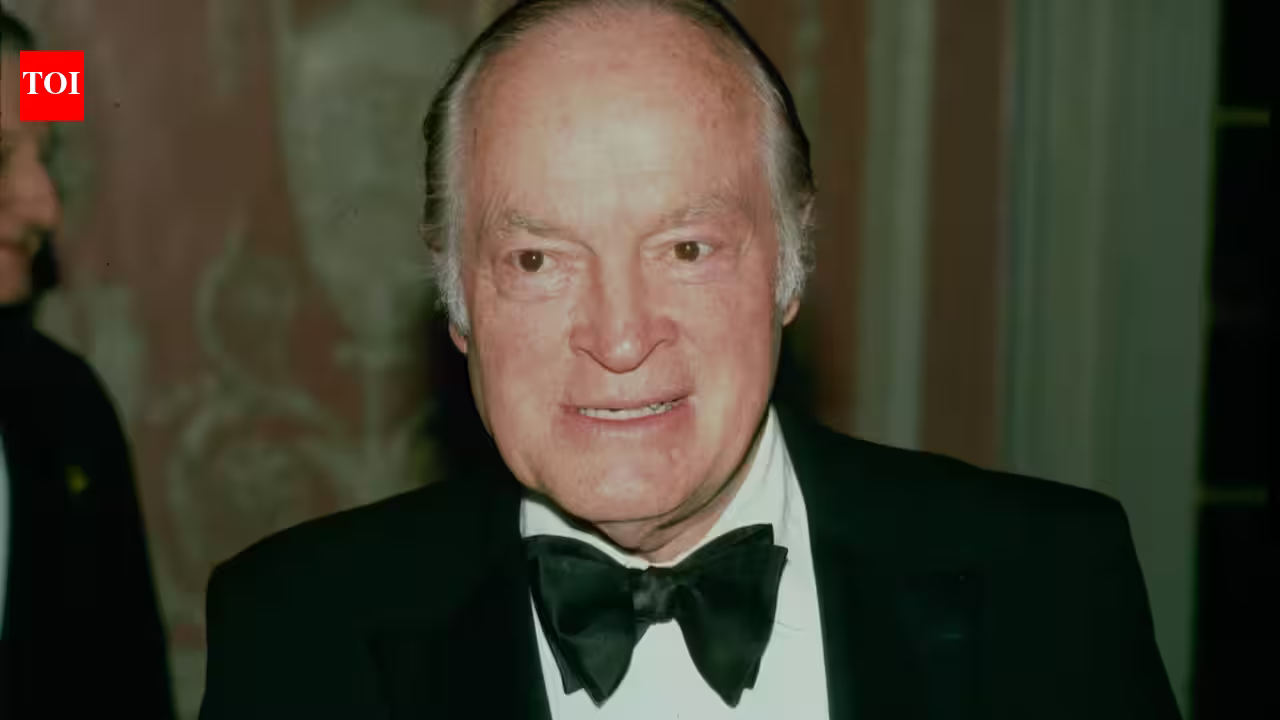
When we think of Bob Hope, the mind immediately conjures images of the legendary entertainer holding a golf club, standing on a USO stage, or hosting the Academy Awards with that signature, self-deprecating wit. He was the quintessential American icon—a man who spent decades traversing the globe to entertain troops and charm television audiences. Yet, beyond the glare of the spotlight and the hollow laughter of a soundstage, Hope left behind a physical legacy that is far more permanent than any film reel.
It is a lesser-known chapter of his life, but one that changed the landscape of Southern California forever: his 1993 decision to sell his sprawling Jordan Ranch to the National Park Service. It was a move that shifted the trajectory of conservation in the Santa Monica Mountains, transforming a developer’s dream into a wild, protected sanctuary for future generations.
## From Development Dreams to Conservation Reality
The story of Jordan Ranch wasn’t always one of environmental altruism. In the late 1980s and early 1990s, the 2,308-acre property, nestled in the scenic Simi Hills east of Thousand Oaks, was the subject of intense ambition. Developers had set their sights on transforming this rugged terrain into a high-end destination, complete with a tournament-level golf course, a sprawling museum dedicated to Hope’s illustrious career, and over 1,800 luxury homes.
However, the project hit a wall—a metaphorical one, built by local environmentalists, and a literal one, created by the logistics of the land itself. Plans for an access road through the sensitive Cheeseboro Canyon Park triggered massive pushback, sparking a protracted legal battle. Caught in the middle of a shifting regulatory landscape and increasing public opposition, the dream of the “Bob Hope golf mecca” began to sour. In an act that served as both a practical resolution to a stalemate and a massive philanthropic gesture, Hope pivoted. He agreed to sell the entire parcel to the National Park Service for $16.7 million—a price tag significantly below the property’s market value at the time. By walking away from the profit-heavy development deal, he ensured the land would remain untouched, a move that echoed far beyond the golf greens he once frequented.
## Expanding the Reach of the Santa Monica Mountains
The acquisition was a masterstroke for the National Park Service. While the federal agency already held jurisdiction over vast swaths of the Santa Monica Mountains, the addition of Jordan Ranch was the final piece of a much larger puzzle. It expanded the total federal parkland in the region to an impressive 20,400 acres.
This wasn’t just about preserving open space; it was about protecting critical biodiversity. By folding Jordan Ranch into the federal park system, the government secured vital migration corridors for local wildlife, including mountain lions, bobcats, and deer. It bridged the gap between Highway 101 and the Simi Hills, creating a contiguous wildlife highway that allowed these species to roam safely across the Santa Susana Mountains. In a rapidly urbanizing region, Hope’s land became a sanctuary for the flora and fauna that define the character of Southern California.
## The Unexpected Hurdles of the Sale
Of course, moving mountains—or in this case, a massive ranch—is rarely without its quirks. One of the more bizarre footnotes of the 1993 deal was the fate of the 200 cattle that still occupied the property. Managed by a long-term caretaker named Terry Boardman, the herd became an unexpected liability for the National Park Service during the transition.
In a classic bureaucratic twist, the federal agency found itself footing the bill and managing the logistics of relocating the livestock, as Hope’s original agreement with his caretaker remained intact until the very end. David Gackenbach, then-superintendent of the Santa Monica Mountains National Recreation Area, famously noted the oddity of the situation at the time. It serves as a reminder that even when performing a grand gesture of conservation, the everyday realities of land management—down to the last cow—persist. Beyond this deal, Hope’s environmental footprint also includes the 360-acre Hope Nature Preserve in the Conejo Valley, further cementing his commitment to giving back to the community that supported him for so long.
## The Man Behind the Legend
To understand the gravity of these contributions, one must look at the trajectory of the man himself. Born Leslie Townes Hope in London in 1903, he arrived in the United States as a young child, settling in Cleveland. His life was a rags-to-riches narrative—from working as a butcher’s assistant and a boxer to eventually becoming one of the most recognized faces in the history of entertainment.
His early exposure to the arts—dancing, singing, and comedy—was fueled by a restless energy. After being discovered by silent film comedian Fatty Arbuckle in the mid-1920s, his star rose meteoriclly. He conquered radio, television, and film with equal ease. From the beloved “Road” pictures with Bing Crosby to his tireless work with the USO, Hope was a constant presence in the living rooms of millions. But for all his fame, he was ultimately a man who understood the value of the land.
## A Lasting Legacy Beyond the Spotlight
Bob Hope’s career was defined by his ability to make people laugh, but his legacy is defined by what he left behind after the laughter died down. Whether it was his final USO show in Vietnam in 1972 or his pivotal decision in 1993 to preserve 2,308 acres of wilderness, he showed a profound ability to understand the greater good.
Today, those who hike the trails of the Simi Hills may not always realize that the vistas they enjoy were made possible by an entertainer who chose preservation over profit. It is a fitting coda for a man who spent his life in the public eye—a quiet, enduring gift to the public, carved out of the rugged California hills, ensuring that while the comedian may be gone, the spirit of his generosity remains written into the landscape itself.
Disclaimer: This content is auto-generated for informational purposes only.
Source: Read Original News