








FAYETTEVILLE — As National Newspaper Week takes center stage, the local media landscape finds itself at a critical crossroads. While the role of community journalism remains the bedrock of democracy, the tools used to produce, distribute, and consume news are undergoing their most radical transformation in a century. For publishers like the Fayette County News, the challenge lies in balancing the traditional duty of local accountability with the fast-moving influence of global tech giants and the rise of artificial intelligence.
The Digital Tug-of-War: Google and the Publishing Ecosystem
The tech industry, led by companies like Google, has become an inescapable partner—and often a point of friction—for local newsrooms. Products like Google Search and Google News act as primary gateways for readers to find local reporting, yet they also create a complex relationship regarding ad revenue and traffic control.
The industry is currently witnessing a massive shift in how information is indexed. With Google’s recent integration of AI-driven search features, often referred to as “Search Generative Experience” or AI Overviews, the way readers discover local content is changing. Instead of clicking through to a reporter’s deep dive into a county commission meeting, users may receive a summarized answer directly on the search results page. For local outlets, this presents a paradox: while these platforms help news reach a wider audience, they also risk disincentivizing the click-throughs necessary to sustain local journalism operations.
AI: A Tool for Survival or a Threat to Authenticity?
Beyond search distribution, artificial intelligence is beginning to permeate the newsroom workflow itself. Large Language Models (LLMs) are being tested to assist with transcriptions of public hearings, data visualization of local school budgets, and even the drafting of routine community briefs. Proponents argue that AI can free up time for reporters to focus on high-impact investigative work that matters most to the community.
However, the rapid adoption of AI in media raises significant ethical concerns. Authenticity and accuracy are the currencies of local news. Unlike national conglomerates that can afford robust teams of AI ethicists, local newsrooms must be hyper-vigilant to ensure that automated tools do not hallucinate facts or strip away the nuance that defines community reporting. During this National Newspaper Week, the consensus among industry leaders is clear: technology should serve as a scaffold to support human journalists, not a replacement for the boots-on-the-ground experience that fosters trust.
Engaging the Community in a Tech-First Era
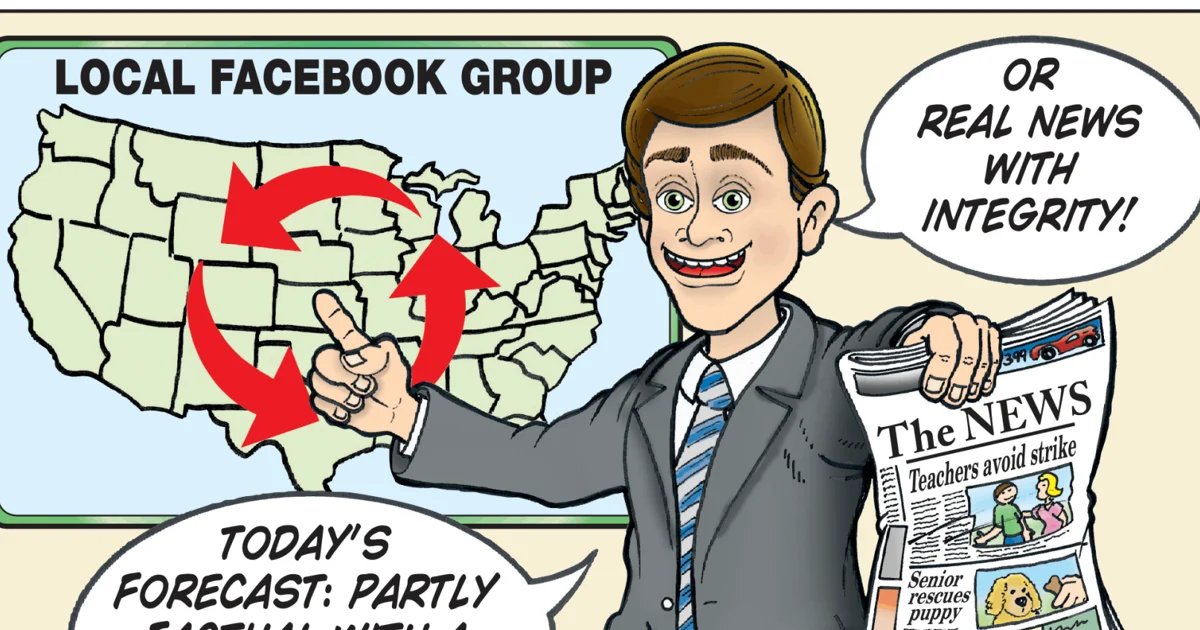
Despite the digital noise, the fundamental mission of local news remains unchanged. It is about fostering conversations that happen at the grocery store, the school board meeting, and the local coffee shop. As algorithms continue to curate personalized “echo chambers” on social media, the role of a local newspaper is to provide a unified, factual record of the community’s progress.
To stay “in the know,” residents are encouraged to look beyond the algorithm. Supporting local media today means more than just reading headlines; it involves engaging directly with local platforms, subscribing to newsletters, and participating in the public discourse that digital giants often bypass.
The tech industry will continue to evolve, bringing more updates to search algorithms and new AI-powered media tools. However, the survival of community news will not be determined by Silicon Valley updates alone. It will be determined by the symbiotic relationship between a newspaper and its readers. This week serves as a vital reminder that while technology provides the delivery system, the content—driven by curiosity, empathy, and local vigilance—remains the true heartbeat of the community. As we move forward, the goal is to bridge the gap between emerging tech efficiencies and the enduring need for human-led, locally-focused journalism.
Disclaimer: This content is auto-generated for informational purposes only.
Source: Read Original News