









NVIDIA Shifts AI Strategy: From Chip Dominance to Capital Powerhouse Amidst Rising Competition
TAIPEI, TAIWAN – June 2, 2026 – NVIDIA, the semiconductor giant that transformed into the world’s most valuable company on the back of its artificial intelligence (AI) head start, is strategically leveraging its substantial capital reserves to maintain its lead in the rapidly evolving AI landscape. Almost four years into the generative AI boom, increasing competition from rivals like Advanced Micro Devices (AMD) and Google is prompting NVIDIA to pivot its focus from solely technological supremacy to wielding its financial might.
The shift in strategy was underscored by a series of recent announcements, including a pact with Wall Street firms last week to pursue $500 billion in financing for NVIDIA’s graphics processing units (GPUs). This was swiftly followed by Monday’s revelation that NVIDIA will provide up to $105 billion to support a massive OpenAI data center in Ohio. This significant investment acts as a crucial safety net for the creator of ChatGPT, ensuring its continued growth and operations.
NVIDIA’s overarching strategy involves fueling the AI boom through any necessary means, recognizing the seemingly insatiable demand for critical AI infrastructure. While a handful of "hyperscalers" account for a disproportionate amount of purchases, NVIDIA, with its quarterly free cash flow soaring 18-fold over the past three years to an astounding $48.5 billion in the latest period, is deploying its robust balance sheet and strong credit rating to avert any potential slowdown. This proactive approach aims to safeguard its impressive streak of 12 consecutive quarters of revenue growth exceeding 55%.
"They remain dominant, but they’re very paranoid about making sure they don’t lose ground," remarked Ram Bala, associate professor of AI and analytics at Santa Clara University’s Leavey School of Business, highlighting NVIDIA’s aggressive stance. NVIDIA declined to comment on the matter.
Analysts at Cantor, in a note to clients on Monday, dismissed concerns that NVIDIA’s financial maneuvers amounted to "buying revenue." They reiterated their "buy" rating, asserting that the latest agreements serve as a "clear signal that the current AI investment cycle will be elongated and durable." The analysts further elaborated, "We view this less as circular and more facilitating the coming AI buildout while at the same time creating additional competitive moats that will continue to enable NVDA to remain THE AI leader."
NVIDIA’s financial strength is undeniable. The company’s exceptional cash generation led to an increase in its quarterly dividend to 25 cents per share from a mere penny in May, alongside the announcement of an $80 billion stock buyback plan. NVIDIA has pledged to return "roughly 50% of free cash flow to shareholders this year."
A significant portion of NVIDIA’s capital is being deployed through equity investments across the AI ecosystem, targeting companies like model developers and "neoclouds" that are substantial consumers of NVIDIA’s chips and systems. As of the most recent quarter, NVIDIA held $30.2 billion in marketable equity securities, a substantial increase from $12.9 billion a year prior.
This year has already seen significant investments, including $30 billion into OpenAI in February, a company heavily reliant on NVIDIA’s most advanced system, Vera Rubin, for its training capacity. Monday’s announcement included a $1.5 billion investment in SB Energy, a SoftBank affiliate tasked with constructing and managing the Ohio data center at the PORTS-Pike Technology Campus through a 20-year lease to OpenAI. Beyond this, NVIDIA is also providing financial backing for approximately 4 gigawatts of development at the Ohio site, covering portions of lease and power costs, and a "specified residual-value commitment" for data centers expected to open between 2028 and 2030.
Expanding Access to AI Infrastructure
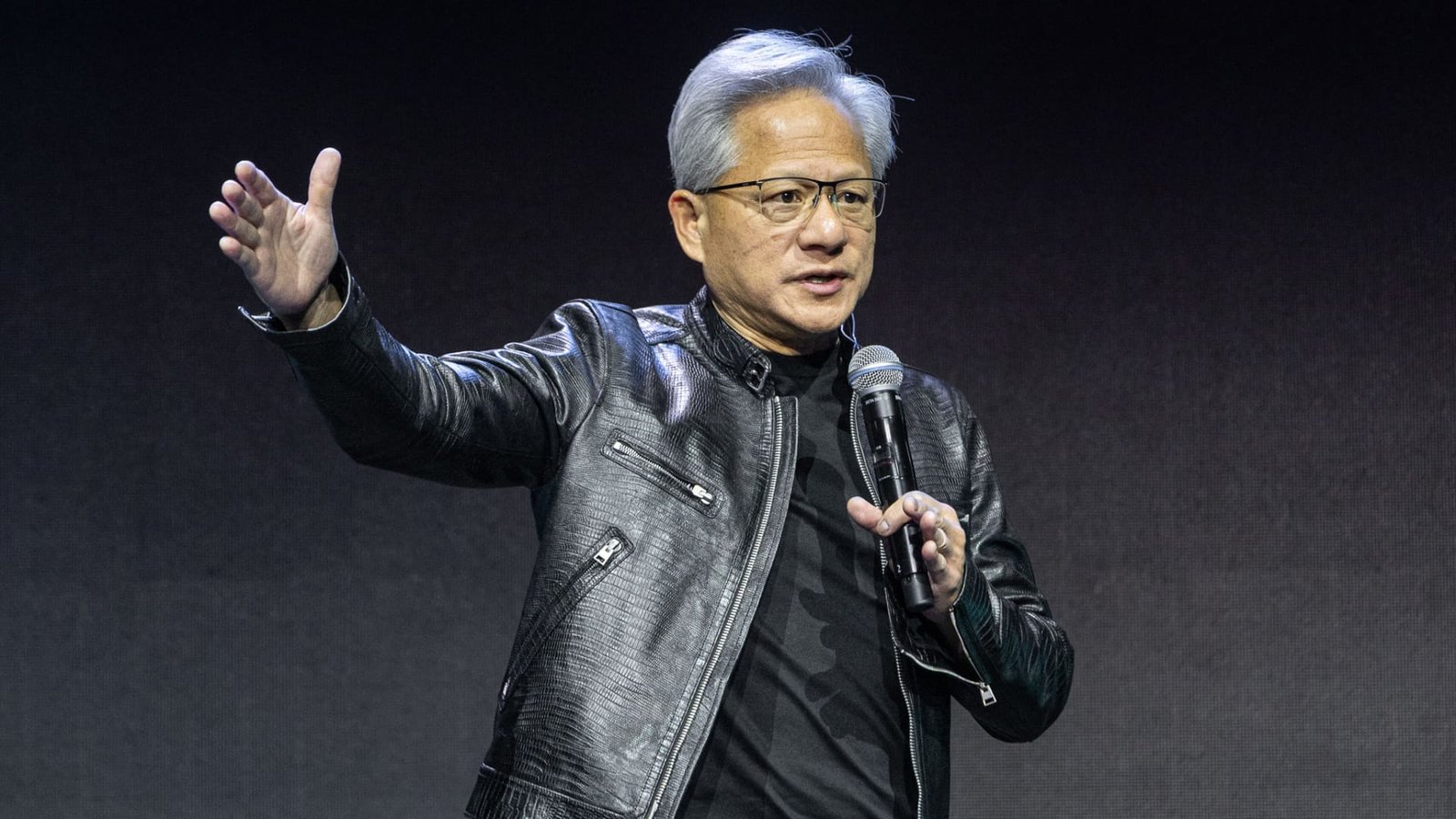
NVIDIA CEO Jensen Huang, speaking at COMPUTEX in Taipei, Taiwan on June 2, 2026, elaborated on the importance of the company’s financial initiatives. In a post on X, he stated, "Frontier AI labs have extraordinary demand for training and inference compute, but many are growing faster than their balance sheets and long-term credit profiles can support." He added, "They may have strong customer demand and rapidly growing revenue yet still lack the decades-long infrastructure contracts and investment-grade financing capacity needed to secure the AI factory infrastructure independently."
Just a week prior, Huang, alongside six prominent Wall Street financiers, announced the arrival of NVIDIA’s graphics processing units as a new asset class. Through a memorandum of understanding with firms such as Goldman Sachs, Apollo Global Management, Blackstone, and BlackRock, Huang signaled that the next phase of AI infrastructure development would be partly financed by third-party investors, who can now invest in GPUs similarly to real estate. "These are revenue-generating assets now," Huang told CNBC. "They’re productive, they’re long-lived, they’re fungible, they’re flexible."
Crucially, obtaining financing for prospective borrowers will be contingent on their commitment to NVIDIA’s systems, with NVIDIA retaining the option to backstop 25% of every loan. This mechanism further entrenches NVIDIA’s technology in the market, especially as competition intensifies from Google, AMD, and specialized chipmakers like Cerebras.
Indeed, the competitive landscape is heating up. In the second quarter, Google began recognizing revenue from its Tensor Processing Unit (TPU) system sales, contributing to an impressive 82% growth in its cloud unit. AMD, meanwhile, reported over 100% growth in its data center business and anticipates shipping its first rack-scale system, Helios, later this year.
Paul Meeks, head of technology research at Freedom Capital Markets, suggested that this increased competition will inevitably erode NVIDIA’s "outrageous margins," thus incentivizing the company to diversify its strategy. "Part of their thinking is let’s broaden our reach," Meeks commented. "We just can’t ride this one horse, which is GPUs."
AI proponents argue that NVIDIA’s actions are simply a response to overwhelming demand, pointing to a current market shortage in capacity. This view is supported by recent figures: Anthropic informed investors over the weekend that its annualized revenue run rate reached $65 billion in July, a sevenfold increase year-over-year. OpenAI’s run rate also recently hit $40 billion.
Matthew Vegari, head of research at Clearwater Analytics, noted in an email that, given the prevailing market dynamics, the "narrative around the AI trade’s circuitous, ‘house of cards’ structure strikes us as somewhat misguided." He concluded, "We might one day be at overcapacity. But that day isn’t today."
The strategic shift by NVIDIA underscores a new chapter in the AI race, where financial strength and strategic investments are becoming as crucial as technological innovation in maintaining market leadership.
WATCH: AI is not a new asset class, it’s the entire market, says Clockwise Capital CIO.