







Sikh Activist Receives Sixth "Duty to Warn" Letter, Challenging Canadian Government’s Stance on Indian Interference
CALEDON, ONTARIO – In a development casting further doubt on the Canadian government’s claims of resolving issues surrounding Indian foreign interference, Sikh activist Inderjeet Singh Gosal has revealed he received a sixth "duty to warn" letter from the RCMP. The letter, delivered on Friday, August 14, in Caledon, Ontario, signals an ongoing threat to Gosal’s life, intensifying concerns about transnational repression on Canadian soil.
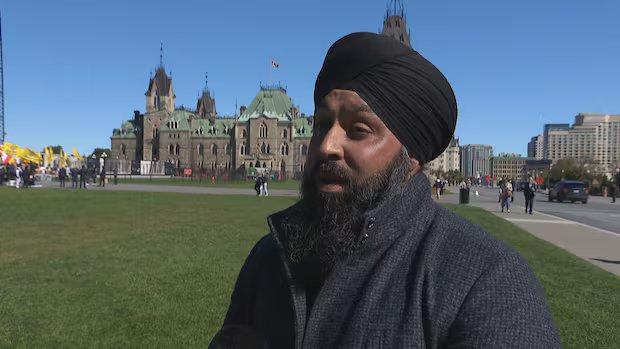
"They said there was a threat to my life and that they needed to see me immediately to provide me with that duty to warn in writing," Gosal told CBC News, confirming the grim communication from law enforcement. Such letters are issued by police when credible intelligence indicates a direct threat to a citizen’s life, although they typically remain vague on the precise nature of the danger. CBC News has independently verified the letter, which bears the signatures of two RCMP members and Gosal himself, signifying his acknowledgement of the warning.
The repeated warnings underscore a persistent tension between Ottawa and New Delhi, particularly regarding the Khalistan movement – a campaign for an independent Sikh homeland in India’s Punjab region. Gosal has become a prominent figure in this movement, having been appointed by international leader Gurpatwant Singh Pannun to lead the Khalistan referendum campaign in Canada. This appointment followed the assassination of Hardeep Singh Nijjar, the former Canadian referendum campaign leader, in Surrey, British Columbia, in June 2023.
Gosal recounted how the RCMP, during their verbal briefing, reiterated an earlier offer to enroll him in a witness protection program. This offer, he noted, came despite him not being a witness in any criminal proceedings. "They said that offer still stands and they were pushing towards that. But I respectfully declined because I would rather take India’s bullet than stop campaigning for the Khalistan referendum," Gosal asserted, emphasizing his unwavering commitment to the cause.
These continuous threats challenge the "Carney government’s claims" of having effectively addressed the issue of Indian government foreign interference and transnational repression. While the letter to Gosal did not explicitly name the government of India, merely stating "the police have determined that a threat has been made against your life," the context of prior warnings and ongoing geopolitical tensions points directly to the Indian state.
The issuance of these "duty to warn" letters has continued even as the Canadian government has seemingly pursued a rapprochement and normalization process with the Narendra Modi government. Relations between the two nations plunged to a historic low following Nijjar’s assassination and accusations from the Canadian government that New Delhi was involved in suppressing the Khalistani movement abroad. This period saw dramatic reductions in diplomatic representation from both countries after tit-for-tat expulsions.
In an unprecedented move, the RCMP held a news conference in August 2024, explicitly warning of an Indian government-inspired campaign of criminal violence across Canada. Despite this, more recent statements from Canadian officials suggest satisfaction with assurances from the Indian government regarding a cessation of illegal activities and foreign interference in Canada.
However, the continued stream of "duty to warn" letters contradicts these assurances, leaving those targeted by perceived Indian interference feeling anything but secure. The situation has also drawn international scrutiny, with five UN rapporteurs questioning Canada’s claims of safeguarding its Sikh citizens. They have specifically highlighted the case of British Columbia activist Moninder Singh, who, like Gosal, is involved in the referendum efforts that Nijjar was spearheading before his death.
While acknowledging the RCMP’s role, Gosal expressed strong criticism of the Canadian government. "I obviously appreciate the RCMP for performing their statutory duty and informing me about these active death threats," Gosal said. However, he questioned the government’s priorities: "How can they justify resuming aggressive business and bilateral diplomatic outreach to India while the Modi regime continues to actively plan extrajudicial assassinations on Canadian citizens on Canadian soil?"
India has consistently denied any involvement in acts of violence in Canada, including the Nijjar killing.
Despite the grave threats to his life, Gosal remains defiant. "My decision hasn’t changed. I’m going to continue. Oct. 18 is the next referendum, taking place in Edmonton, Alberta, and I’m going to continue organizing that and we’ll go from there," he declared. "This is the exact democratic exercise that the Indian government is trying to suppress through transnational repression. So I know I’m a target for that, but that’s not going to stop me."
The persistence of these threats and the Canadian government’s seemingly contradictory approach to its relationship with India continue to raise significant questions about the safety and security of Sikh Canadians and the efficacy of Ottawa’s foreign policy. The ongoing saga underscores the complex challenges of balancing diplomatic relations with the imperative to protect citizens from foreign interference and targeted violence.