








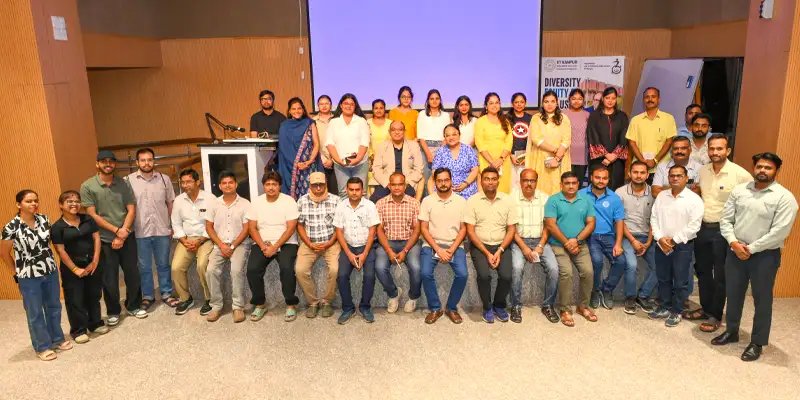
IIT Kanpur, DBRAU, and VIF Launch Groundbreaking Hindi Cybersecurity Program for Over 3 Lakh Students
Agra, India – In a significant move to democratize cybersecurity education, particularly for students in semi-urban and rural areas, C3iHub at IIT Kanpur has joined forces with Dr. Bhimrao Ambedkar University (DBRAU), Agra, and the Vivekanand Incubation Foundation (VIF) to introduce a pioneering online vocational program in cybersecurity. This collaborative initiative aims to overcome language barriers and equip over 300,000 students across DBRAU’s extensive network of more than 570 affiliated colleges with essential digital defense skills.
The program, delivered entirely online and notably in Hindi, is a direct response to the growing need for accessible technical education for students who may face challenges with English-centric courses. This innovative approach underscores a commitment to inclusivity and ensuring that crucial skills are not limited by linguistic constraints.
A tripartite Memorandum of Understanding (MoU) formalizing this partnership was recently signed by key representatives from all three institutions. Prof. Surendra Baswana, Program Director at C3iHub and Head of the Department of Computer Science and Engineering at IIT Kanpur, signed on behalf of the prestigious technology institute. Prof. Sanjay Chaudhary, Director of IQAC and VIF at DBRAU, and Prof. Anil Gupta, Director of UCC at DBRAU Agra, represented the university and the incubation foundation respectively.
Under this strategic alliance, C3iHub, leveraging IIT Kanpur’s profound expertise in cybersecurity research and training, will be responsible for designing and delivering the program’s robust curriculum. The Vivekanand Incubation Foundation (VIF) will play a crucial role in providing the necessary administrative and technical infrastructure, ensuring the seamless deployment and scalability of the program to its vast target audience.
Furthermore, DBRAU will establish a dedicated Cybersecurity Counselling Cell (CCC) as part of this initiative. This cell will serve as a vital resource for students, offering support and guidance to prevent cybercrime incidents and address any related concerns. This proactive measure highlights a holistic approach to student welfare and online safety.
The comprehensive curriculum will delve into a wide array of critical cybersecurity topics. These include understanding cybercrime and promoting cyber hygiene, identifying and mitigating social media threats, protecting against identity theft and personal data leaks, and ensuring online safety for vulnerable groups such as women and children. The program will also explore advanced subjects like the dark web, cyber terrorism, and various illegal online activities.
Beyond theoretical knowledge, the program emphasizes practical application through interactive quizzes, workshops, and effective feedback mechanisms. Crucially, it will incorporate customized virtual labs designed to provide students with invaluable hands-on exposure to real-world cybersecurity scenarios, preparing them for the complexities of the digital landscape.
Prof. Ashu Rani, Vice Chancellor of DBRAU, lauded the initiative, emphasizing the university’s responsibility to prepare its extensive student body for the ever-evolving digital challenges of both professional and personal life. She underscored a pivotal shift in perspective, advocating that cybersecurity be viewed not merely as a specialized subject for engineering students, but as a fundamental life skill essential for everyone in today’s interconnected world. This collaborative effort marks a significant step towards fostering a more cyber-aware and resilient generation in India.