







Jaipur Civic Body’s Grievance Portal Goes Viral for Unfiltered "Hinglish" Approach
Jaipur, India – In a surprising departure from the often-convoluted language of government websites, the Jaipur Nagar Nigam (JMC) has captured the internet’s attention with its refreshingly straightforward, and at times hilariously candid, online grievance system. Eschewing formal English or Hindi, the JMC portal has embraced everyday "Hinglish" in its complaint sub-categories, making it remarkably accessible for local residents.
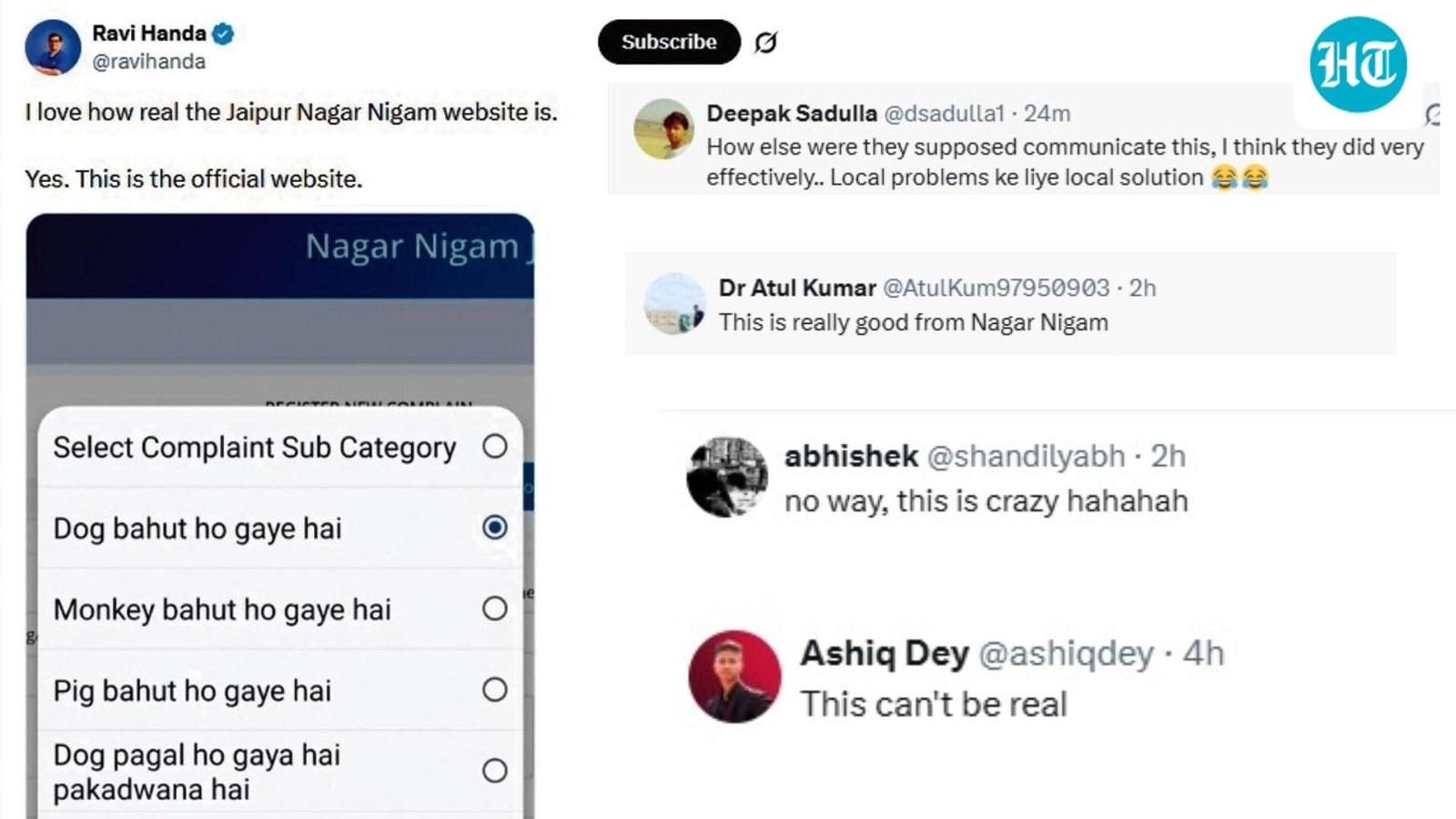
The unconventional approach came to light after an X user, @ravihanda, shared a screenshot of the website, which quickly went viral, garnering over 10,500 likes. Social media users were quick to react, with many praising the candid and commonsensical language as a welcome relief from typical bureaucratic jargon.
While most municipal council portals require users to decipher a labyrinth of technical and formal terminology, Jaipur’s civic body has opted for an unfiltered route. For instance, if residents wish to report an influx of stray dogs, the option plainly states: "Kutte bahut ho gaye hain" (There are too many dogs). Need to flag a rabid animal? The portal offers: "Kutta pagal ho gaya hai pakadwana hai" (The dog has gone mad, needs to be caught). Other options for animal casualties maintain this directness, such as "Billi mar gayi hai" (The cat has died) and "Suwar mar gaya hai" (The pig has died).
This informal style has sparked a lively debate online. Many users found the direct language to be not only refreshing but also significantly easier for the average citizen to navigate, fostering a sense of immediate understanding and reducing the barrier to reporting issues. However, some have raised concerns, objecting to the use of certain words as potentially derogatory or undignified for official communications.
The stark contrast in approach is evident when compared to other major Indian cities. For example, citizens in Delhi filing complaints on the Municipal Corporation of Delhi (MCD) system encounter a far more standard, textbook process. When reporting veterinary issues, Delhiites navigate typical bureaucratic options like "Removal of dead animals," "Stray monkeys," or "Stray cattle/pigs." Delhi’s civic reporting, in this regard, remains strictly business as usual, adhering to conventional governmental communication styles.
The Jaipur Nagar Nigam’s bold move highlights a growing trend towards making public services more user-friendly and accessible. While it may not adhere to traditional linguistic norms for official documents, its viral success underscores the potential benefits of speaking directly to the populace in their everyday language. The initiative also raises questions about the balance between formality and accessibility in public administration, potentially paving the way for more innovative communication strategies in the future.
The discussion surrounding Jaipur’s complaint section continues to generate interest, serving as a compelling case study in how government bodies can better engage with their citizens.