








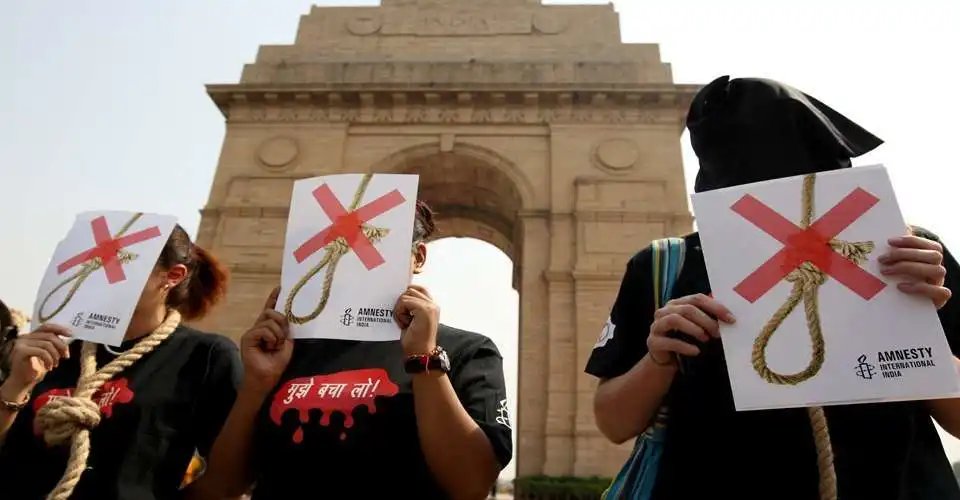
India’s Supreme Court Rejects ‘Dignified Death’ Plea, Sparking Calls for Humane Execution Methods
NEW DELHI, INDIA – The Supreme Court of India has dismissed a petition seeking to replace hanging with a more humane method of execution for death row inmates, igniting renewed calls from faith leaders and civil society advocates for a dignified end to life, even for those condemned.
The rejected petition, filed by lawyer Rishi Malhotra, argued that execution by hanging is "barbaric, inhumane and cruel," violating constitutional standards that guarantee a dignified death. Malhotra’s plea highlighted the inherent suffering associated with hanging, citing a 2003 report by the Law Commission of India which described the method as causing "intense physical torture and pain."
The petition detailed how hanging could lead to prolonged agony through strangulation if the neck does not break instantly, or even decapitation if the drop is improperly calculated. Such a method, with its significant margin of error and potential for extreme suffering, should be deemed unacceptable, Malhotra contended. He urged the court to consider alternative methods like lethal injection or shooting, supported by scientific and medical literature on judicial execution.
While the Supreme Court has yet to provide detailed reasoning for its dismissal, the decision has galvanized prominent voices to advocate for legislative reform.
Bishop Thomas Kuttimackal of Indore, representing the Catholic Church, reiterated the Church’s long-standing opposition to the death penalty, emphasizing the importance of rehabilitation over retribution. "When a court sentences a person to death, it is done because the existence of the convict is not good for society and as a deterrent for others to avoid repetition of the same crime," Bishop Kuttimackal told UCA News on August 19. "But still, we need to show mercy to such convicts as they are still entitled to a dignified and painless death."
The Bishop urged the Indian government to seriously consider the concerns raised in the petition and enact legislation that mandates more humane methods of execution. "We live in a modern era with advanced technologies, unlike in the past when hanging was seen as the only method of legally terminating the life of a convict," he added, underscoring the anachronistic nature of the current practice.
Arif Khan, Uttar Pradesh coordinator of the All India Secular Forum, echoed these sentiments, asserting the fundamental right of all individuals to a dignified death. "We are a democratic country where everyone has a right to a dignified life and, similarly, the right to a dignified death," Khan stated to UCA News on August 19. He called upon the government to actively explore less painful and more dignified alternatives to hanging.
B.L. Garg, a retired police officer from Bhopal, emphasized that even in the rarest and most exceptional cases where a death sentence is imposed, it should not justify cruel or inhumane treatment. "Our Hindu traditions and cultures are always in favor of a dignified death even for those considered as enemies, and therefore there is no question of denying a painless and dignified death to a convict," Garg explained to UCA News.
Garg suggested that despite the Supreme Court’s ruling, the petitioner could still pursue the matter with the federal government, advocating for new legislation that would replace hanging with more humane methods of execution.
Currently, over 560 individuals are on death row across India, although executions remain relatively infrequent, often taking years to be carried out. The ongoing debate highlights a critical intersection of legal precedent, moral considerations, and evolving societal values in India’s capital punishment framework. The Supreme Court’s decision, while firm on the petition, is likely to fuel further activism and legislative efforts to ensure that even the gravest of penalties is administered with respect for human dignity.