








Kangana Ranaut Criticizes Sharmila Tagore’s Views on ‘Vande Mataram,’ Calls for Moving Beyond ‘Hindu-Muslim Mindset’
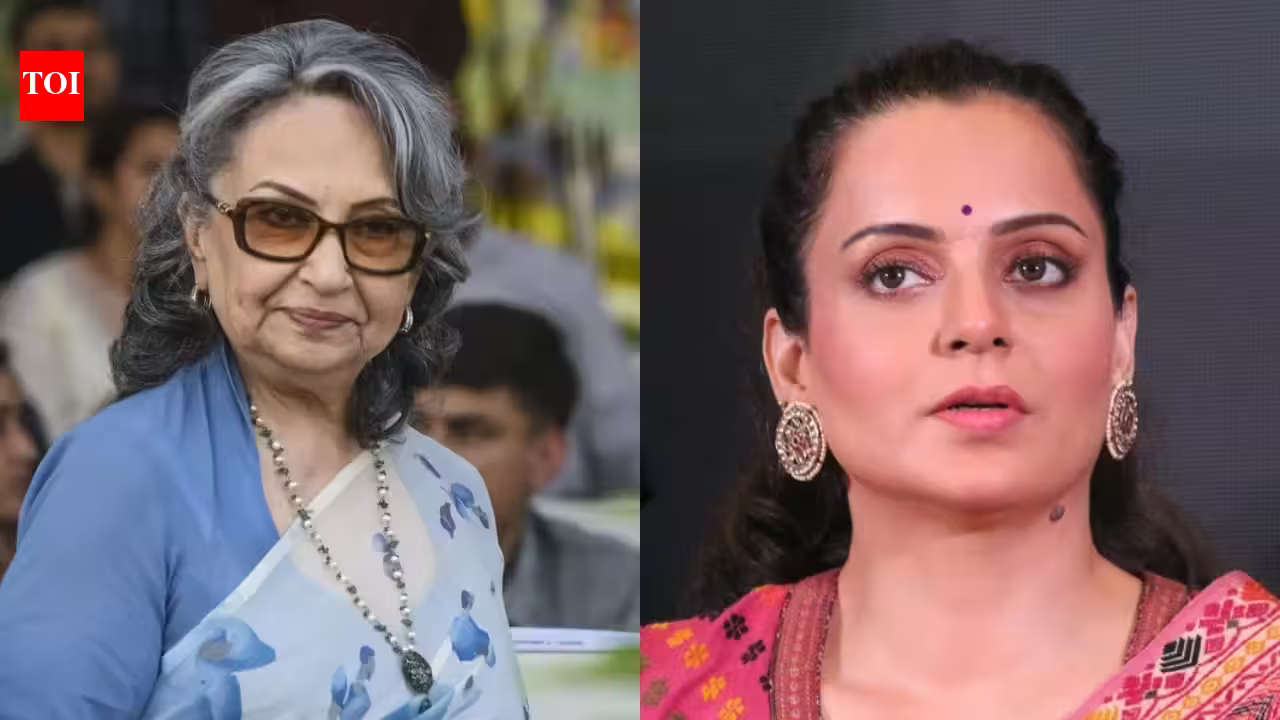
The enduring debate over Vande Mataram—India’s National Song—has been reignited following a clash of perspectives between veteran actor Sharmila Tagore and outspoken star Kangana Ranaut. The controversy centers on the interpretation of the song’s lyrics, specifically the inclusion of references to Hindu deities, and whether such verses align with a secular, diverse nation.
The Source of Contention
Vande Mataram, penned by Bankim Chandra Chatterjee in the 1870s and immortalized in his novel Anandamath, served as a potent rallying cry during India’s struggle for independence. While the first two stanzas focus on the physical beauty and landscape of the motherland, the subsequent four stanzas explicitly invoke Hindu goddesses such as Durga, Lakshmi, and Saraswati.
In a recent discussion, Sharmila Tagore expressed reservations regarding the latter part of the song. She argued that for individuals adhering to monotheistic faiths—those who believe in a single God—the explicit religious references present a challenge to inclusivity.
"My point of view is that there are many religious people who believe in one single God, not many Gods," Tagore stated. She suggested that while the first two stanzas are widely acceptable and unifying, the later verses, which include phrases like "Vande Kali" and "Vande Durga," are difficult for some to embrace, potentially hindering the goal of bringing people of all faiths together.
Kangana Ranaut’s Rebuttal
The comments did not sit well with Kangana Ranaut, who took to social media to voice her disagreement. Sharing a clip of Tagore’s interview, Ranaut expressed shock that an artist of Tagore’s stature would hold what she deemed "limiting and contrived" views on art and poetry.
Ranaut argued that lyrics should be interpreted as metaphors rather than literal religious liturgy. "Vande Mataram is the spirit of the freedom struggle. Bankim Chandra ji is compelling the nation to awaken the Shakti (strength) within; how can you reduce such a great piece of art to mere religious practice?" she wrote.
Drawing on the philosophy of Swami Vivekananda, Ranaut emphasized that references to Shakti in nationalistic poetry should be understood as expressions of inner power and strength. She urged critics to stop viewing such cultural expressions through a sectarian lens, stating, "Please come out of the Hindu-Muslim mindset. Even if we believe in one God, doctors also call power ‘Shakti.’ Let’s embrace each other."
A Historical Context
The distinction between the National Anthem, Jana Gana Mana, and the National Song, Vande Mataram, remains a complex topic in Indian discourse. While both hold immense historical significance, Vande Mataram continues to evoke strong emotions due to its deep ties to the anti-colonial movement.
As the debate continues to unfold, Kangana Ranaut’s reaction highlights a growing divide in how cultural heritage is interpreted—whether as a religious text or as a broader, metaphorical spirit of national awakening. Despite their ideological disagreement, Ranaut concluded her statement on a personal note, expressing her affection for the veteran actress and acknowledging their mutual respect.