








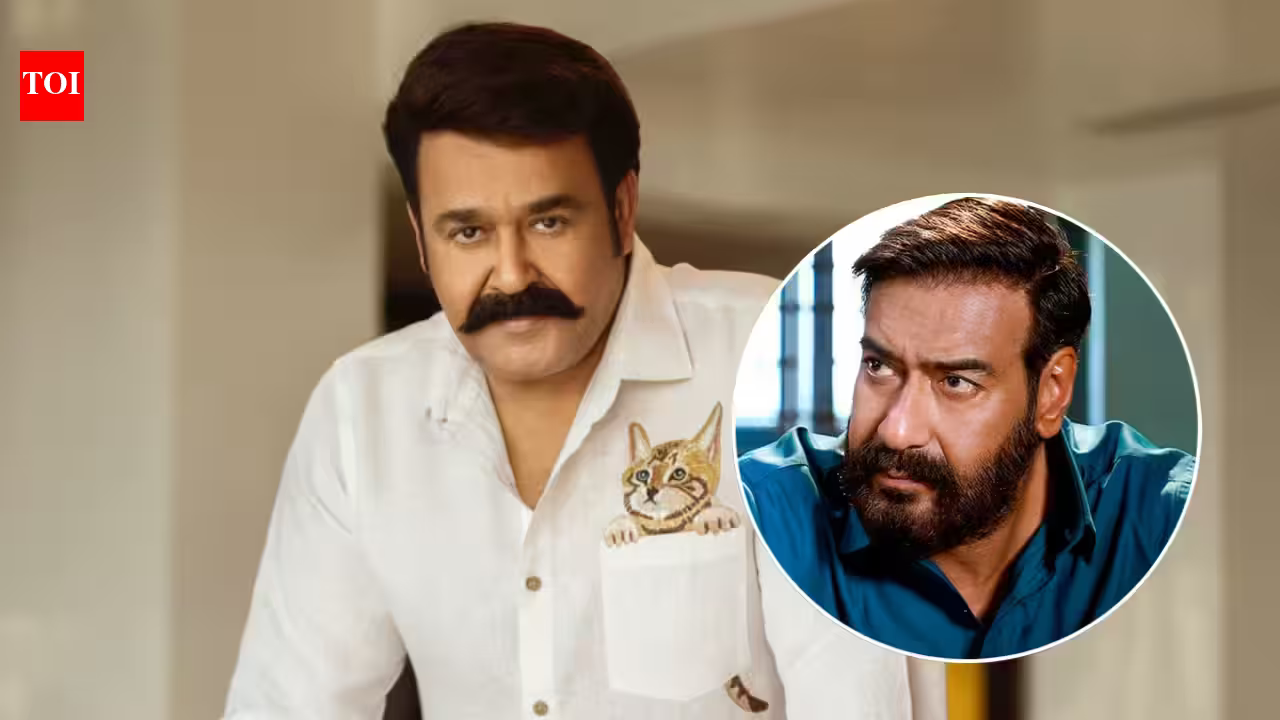
When the original architect of a cinematic phenomenon gives his blessing to an adaptation, it isn’t just a PR stunt—it’s a passing of the torch. In the world of Indian thrillers, few characters are as iconic as the humble cable operator with a brilliant, calculating mind. Whether you call him Georgekutty or Vijay Salgaonkar, the man who would do anything to protect his family has defined a generation of suspense cinema.
Recently, the legendary Mohanlal, the face of the original Malayalam Drishyam franchise, weighed in on the Hindi version’s grand finale, Drishyam 3: The Conclusion. His seal of approval has sent ripples through the industry, validating a bold creative risk taken by the Hindi production team.
The Weight of an Icon’s Endorsement
Mohanlal’s appreciation isn’t merely a polite nod; it carries the weight of a veteran who understands the intricate DNA of this story. Sharing his thoughts in a candid video message, the superstar remarked, “I watched Drishyam: The Conclusion, and I am truly impressed with the way they have brought a much-loved journey to a befitting end. Congratulations to Abhishek Pathak, Kumar Mangat Pathak, Ajay Devgn, and the entire cast and crew on a job so well done.”
For a story that has been translated across multiple languages and cultures, this acknowledgment serves as a bridge between the South Indian industry and its Hindi counterpart. It suggests that while the names, settings, and regional nuances may change, the core essence of the “Salgaonkar/Georgekutty” struggle remains universally resonant.
Breaking Free from the Blueprint
One of the most fascinating aspects of Drishyam 3: The Conclusion is its refusal to be a copycat. For years, Hindi audiences grew accustomed to waiting for the Hindi remakes to mirror the Malayalam originals. However, this third installment broke the mold entirely. Instead of adhering to the script of the third Malayalam entry, the Hindi team—led by director Abhishek Pathak—ventured into uncharted territory with an original screenplay.
This decision was met with both skepticism and high expectations. Ajay Devgn, who has inhabited the role of Vijay Salgaonkar with a stoic, brooding intensity, spoke openly about this deviation during his appearance at FICCI Frames. “The original one did not have the character arc we explored here,” Devgn explained. “3 is a completely new script. They are two very different films. The way Abhishek and the writers worked so hard on the script for the past two years… it really gives you a high. The way it has shaped up, we decided this was the right place for the final curtain call.”
By choosing to forge their own path, the makers managed to keep audiences on the edge of their seats—even those who considered themselves experts on the franchise’s lore.
A Box Office Juggernaut
Numbers don’t lie, and Drishyam 3 has performed with the kind of consistency that is becoming increasingly rare in today’s volatile theater market. With a staggering global box office collection exceeding Rs 479.80 crore and an Indian gross surpassing Rs 370.80 crore, the film has firmly cemented itself as a commercial heavyweight.
It is clear that the franchise didn’t just survive on brand recall; it thrived on the audience’s genuine need to see how the Salgaonkar saga concluded. The sheer volume of engagement, from ticket sales to social media discourse, proves that there is a massive appetite for high-stakes, grounded thrillers that prioritize taut writing over superficial spectacle.
The Power Players: Devgn, Tabu, and the New Guard
The success of the franchise has always been tethered to the electric chemistry between its leads. Ajay Devgn’s portrayal of a man pushed to the brink remains the emotional anchor, while Tabu’s return as the relentless Meera Deshmukh offers the perfect counterweight. Their antagonistic dynamic—a high-stakes game of cat and mouse—has been the engine driving these films for over a decade.
However, the final chapter needed a fresh injection of tension. Enter Jaideep Ahlawat, whose performance as SP Rajveer Singh Tomar has been hailed by critics and fans alike as a stroke of genius. Ahlawat, known for his ability to disappear into complex roles, brought a cerebral menace to the screen that pushed Vijay Salgaonkar to his limits. Social media has been ablaze with praise for the face-offs between Devgn and Ahlawat, with many viewers noting that this specific dynamic elevated the third film from a standard sequel to a masterclass in psychological warfare.
The Legacy of the Salgaonkars
As the curtains fall on this saga, the industry is left reflecting on what made the Drishyam franchise such a monumental success. It wasn’t just the twisty plots or the elaborate alibis; it was the emotional stakes. Every move Vijay Salgaonkar made was rooted in a father’s love, a motivation that resonated with audiences across the country.
Abhishek Pathak’s direction brought a refined, contemporary grit to the table, ensuring that the conclusion didn’t feel like a retread of past glories. By moving away from the source material, the creative team honored the original by daring to do something different.
Mohanlal’s praise acts as the final punctuation mark on a decade-long narrative. It validates the ambition of the Hindi team and satisfies the loyalists who wanted to see their favorite characters go out on a high note. Drishyam 3 wasn’t just another thriller; it was a testament to the fact that when storytelling is handled with care—and when a hero like Georgekutty/Vijay is allowed to face his final challenge—the audience will follow, no matter how many times they’ve seen the trick before. The mystery may be solved, but the impact of this franchise on Indian cinema is set to last for years to come.
Disclaimer: This content is auto-generated for informational purposes only.
Source: Read Original News