









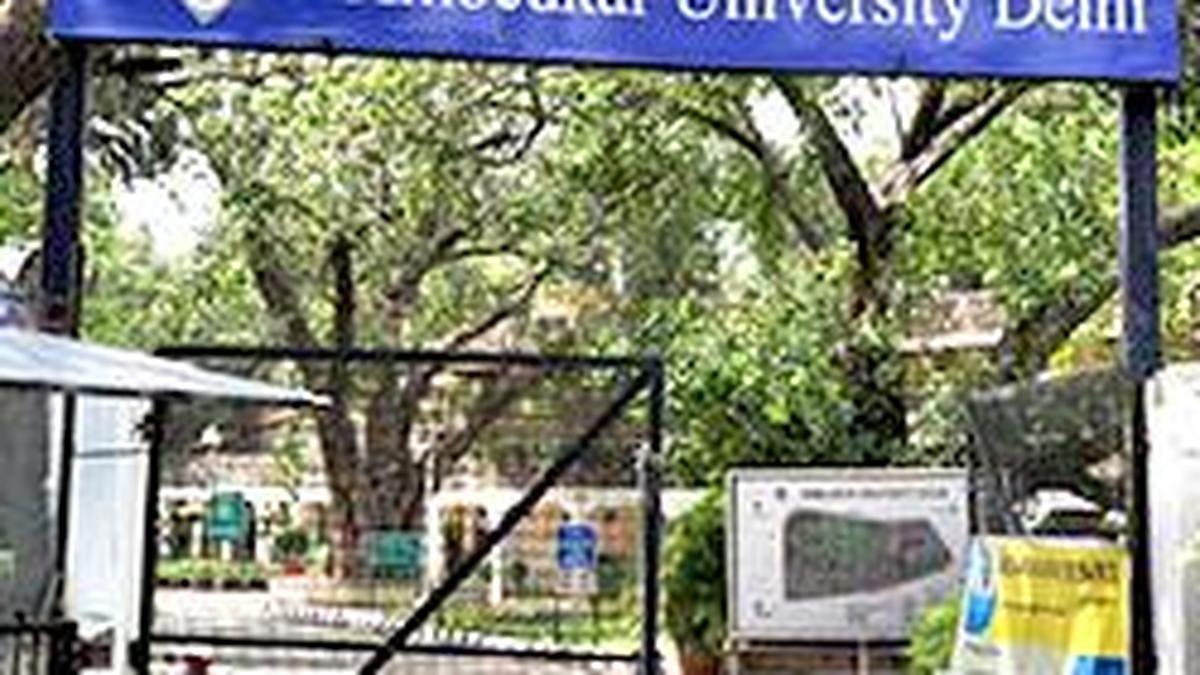
The Evolution and Current Crisis of Dr. B.R. Ambedkar University Delhi
Established in 2007 by the Delhi legislature, Dr. B.R. Ambedkar University Delhi (AUD) was envisioned as a premier public institution distinct from the city’s older central universities. Designed as a State university with a dedicated focus on humanities, social sciences, and the liberal arts, its early years under founding Vice-Chancellor Shyam Menon emphasized interdisciplinary pedagogy and an egalitarian institutional ethos. However, nearly two decades later, the university faces a severe crisis that challenges its original commitment to social justice and academic excellence.
The current standoff between the administration and the student body, centered at the Kashmere Gate campus, reflects a broader shift toward centralized control, surveillance, and fiscal policies that students argue are exclusionary.
Academic Autonomy vs. Surveillance Policies
The tipping point for the current unrest occurred in July 2026, when the Dean of Academic Affairs issued a directive requiring Ph.D. scholars to maintain a daily “Attendance-cum-Whereabouts Register.” The policy mandates that researchers obtain prior administrative approval for field research, archival work, or library visits, with warnings that unauthorized absence will result in stipend deductions.
For the academic community, this represents a fundamental misunderstanding of doctoral research, which is rarely desk-bound. Critics argue that treating research fellowships as taxable wages subject to “punch clock” monitoring ignores the nature of scholarly inquiry in the humanities. This administrative rigidity has extended to the suppression of dissent; recent student sit-ins have been met with barricades, private security interventions, and the closure of campus gates, leading to confrontations and injuries.
The Financial Burden on Students
The crisis is exacerbated by a rising fee structure that contrasts sharply with other public universities. While institutions like Calcutta University and Panjab University maintain modest annual fees, AUD’s fee structure is significantly higher, with M.A. programs costing over ₹40,000 per semester and MBA programs exceeding ₹2,00,000.
Furthermore, support mechanisms for economically disadvantaged students have been effectively curtailed. While the university claims to offer fee waivers for marginalized groups and students from lower-income families, the shift to a “reimbursement” model forces students to pay the full amount upfront. For many, this acts as an insurmountable barrier at the point of admission. Additionally, doctoral scholars are experiencing a structural withdrawal of support, as fees are increasingly reclassified to bypass existing waiver policies, leaving researchers to self-fund their work.
Infrastructure Decay and Institutional Drift
Beyond the policy disputes lies a visible decline in campus infrastructure. Despite the restoration of the historic Dara Shikoh Library, daily student facilities are in disrepair. Classrooms suffer from structural issues such as monsoon seepage, while basic sanitation remains neglected. The lack of hostel accommodation—particularly for male students and the limited capacity for female students—further inflates the cost of education by forcing students into Delhi’s expensive private housing market.
These physical challenges are compounded by administrative centralization. The concentration of multiple leadership roles—such as Chief Proctor and Dean of Academic Affairs—in single individuals has resulted in a lack of transparency and a failure to respond to statutory inquiries under the Right to Information (RTI) Act.
The Path Forward for Public Education
The situation at AUD serves as a case study in the risks of prioritizing revenue generation and administrative control over the pedagogical needs of a public university. The Delhi High Court’s ruling in Nadia v. Dr. B.R. Ambedkar University Delhi—which protected the right to peaceful protest—underscores that public institutions cannot operate in a vacuum of top-down authority.
For AUD to regain its status as an institution of excellence, it must move away from its current “fortress mentality.” Re-establishing an environment that fosters democratic dissent, ensures equitable access, and respects the autonomy of researchers is essential. Without a structural rethink, the university risks transforming from a space of critical inquiry into an environment that treats education as a service to be regulated rather than a public good to be nurtured.
Disclaimer: This content is auto-generated for informational purposes only.
Source: Read Original News