








India Faces Sugar Price Surge Amid Crop Losses and Supply Concerns
New Delhi: Indian households and businesses are grappling with a sharp uptick in commodity costs as average sugar prices have spiked by more than 15 percent over the past month. As of August 20, the average price reached Rs 55.7 per kilogram, with retail rates in the capital, Delhi, surging past the Rs 60 per kg mark. According to official government data, the year-on-year increase has now climbed beyond 20 percent.
The volatility has extended to wholesale markets as well. In Kolhapur—a vital hub for the nation’s sugar trade—wholesale prices hit Rs 5,750 per quintal on August 20, as reported by the National Commodity and Derivatives Exchange Limited (NCDEX).
Government Intervenes to Stabilize Market
In an effort to curb the inflationary trend and ensure food security, the government has taken decisive action. For the first time in a decade, authorities have permitted the duty-free import of 10 lakh metric tonnes (LMT) of sugar. Furthermore, to prevent market manipulation, the government has imposed strict limits on stock holdings for bulk consumers and dealers and has ordered physical verification of inventory at sugar mills to discourage hoarding.
Why Are Prices Rising?
As the world’s largest consumer of sugar, India requires an estimated 270 to 297 LMT annually to meet domestic demand. The current crisis is being attributed to a combination of supply-side constraints and speculative hoarding.
Official projections for the current season suggest a production total of roughly 306 LMT—a significant shortfall compared to the initial estimates of 343 LMT. The government points to a "perfect storm" of agricultural setbacks:
- Pest Infestations: Crops have been severely impacted by Red Rot and Top Borer diseases.
- Erratic Weather: Excess rainfall has caused waterlogging in some areas, while other key regions have suffered from moisture deficits.
Data from the India Meteorological Department (IMD) highlights that 35 districts in Uttar Pradesh, the country’s largest producer, face rain deficiencies. Similar conditions prevail in Maharashtra and Karnataka—the second and third-largest producers, respectively—further tightening supply chains.
The government maintains that current stockpiles are sufficient to bridge the gap until the new crushing season commences in October. However, analysts warn that national reserves have been steadily declining and could hit a five-year low before the next harvest arrives.
Addressing the Ethanol Factor
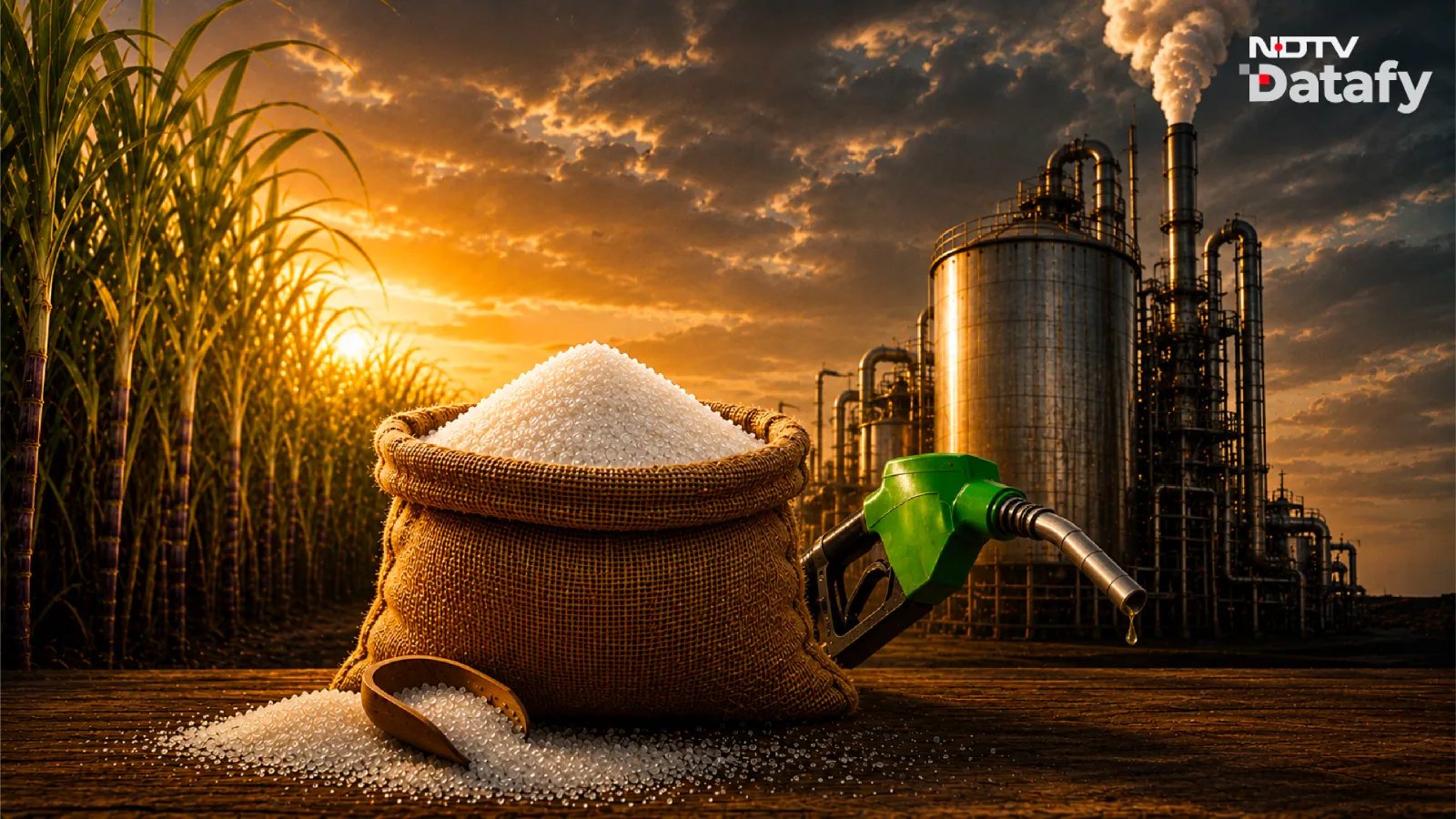
Amid the price hike, there has been widespread speculation on social media regarding whether the diversion of sugarcane toward ethanol production—driven by India’s goal of 20 percent petrol blending—is responsible for the sugar shortage.
Refuting these claims, the government released data on August 21 indicating that the allocation of sugar for ethanol has remained stable. Officials noted that only about 9 percent of total sugar production was diverted for ethanol in the 2025-26 season. Furthermore, the industry is increasingly pivoting away from sugar-based ethanol, with nearly three-fourths of the current supply now being produced from grains, particularly maize.
For a deeper understanding of the factors behind this market instability, check out this explained analysis on why sugar is becoming increasingly expensive.