







Security Concerns vs. Market Competition: The Starlink Row Escalates into Political Standoff
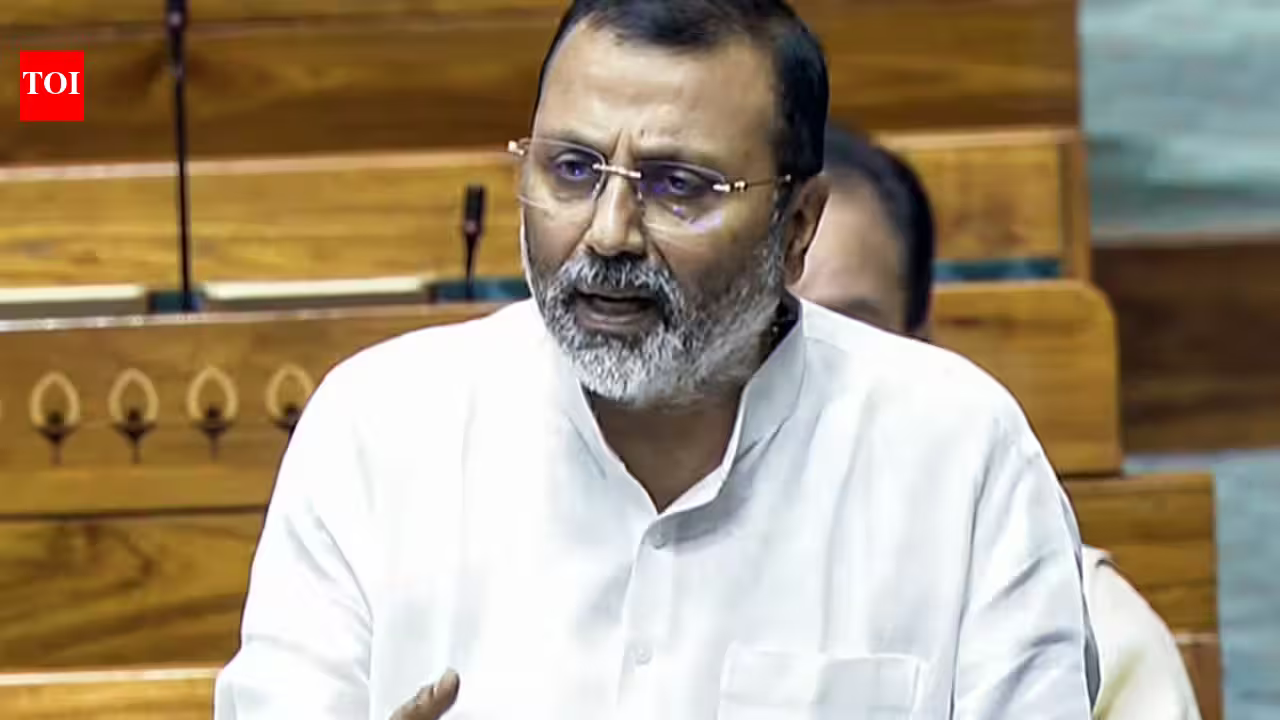
The entry of Elon Musk’s satellite internet service, Starlink, into the Indian market has transcended regulatory debates to become a charged political confrontation. On Sunday, Nishikant Dubey, the chairman of the Parliamentary Standing Committee on Communications and IT, delivered a stern rebuke to the billionaire entrepreneur, emphasizing that India’s national security protocols remain non-negotiable regardless of external pressure.
The controversy erupted following a series of posts on X (formerly Twitter) by Musk, who criticized the alleged influence of Reliance Jio on India’s satellite spectrum policy. Musk labeled the arguments against Starlink as “absurd hypocrisy,” suggesting that domestic players were merely attempting to protect a monopoly by obstructing foreign competition under the guise of security concerns.
India’s Sovereign Stance
Responding directly to Musk’s remarks, the senior BJP leader asserted that India would not be swayed by social media narratives or financial interests when it comes to the safety of its citizens. Dubey clarified that the security risks associated with satellite communications are not new.
“In 2013-14, the government of Manmohan Singh had already informed the Telecom Regulatory Authority of India (TRAI) about these inherent threats,” Dubey stated. He further challenged Musk to focus on expanding affordable internet access within the United States before leveling accusations at the Indian government. “India is a healthy, democratic, sovereign nation. If our policies were driven by money, we would have rolled out the red carpet for you despite the objections raised by our security agencies,” the MP added.
The Regulatory Landscape
The central government has maintained that the playing field remains level for all applicants. Currently, three major players are vying for a slice of India’s burgeoning satellite communication (satcom) market: Sunil Bharti Mittal-backed Eutelsat OneWeb, Reliance Jio, and Starlink.
Each entity is required to navigate a stringent process that involves individual security clearances and compliance with local regulatory requirements. Government officials have reiterated that no single entity is being prioritized; rather, all must undergo the same vetting process designed to protect the integrity of India’s telecommunications infrastructure.
The Technological and Strategic Divide
The technological race for Low-Earth Orbit (LEO) satellite dominance involves a complex web of deployment strategies. Starlink currently leads the group with over 11,100 satellites in orbit, while Eutelsat OneWeb operates a fleet exceeding 630. Meanwhile, Reliance Jio is developing a robust constellation of roughly 1,600 satellites supported by 23 ground stations across the country. Amazon’s Project Kuiper is also expected to join the fray soon.
While Musk argues that competition serves the best interest of the average Indian consumer—predicting that affordable pricing will eventually dictate market success—the government’s focus remains anchored in national security. Analysts following the development suggest that due to ongoing geopolitical tensions and the rigorous nature of security evaluations, companies like Eutelsat OneWeb and Reliance Jio may receive operational clearances ahead of Starlink. For Musk, the road to securing a footprint in India appears to be paved with significant regulatory hurdles that are unlikely to be cleared through public confrontation alone.
Disclaimer: This content is auto-generated for informational purposes only.
Source: Read Original News