








Saffron Shift: Indian Hockey Faces Visibility Debate and Backlash Amid World Cup Debut
AMSTELVEEN – The Indian hockey teams have stepped onto the world stage at the FIH Hockey World Cup with a striking new visual identity, swapping their iconic blue jerseys for a bold saffron kit. While Hockey India has defended the move as a functional necessity, the transition has sparked a heated debate regarding both its practicality and its underlying intent.
For decades, the colour blue has been synonymous with Indian sporting excellence, serving as the constant visual representative for the nation across nearly every major discipline. However, ahead of the current World Cup, the national federation introduced a new saffron-dominated uniform for both the men’s and women’s teams.
The Visibility Argument
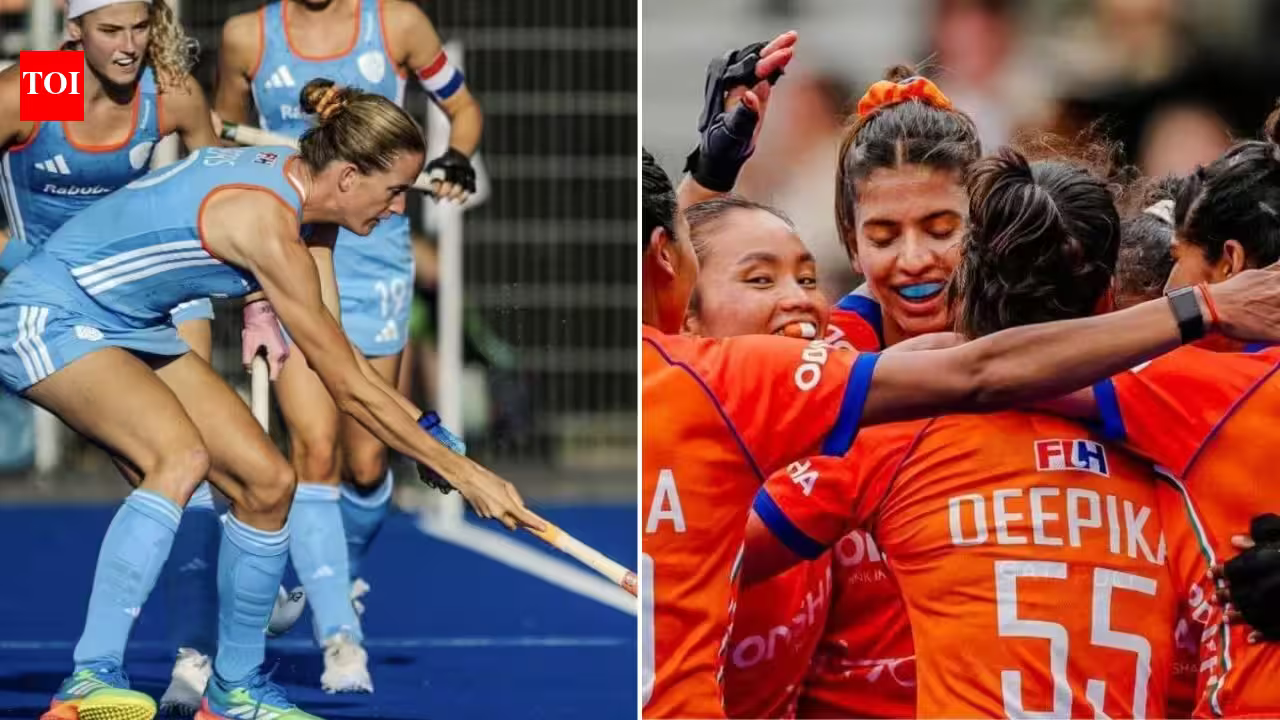
Hockey India’s official rationale for the drastic colour shift centers on "visibility." According to the federation, the traditional blue kits often blended into the modern, blue-coloured synthetic turf now standard at international hockey venues. Officials argued that the lack of contrast between player uniforms and the pitch hindered on-field clarity, thereby justifying the move to a more vibrant, high-contrast colour.
However, the validity of this claim was cast into doubt during Friday’s high-stakes clash at the Wagner Stadium. As India faced off against the tournament co-hosts, the Netherlands, the Dutch team—playing on the same blue surface that reportedly hindered Indian players—donned their traditional blue kits. The sight of the Netherlands competing successfully in blue on the blue turf prompted observers to question if the visibility concerns were, perhaps, overstated.
Controversy and Criticisms
The decision to abandon the traditional blue has faced stiff resistance from some of the biggest names in the sport. Former Indian captains, including Pargat Singh, Dhanraj Pillay, and Viren Rasquinha, have publicly expressed their dismay.
Dhanraj Pillay, a legend with 339 international caps, questioned the timing and necessity of the change. "The blue jersey has become the identity of Indian hockey," Pillay stated. "While saffron is an auspicious colour and part of our national flag, it has never been the traditional colour of Indian hockey. I don’t understand why this has suddenly changed after so many years."
Pargat Singh was more pointed in his assessment, suggesting that the change reflects a wider trend in the country. "Everything in the country is being saffronised—education, history and now sports too," Singh remarked. He warned that injecting political undertones into athletics threatens the spirit of sports, which is intended to serve as a unifying force that transcends religion, caste, and politics.
On the Pitch
Despite the off-field discourse, the Indian women’s team delivered a commendable performance against the world No. 1 side. In the opening match of the second round, the Indian defense—anchored by veteran goalkeeper Savita—exhibited remarkable discipline.
While the Netherlands secured a 2-0 victory, both goals were conceded via penalty corners. Notably, the Indian defense successfully prevented the three-time defending champions from scoring a single field goal throughout the contest, proving their mettle against the tournament favorites.
As the tournament continues, the debate surrounding the team’s Hockey World Cup uniform is likely to persist. For now, however, all eyes remain on whether the Indian squad can translate their defensive grit into a podium finish, regardless of the colour of their jerseys.