







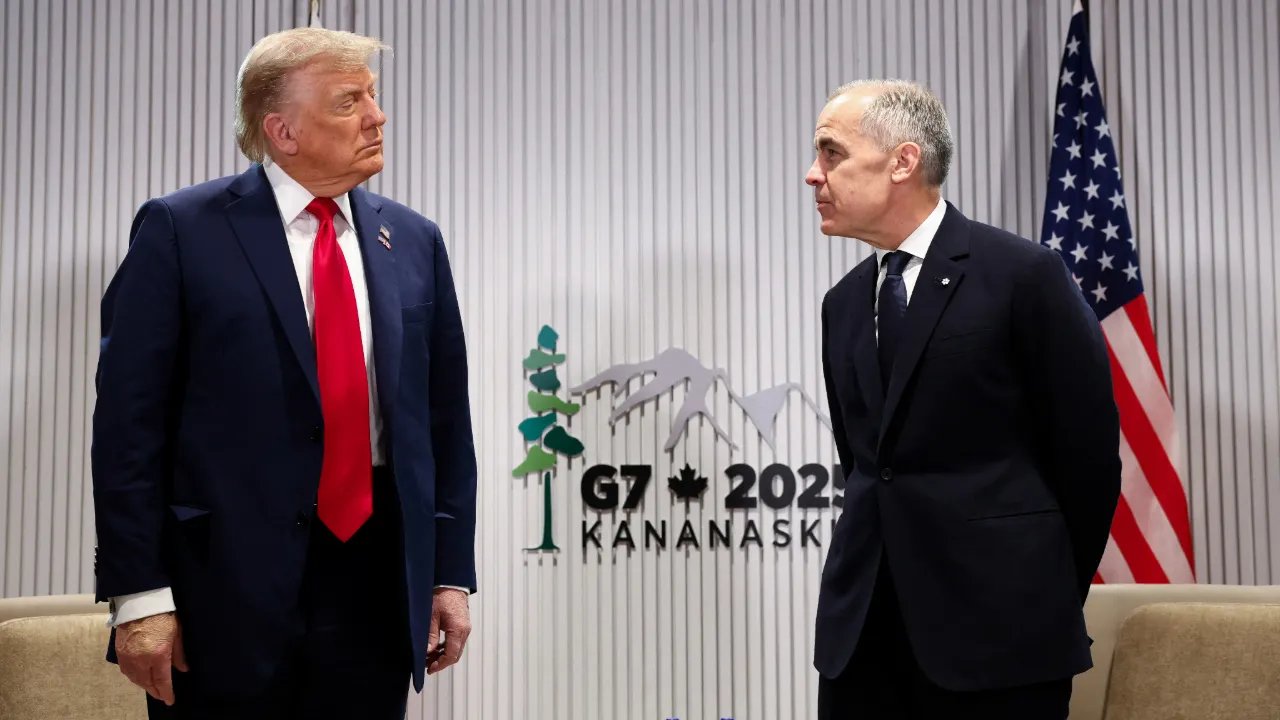
Trade Tensions Escalate: Canada Suspends Negotiations, Vows Retaliatory Tariffs Against U.S.
OTTAWA – Efforts to secure a landmark trade agreement between Washington and Ottawa collapsed late Friday, as Canadian Prime Minister Mark Carney abruptly suspended negotiations, citing "unfair" and "uneconomic" eleventh-hour demands from the United States.
The breakdown marks a dramatic reversal from just days ago, when President Donald Trump signaled a potential breakthrough, pausing a suite of aggressive tariffs for three days and declaring that the two nations had reached a "DEAL!"
However, the optimism proved short-lived. Prime Minister Carney announced that the government has directed its negotiating team to return to Ottawa, stating that the latest terms proposed by the U.S. were unacceptable.
"While our negotiators have worked in good faith to defend the interests of Canadians, the last-minute changes to the U.S. proposed terms were unfair and called into question the reliability of any deal," Carney said in a statement.
In a direct response to the impasse, Canada confirmed it would launch retaliatory measures as a 50% tariff on approximately $28 billion in Canadian goods is set to take effect at midnight. "Canada will match those tariffs dollar for dollar to protect our workers and businesses," Carney added.
The Office of the U.S. Trade Representative (USTR) provided a sharply contradictory account of the failed talks. USTR Jamieson Greer claimed that it was Canada that walked away from a pre-established framework.
"Tonight, Canada declined to finalize the trade deal under the terms agreed earlier this week," Greer stated. "Despite the U.S. offer to Canada to receive the best treatment of any major exporter to our market, new demands and walk backs of other commitments by Canada have upended the careful balance reached in the past days."
Greer characterized the stalemate as a "missed opportunity" for Canada to solidify a partnership with the U.S. economy, highlighting that the U.S. had reportedly offered significant tariff reductions on key sectors, including steel, aluminum, automobiles, and lumber.
The escalating dispute follows months of friction that began in June, when the Trump administration initially moved to impose the 50% tariffs on Canadian goods, alleging trade "discrimination" against American businesses. Those duties, which would impact a wide range of imports from dairy and vehicles to industrial goods, had been briefly suspended by President Trump earlier this week to allow for final documentation of a potential agreement.
As the midnight deadline looms, the Canadian government has pledged to introduce further measures to support domestic industries, noting that it has already provided roughly $25 billion in support over the past 18 months to stabilize the economy amid ongoing trade negotiations.
With both sides now bracing for a significant economic standoff, the future of the critical cross-border relationship remains uncertain.
This is a developing story. Check back for updates.