








From Campus Racing to Climate Tech: How One IIT Delhi Graduate is Transforming India’s Cold Chain
India loses a staggering amount of its annual produce—fruits, vegetables, and dairy—long before it ever reaches the dinner table. While much of this food waste is attributed to the lack of infrastructure, the real culprit often lies in the inefficiency of the “cold chain” itself.
Shaivee Malik, a 25-year-old biotechnology graduate from the Indian Institute of Technology (IIT) Delhi, is now addressing this hidden crisis. By rethinking how refrigeration systems draw their power, she and her team at Yotuh Energy are proving that India’s most complex sustainability challenges can often be solved by simply asking: Why does the machine work this way in the first place?
The Formula for Innovation
Malik’s journey into climate-tech was anything but conventional. As an undergraduate, she was deeply involved with “Axlr8r,” IIT Delhi’s elite Formula Student racing team, where she eventually served as associate team captain. It was in the high-pressure world of automotive engineering that she met her future co-founders, Vivek Mahindrakar and Dharmik Bapodara.
The trio shared a common ambition: to pivot their technical expertise toward climate-related problems. Their attention turned to the refrigerated transport sector, a massive, energy-intensive industry that serves as the backbone of India’s food supply. In 2022, they founded Yotuh Energy, subsequently moving to Chennai to participate in an incubation program at IIT Madras.
The Diesel Dilemma
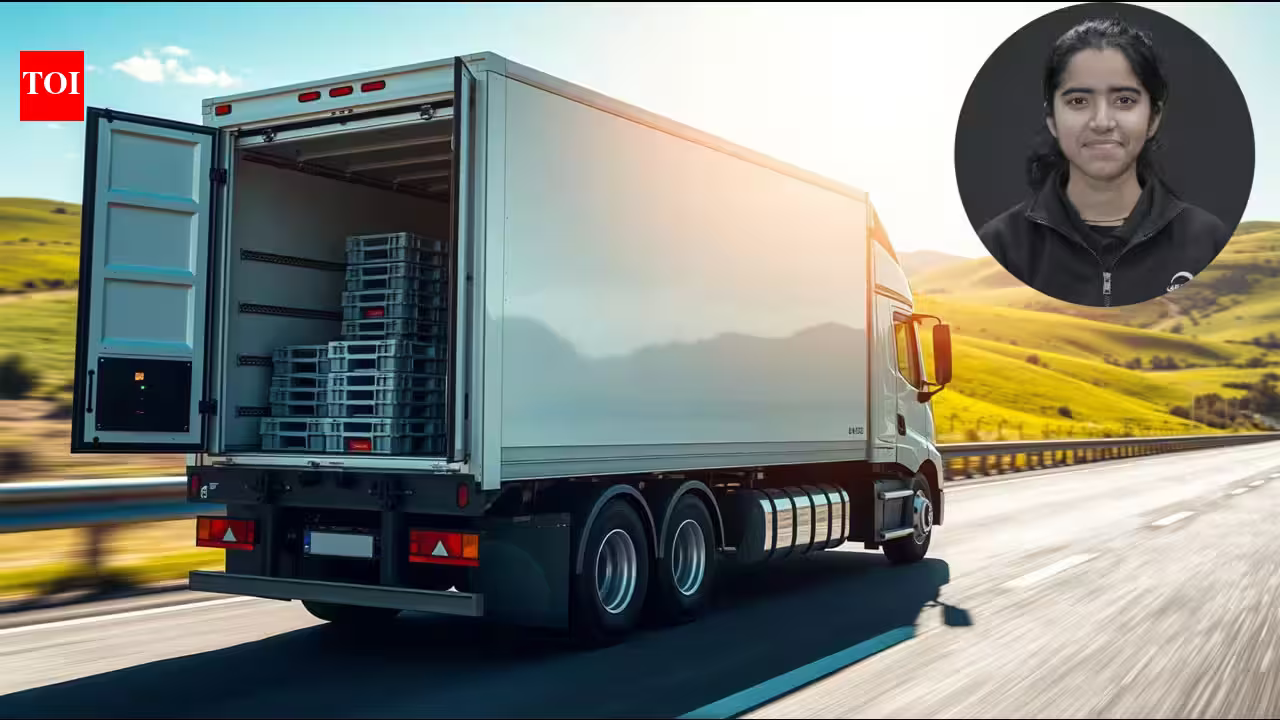
Conventional refrigerated trucks pose a significant environmental and economic problem: they rely on the vehicle’s engine to power the cooling unit. This forces drivers to keep their engines running even when the truck is idling in heavy traffic or sitting at a loading dock, leading to excessive fuel consumption and high emissions.
Yotuh Energy has disrupted this model by decoupling the refrigeration system from the vehicle’s primary engine. Their solution uses a dedicated lithium-ion battery to power the cooling unit, allowing it to function independently. This innovation offers several key advantages:
| Feature | Conventional Refrigeration | Yotuh Energy’s Approach |
|---|---|---|
| Power Source | Linked to truck engine | Independent battery system |
| Idling | Engine must run to cool | Cooling operates while stationary |
| Efficiency | High fuel waste | 75% reduction in running costs |
| Reliability | Engine failure stops cooling | Separate, secure power source |
According to the startup, these units can operate for six to eight hours on a single charge and have the potential to prevent 3 to 36 tonnes of carbon dioxide emissions annually, depending on usage.
From Prototypes to Commercial Success
Building a hardware-based startup is notoriously difficult. Malik notes that the company’s early days were powered by personal savings and family support, before securing critical government grants and research funding. To date, the company has raised approximately Rs 1.53 crore, allowing them to move from experimental prototypes to real-world commercial application.
Today, Yotuh’s technology is being put to the test by major players in the logistics space, including distributors for Amul ice cream and McCain frozen foods.
A Broader Vision for Cooling
For Malik, the truck-cooling unit is merely the first application of their technology. “We are a cooling solutions company,” she explains. By treating cooling as a fundamental problem of energy management rather than just a logistical one, Yotuh is positioning itself to address the broader inefficiencies of the sector.
For current engineering students, Malik’s trajectory from biotechnology to climate-tech serves as a powerful reminder: you do not always need to invent a new machine to change the world. Sometimes, the most significant impact comes from challenging the status quo of the infrastructure we already rely on every day.
Disclaimer: This article is based on publicly available information and statements attributed to the company or its representatives. Performance, emissions, and cost-saving figures cited above have not been independently verified.