









Mystery Solved: Former CDS Reveals Why Indian Drone Struck Pakistan’s Nuclear Hub
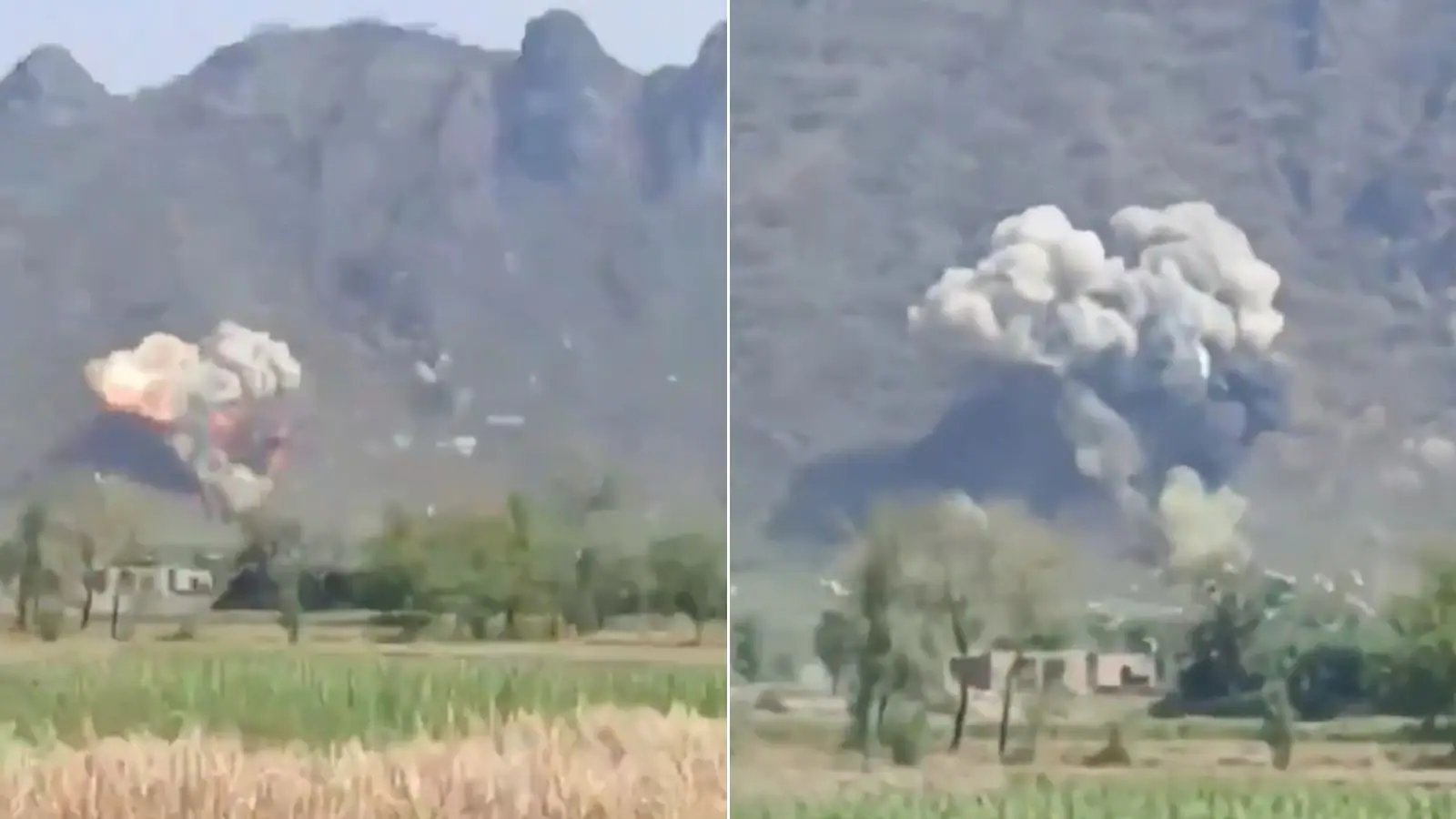
New Delhi: The speculation surrounding the mysterious strike on Pakistan’s Kirana Hills—a critical nuclear facility for the Pakistani armed forces—during last year’s Operation Sindoor has finally been laid to rest.
Former Chief of Defence Staff (CDS) General Anil Chauhan has clarified that the incident, which occurred during the height of the military campaign, was not a deliberate targeting of the nuclear site. Instead, the strike was the result of an operational contingency involving an Indian loitering munition.
An Unintended Impact
Addressing an audience at the Vivekananda Centre in New Delhi, General Chauhan explained that the Indian Air Force had deployed several loitering munitions—believed to be Israeli-designed Harop drones—to search for radar installations in and around the Sargodha and Kirana Hills region.
“These loitering munitions are designed to hunt for radars, but they have a finite operational life. They loiter for about two hours; if they fail to acquire a target, they are programmed to descend and impact a location,” General Chauhan explained.
He dismissed claims that the facility was a primary target, citing confirmation from Air Marshal AK Bharti (retired), who served as the IAF’s Director General of Air Operations during the campaign. “Bharti had rightly clarified that we did not target Kirana Hills,” the General added. “The drone simply ran short on fuel and struck the hills after failing to find its intended radar target.”
Skardu Mission Scrubbed
General Chauhan also shed light on other aspects of the aerial campaign, confirming that the Indian Air Force had been given the green light to strike Skardu in Pakistan-Occupied Kashmir (PoK). That specific mission, however, was aborted due to adverse weather conditions.
“The Chief asked me whether he should strike Sargodha. I said, ‘Go ahead,’ and suggested he identify two more targets,” the former CDS recalled. “Skardu was one of them. We gave the go-ahead, but when the weather deteriorated over Skardu, the mission parameters were shifted to Bholari.”
The Bholari Hangar Strike
The strike on the Bholari hangar remains one of the most recognizable successes of the May 10 air campaign. Executed by the Gandhinagar-based South Western Air Command, the precision attack left a distinct mark on the facility.
Satellite imagery, first brought to public attention by NDTV, depicted a massive, jagged breach in the hangar’s roof, with debris scattered across the connecting apron. The contained nature of the destruction highlighted the surgical precision of the IAF’s strike capabilities, reinforcing the tactical efficiency of the operations conducted under Operation Sindoor.