




Strategic Dogfights: China’s J-16 Jets Test Mettle Against Rafales in Historic Joint Drills
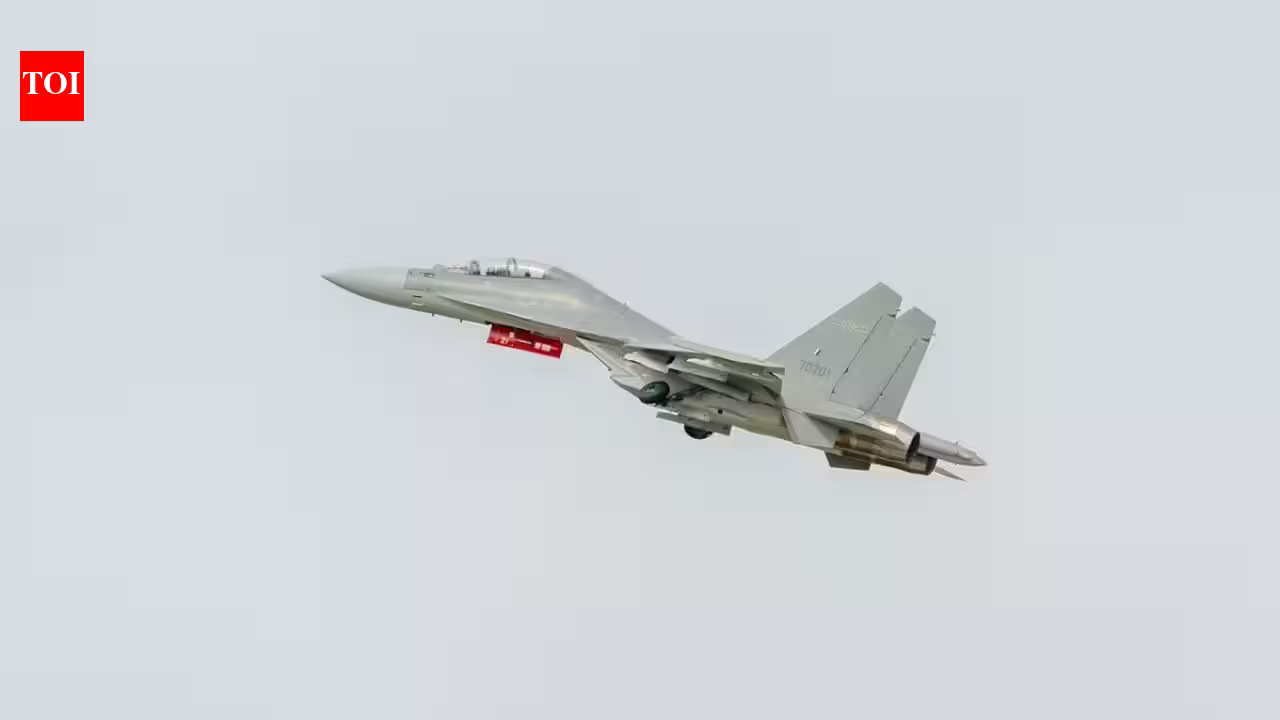
In a significant development for regional security dynamics, China’s advanced J-16 fighter jets have engaged in head-to-head, simulated air combat against Rafale fighters. This historic exercise, part of the “Eagles of Civilization 2026” joint drills held in Egypt, marks the first time the People’s Liberation Army Air Force (PLAAF) has had the opportunity to train directly against the Rafale, a platform central to the Indian Air Force’s (IAF) offensive capabilities.
A Rare Training Opportunity
The opening phases of the exercise, reported by CCTV News, focused on one-on-one engagements between the Chinese-made J-16s and the French-designed Egyptian Rafales. Beyond the cockpit, the exchange involved intensive intelligence-sharing, with pilots briefing one another on flight-safety rules, airspace procedures, and emergency response protocols.
The scope of the exercise is slated to increase in intensity, shifting from individual dogfights to complex two-on-two engagements and, eventually, integrated joint operations.
For Beijing, the value of these drills is immense. While the PLAAF regularly conducts training against its own fleet, the opportunity to test its systems against a Western-designed, fourth-generation-plus fighter is exceptionally rare. Chinese aviation experts, including Wang Yanan, have noted that the exercise allows the PLAAF to gain critical insights into the Rafale’s flight characteristics, maneuverability, and tactical behaviors.
Implications for the Himalayas
For New Delhi, these drills are being monitored with extreme caution. The Rafale represents one of the most potent assets in the Indian arsenal, and the prospect of the PLAAF gaining structured, real-world data on how the aircraft operates in a combat environment is a strategic concern.
Defense analysts are quick to caution that the Egyptian Rafales are not identical to those flown by the Indian Air Force. Disparities in weapons suites, onboard sensor fusion, software architecture, and operational doctrine mean these drills do not serve as a perfect mirror for a potential India-China conflict. However, the data gathered by China during these exercises serves as a significant building block for future tactical planning.
Decoding the PLA Strategy
By putting the J-16 through its paces against the Rafale, the PLAAF is essentially “stress-testing” its own hardware. Chinese military planners are using these encounters to refine counter-tactics, assess performance gaps, and train pilots to neutralize a threat that they could theoretically encounter in a theater-level conflict over the Himalayas.
As the “Eagles of Civilization” exercise progresses, it underscores a shifting reality in modern aerial warfare: joint drills between friendly nations are increasingly being leveraged as strategic intelligence-gathering missions. For the Indian defense establishment, this development serves as a sharp reminder that as the Rafale continues to bolster India’s deterrence, it simultaneously becomes a primary subject of study for competitors seeking to gain an edge in the skies.