









Urvashi Rautela Defends ‘Tiranga-Inspired’ Gown Amid Social Media Backlash
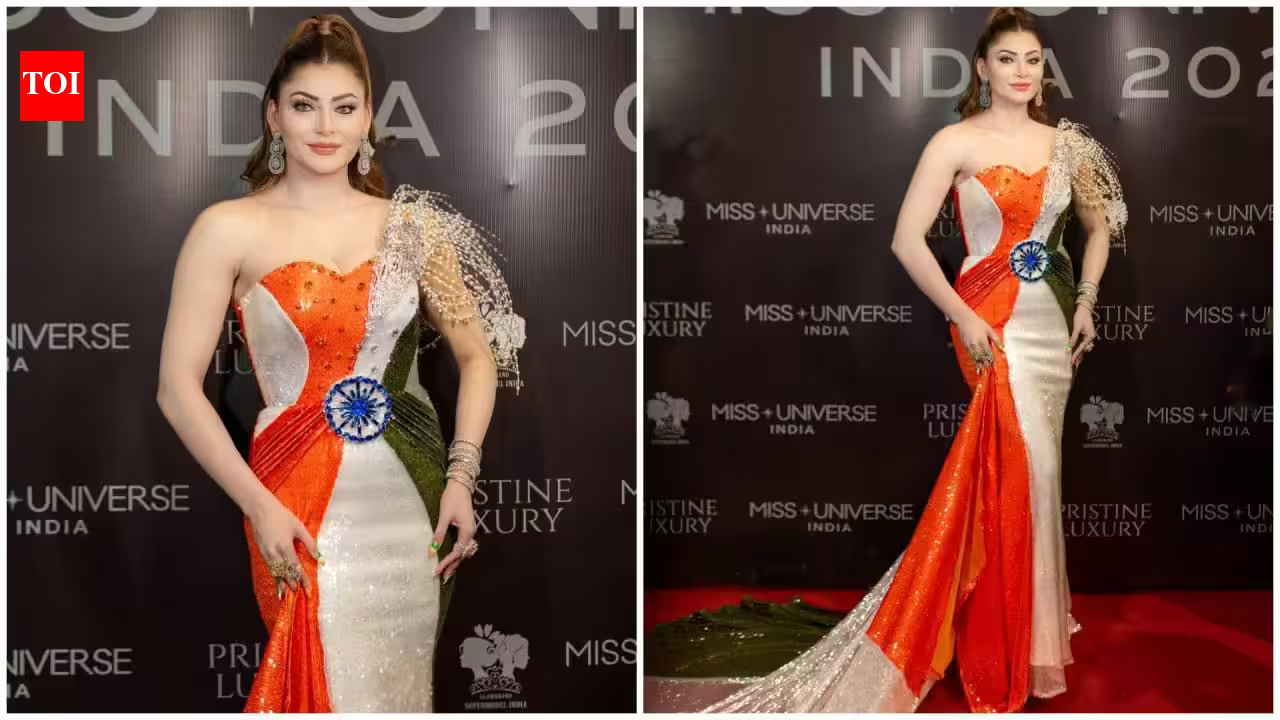
Bollywood actor and former beauty queen Urvashi Rautela has found herself at the center of a heated debate following her appearance at the Miss Universe India pageant in Jaipur this past Sunday. Serving as a judge for the event, Rautela opted for a high-fashion ensemble that drew inspiration from the Indian tricolour, sparking a wave of criticism from social media users who questioned whether the outfit violated national flag protocols.
A Controversial Fashion Statement
The gown, which featured the distinct saffron, white, and green hues of the Indian flag accompanied by an Ashok Chakra-inspired embellishment, was intended as a tribute to the nation. However, the design quickly drew fire online. Critics pointed to the Flag Code of India, 2002, and the Prevention of Insults to National Honour Act, 1971, which strictly prohibit the National Flag from touching the ground or being worn as a costume below the waist.
Addressing the controversy in an exclusive interview with Hindustan Times, the actor defended her choice, asserting that the gown was an artistic homage rather than a reproduction of the flag.
“I carry my country with me not merely as a nationality, but as a part of my identity,” Rautela explained. “I wanted to wear something that didn’t merely tell people where I came from, but communicated what India means to me. That is where this couture came from.”
The Creative Vision
Crafted by Belarusian designer Darya Chermashentseva of DASHA Fashion Couture, the gown took approximately three months to complete. Rautela emphasized that the project was a complex, theatrical undertaking intended to translate patriotic sentiment into a high-fashion format.
“The silhouette, the placement of the colours, the embellishment, the detailing, and the construction were all interpreted as fashion,” she stated. “It wasn’t simply about putting three colours on a dress. It was about transforming a national sentiment into an artistic expression.”
Distinguishing Art from Symbolism
In response to the specific concerns regarding the flag touching the floor or appearing as a costume, Rautela clarified that there are “several visible differences” between the Indian National Flag and her gown. She noted that the shades, proportions, and materials were deliberately modified for the requirements of a stage performance and to ensure the garment held its own under intense studio lighting.
“The gown is not a literal reproduction of the National Flag; it is a couture interpretation using tricolour-inspired elements,” she added. “The differences in colour shades, orientation, proportions, and especially the central emblem are substantial and intentional for theatrical stage impact.”
Legal and Ethical Context
While the actor maintains the look was a tribute, the public discourse highlights a broader sensitivity toward the treatment of national symbols. Under the Tiranga-inspired-outfit debate, legal experts often cite the 1971 Act, which notes that any “visible representation” of the flag—including embroidery or printing on clothing—can be scrutinized if deemed disrespectful.
As the conversation continues, Rautela remains firm that her intent was purely celebratory, framing the piece as a “theatrical, high-fashion homage” meant to honor her country on a global stage.