








Shadows of Controversy: Veteran Actors Weigh In on Imran Khan’s ‘Leave India’ Notice
In a development that has sent shockwaves through the corridors of Bollywood and beyond, actor Imran Khan—best known for his breakthrough in the 2008 hit Jaane Tu… Ya Jaane Na—finds himself at the center of a geopolitical and legal firestorm. The Delhi Belly actor, who holds an American passport, has been issued a ‘Leave India’ notice by the Mumbai Police, with a strict directive to exit the country by October 28. The reason? His active participation in a protest at Mumbai’s August Kranti Maidan, where he joined calls for the resignation of Chief Election Commissioner Gyanesh Kumar.
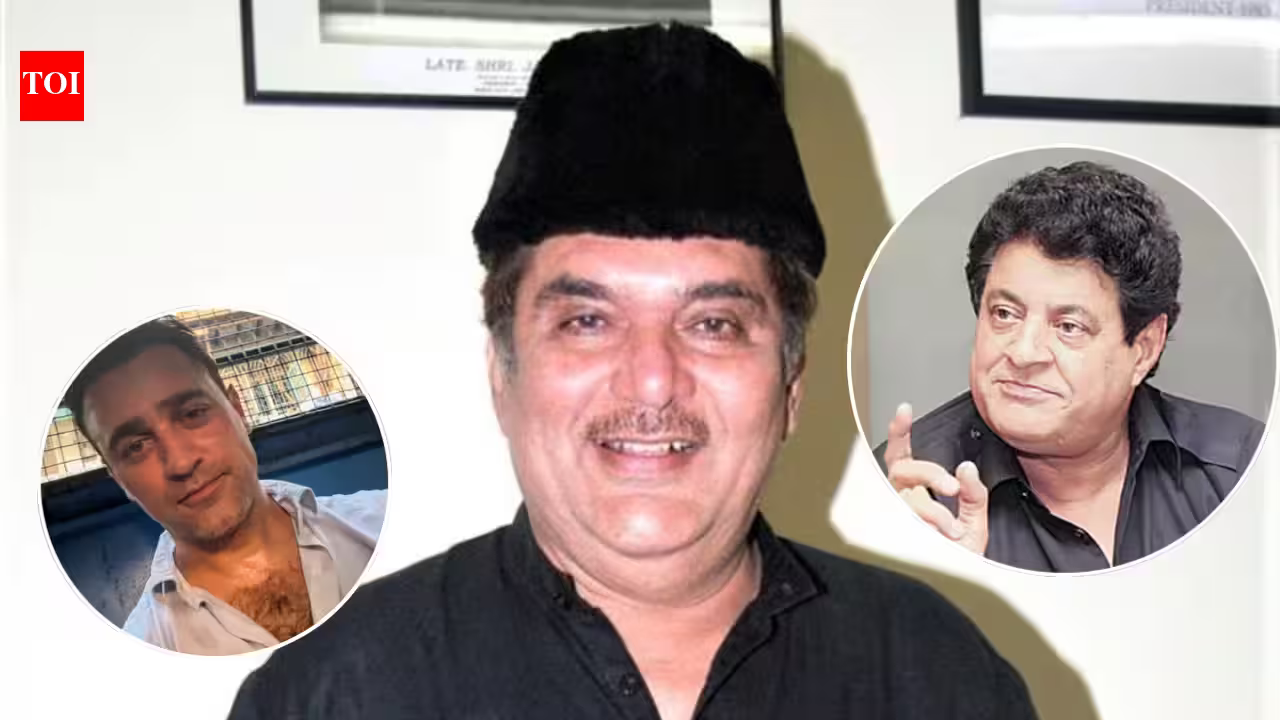
The incident has polarized public opinion, but among his own fraternity, the reaction has been swift and unforgiving. Two stalwarts of the industry, Raza Murad and Gajendra Chauhan, have publicly backed the administrative move, asserting that citizenship carries responsibilities that transcend the glamour of the silver screen.
Raza Murad: The Rule of Law Above All
Veteran actor Raza Murad, a man who has navigated the complexities of the Indian film industry for decades, did not mince words when addressing the matter. Speaking to the media, Murad emphasized that the Mumbai Police were operating strictly within the parameters of the law.
“Whether it is Imran Khan or any other foreign national, there is no reason to interfere in the internal affairs of our country,” Murad stated. His critique hinges on a fundamental point of diplomatic and legal decorum: sovereignty. By choosing to hold American citizenship, Khan has shifted his status from an ‘insider’ to an international visitor. Murad pointedly added, “Now I have come to know that Imran Khan has become a US national and he was an actor here. So, as a US national, he has no right to intervene in the internal affairs of our country.”
Murad also defended the administrative timeline provided to the actor. Dismissing claims of high-handedness, he noted that the authorities have granted a 15-day window for Khan to settle his affairs. “Mumbai Police is doing this in the framework of the law. And he has not been told to leave the country tomorrow or in 24 hours,” he noted, providing a pragmatic perspective on the notice period.
Gajendra Chauhan: The OCI Conundrum
If Raza Murad’s approach was one of legal necessity, actor and former FTII chairperson Gajendra Chauhan’s response was rooted in the ethics of the Overseas Citizen of India (OCI) status. Chauhan was particularly incensed by the optics of a foreign national engaging in political agitation on Indian soil.
“He is an American citizen, and he was living here. I don’t think he should have gone to protest because it is against the law,” Chauhan argued. For the actor, the limitations of an OCI card are not mere suggestions—they are binding boundaries. Under current regulations, foreign nationals residing in India on such statuses are restricted from voting, contesting elections, and significantly, participating in domestic political protests.
Chauhan didn’t hide his disappointment regarding the breach of trust between a star and his audience. “You have been such a big celebrity in India. You have earned a name, earned money, earned a position. Indians used to love you. Despite that, you go to such a protest, which is against the residential values on which you are living in India.” For Chauhan, this isn’t just a bureaucratic error; it is a violation of the hospitality and status India provided him.
The Intersection of Celebrity and Citizenship
This incident highlights an increasingly complex intersection in modern India: the space where high-profile celebrities, who often leverage their platform for activism, collide with the rigid realities of international law. Imran Khan, the nephew of Aamir Khan, has long been a face of Indian youth cinema, but this incident forces a difficult conversation about the limitations placed on those who choose to retain foreign passports.
In an era where social media allows for instantaneous political mobilization, celebrities are often tempted to lend their faces to causes. However, the legal reality remains that the privilege of residence for a foreign national in India is contingent upon non-interference in domestic policy—a line that many argue was crossed at the August Kranti Maidan.
What Lies Ahead for the Actor?
As the October 28 deadline approaches, all eyes remain on how Khan will navigate this legal quagmire. Raza Murad offered a democratic exit ramp for the actor, stating that if Khan believes the police action is discriminatory or unjustified, the courts remain the final arbiter. “If he feels that he is being forced out of the country, then he can approach the court,” Murad suggested.
However, the prevailing sentiment from his industry seniors is one of stern disappointment. They believe that if one chooses to reside in a nation—and certainly if one enjoys the fruits of that nation’s industry—there is a prerequisite to abide by the codes that govern that society.
The episode serves as a sobering reminder for the creative community: while art may be global and activism may feel universal, the legal standing of an individual is bound by their passport. Whether this results in a legal battle, a quiet departure, or a reconsideration of his residential status remains to be seen. For now, the ‘Leave India’ notice stands as a stark testament to the fact that, in the eyes of the law, a film star is no different from any other foreign national—and that in the theater of geopolitics, the script is written by the state, not the actor.
Disclaimer: This content is auto-generated for informational purposes only.
Source: Read Original News